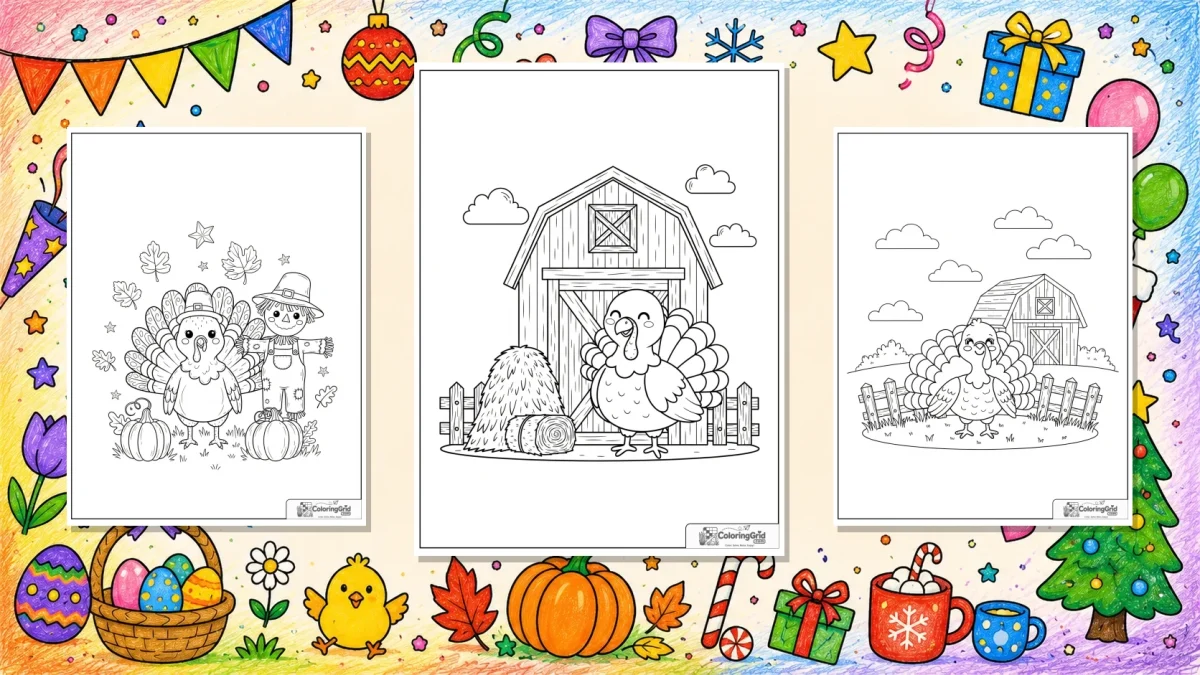
Choose from 43 turkey coloring pages featuring large feather fans, pumpkins, autumn leaves, farm scenes, books, baking, family groups and playful costumes. Some designs have one clear character and wide spaces; others include borders, harvest objects or patterned feathers for a longer coloring session.
What's Inside
Print one of 43 turkey designs
Browse the gallery and use the individual PDF or JPG control beside the sheet you want. The page offers separate downloads for each design; it does not promise one combined packet. Check the preview for feather detail and background objects before printing several copies.
While you're here, explore these fun related coloring pages too!
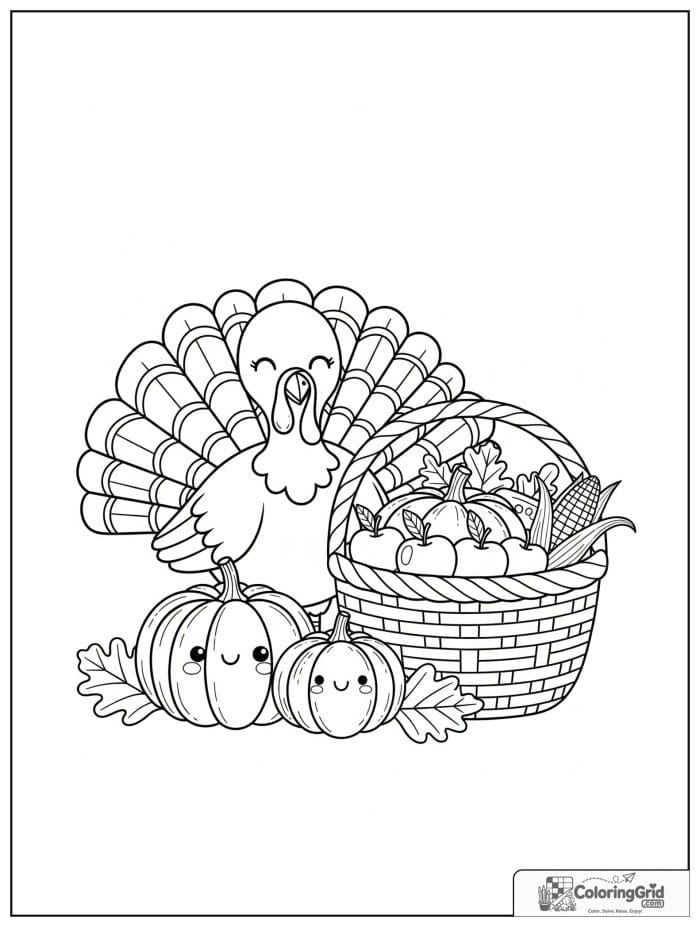
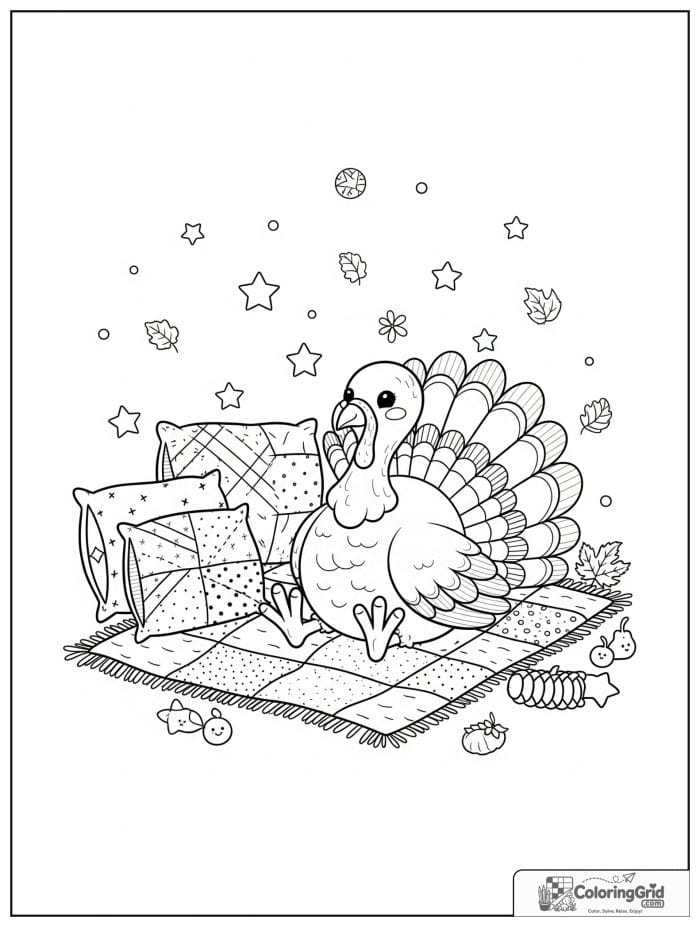
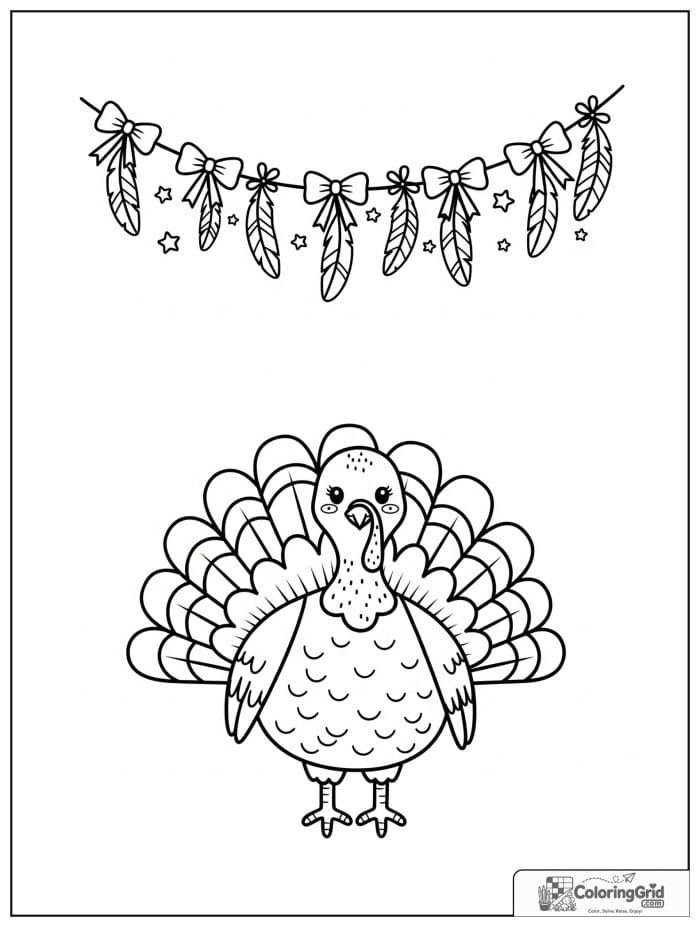
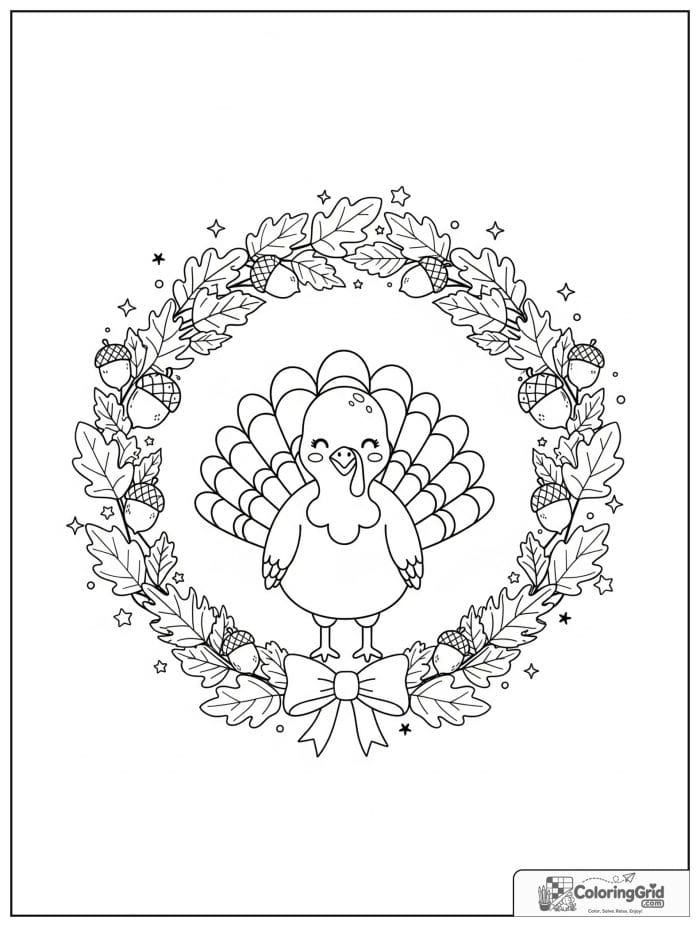
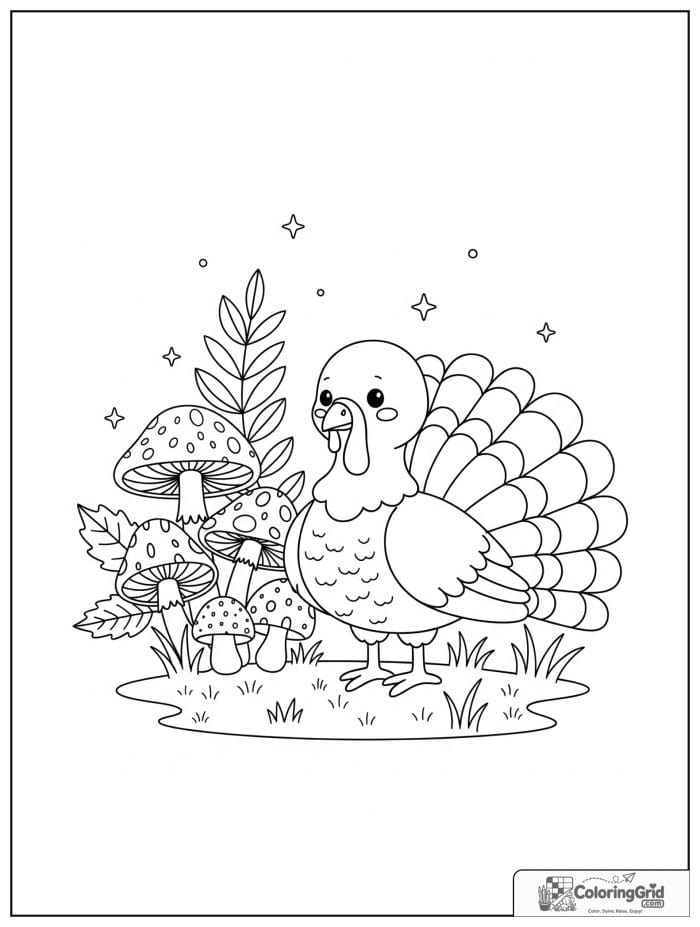
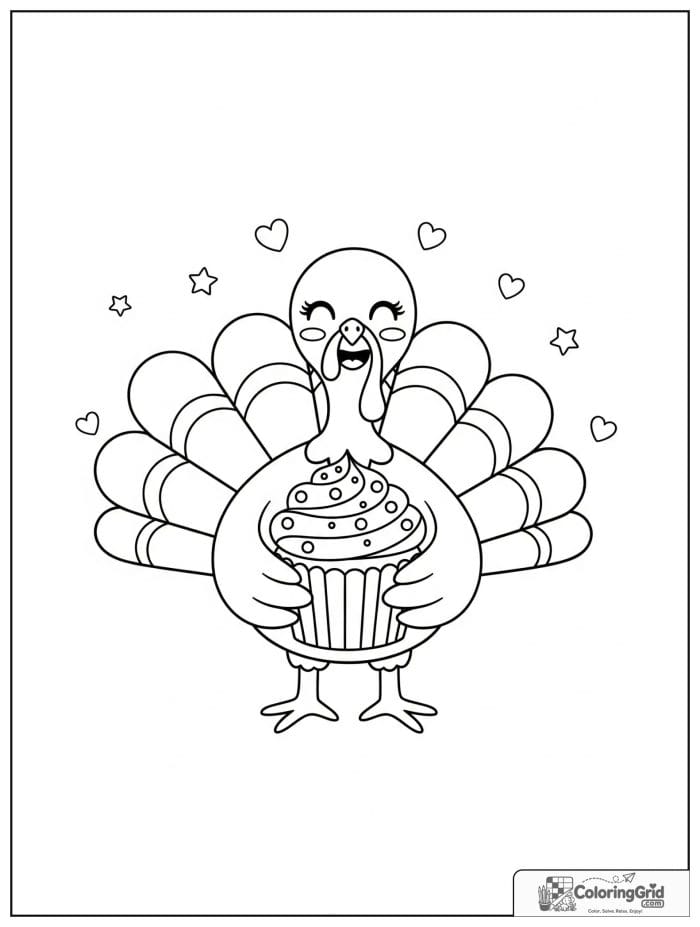
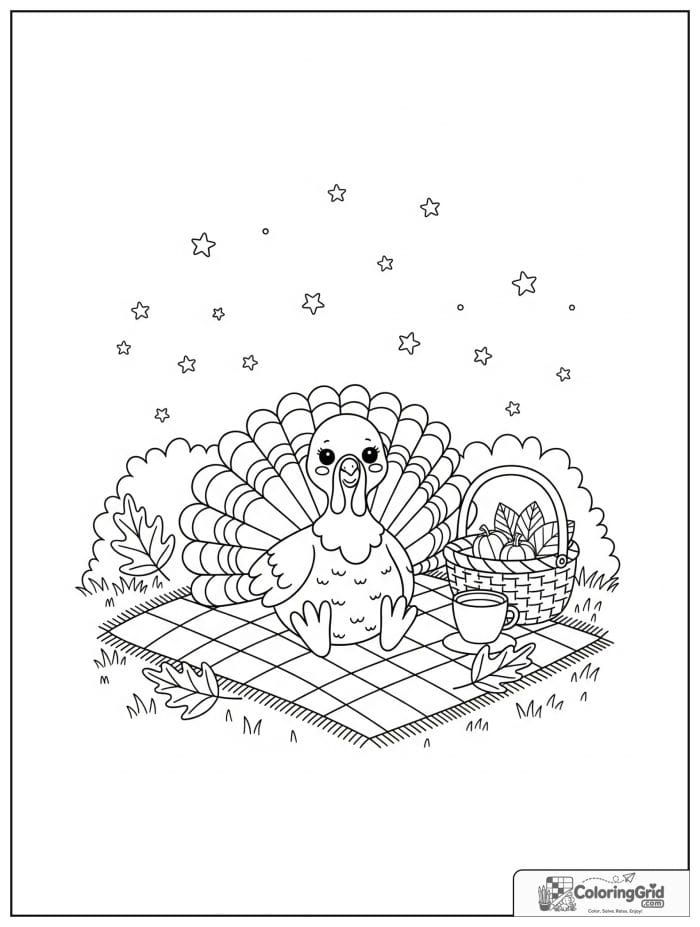
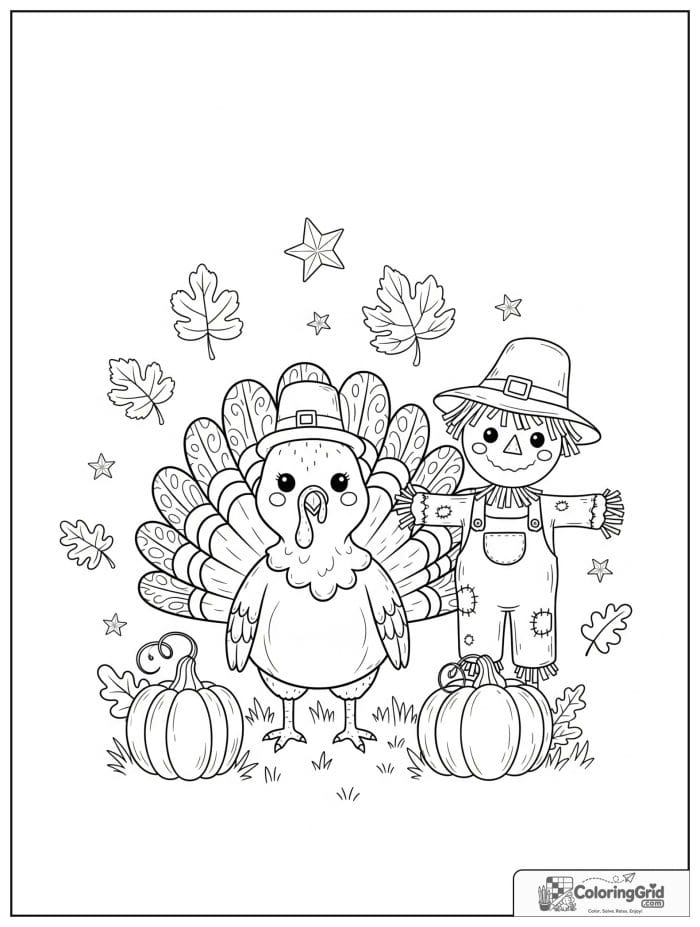
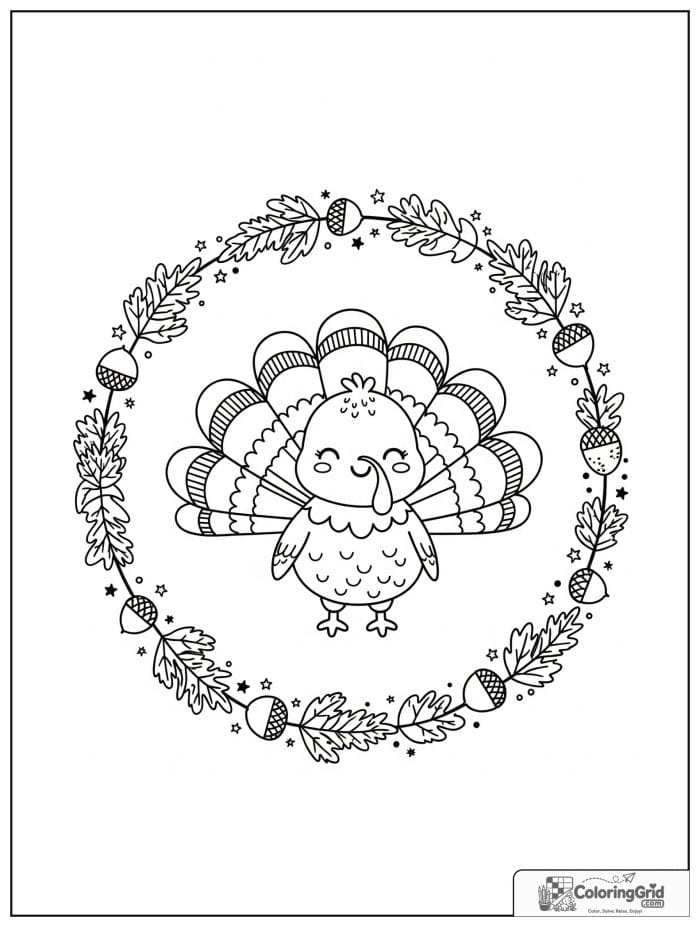
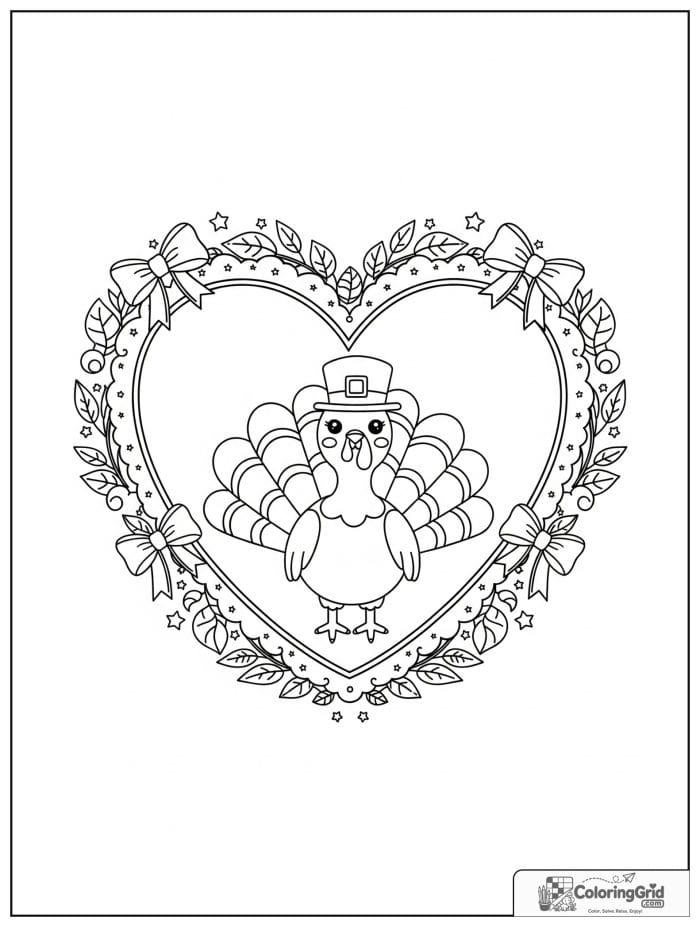
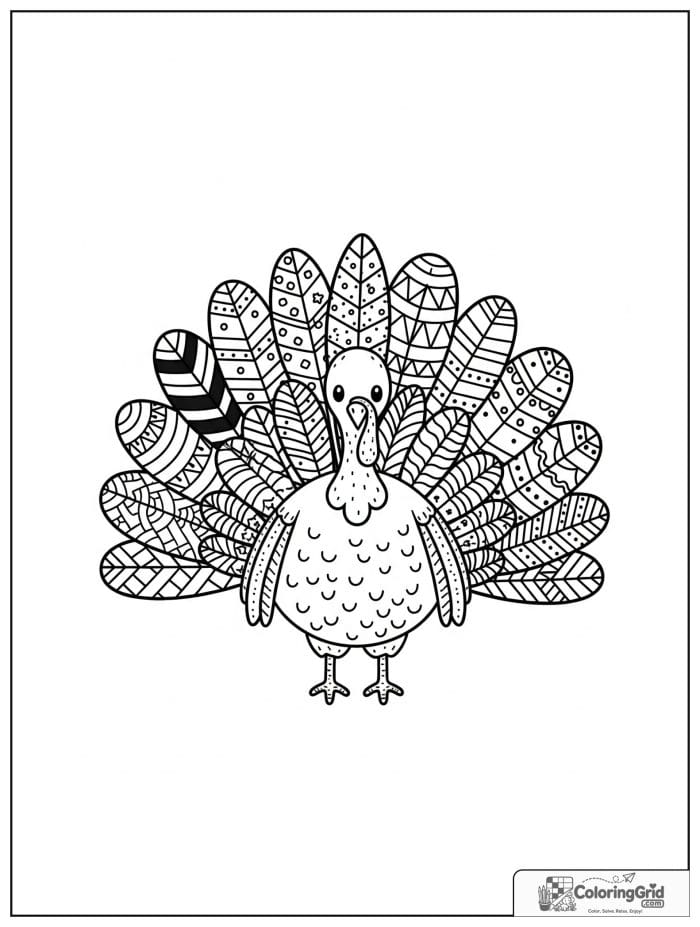
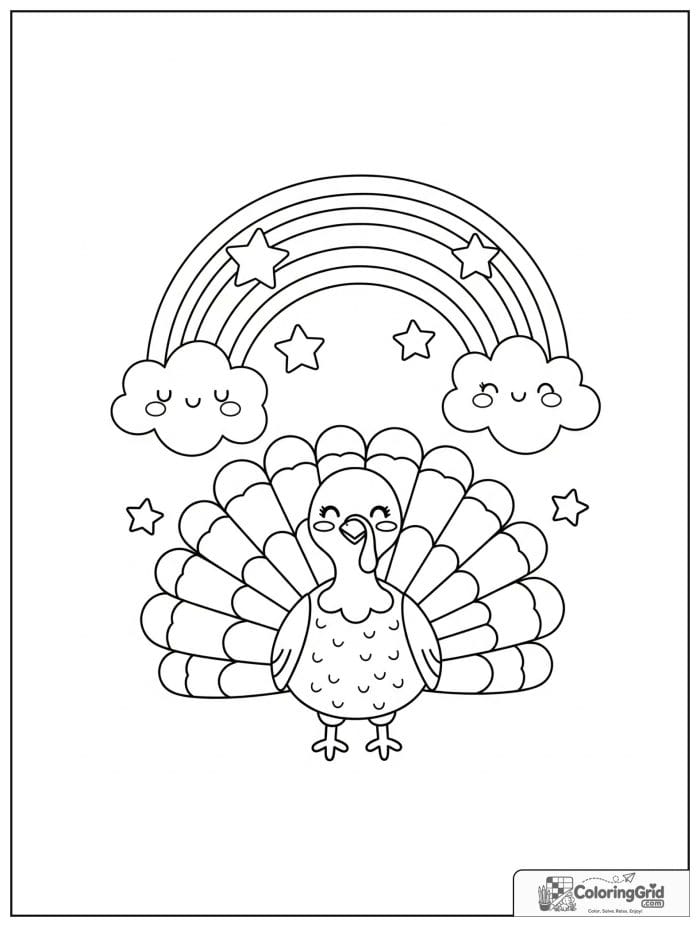
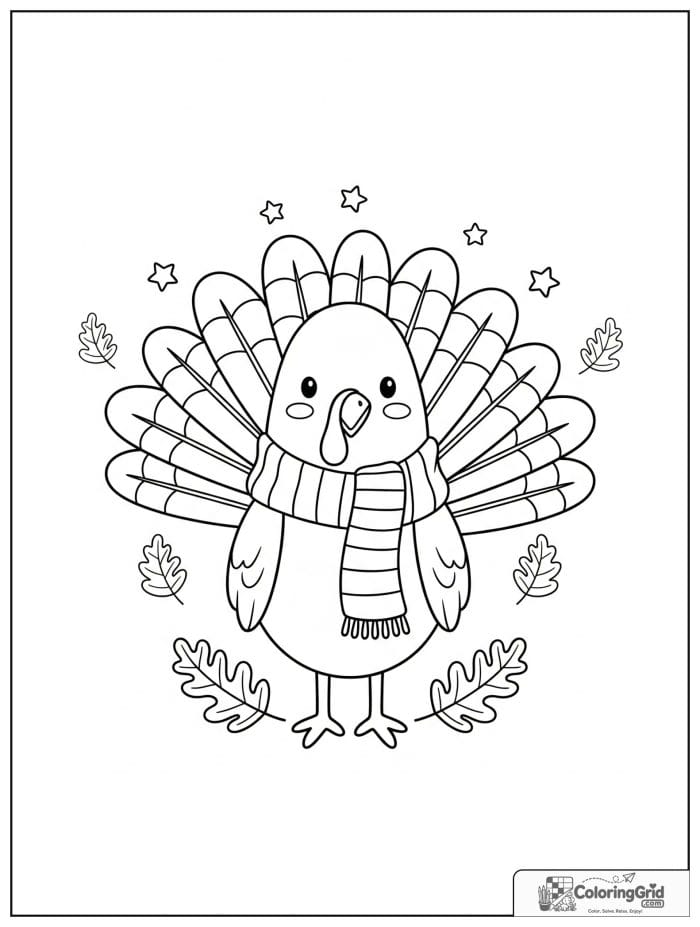
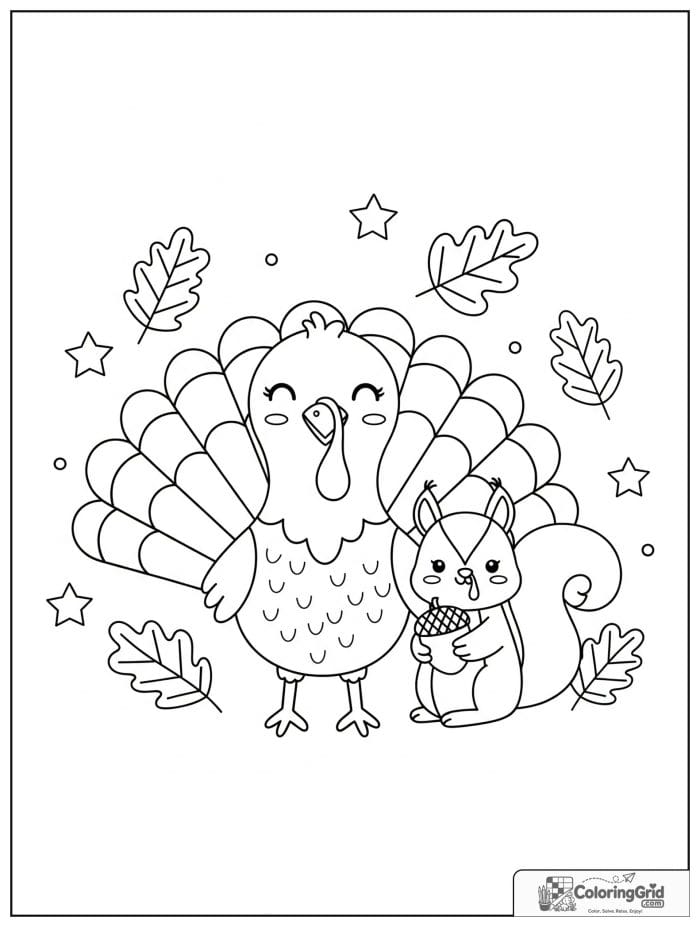
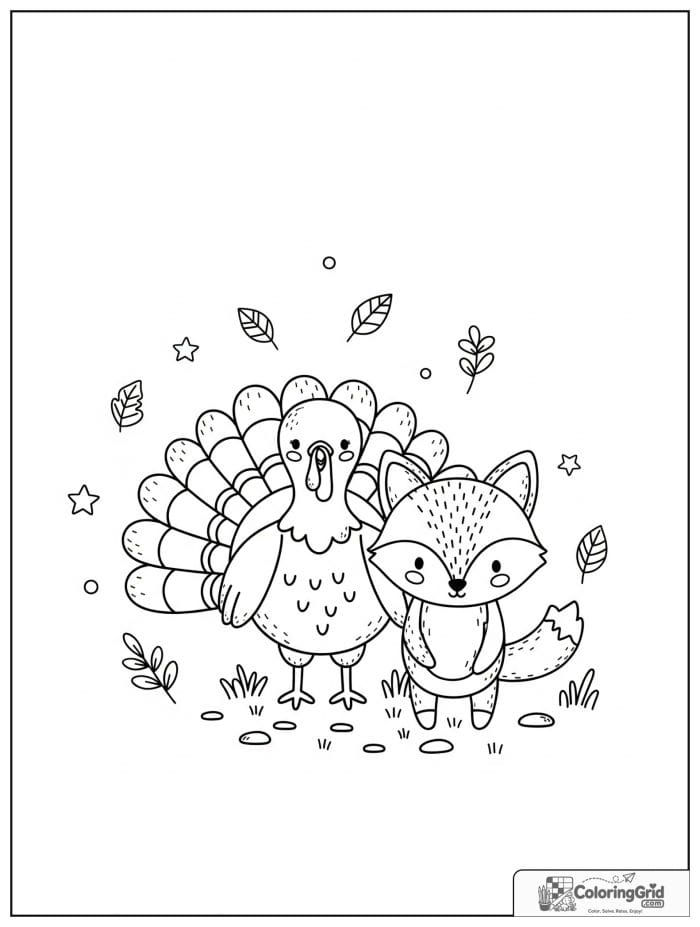
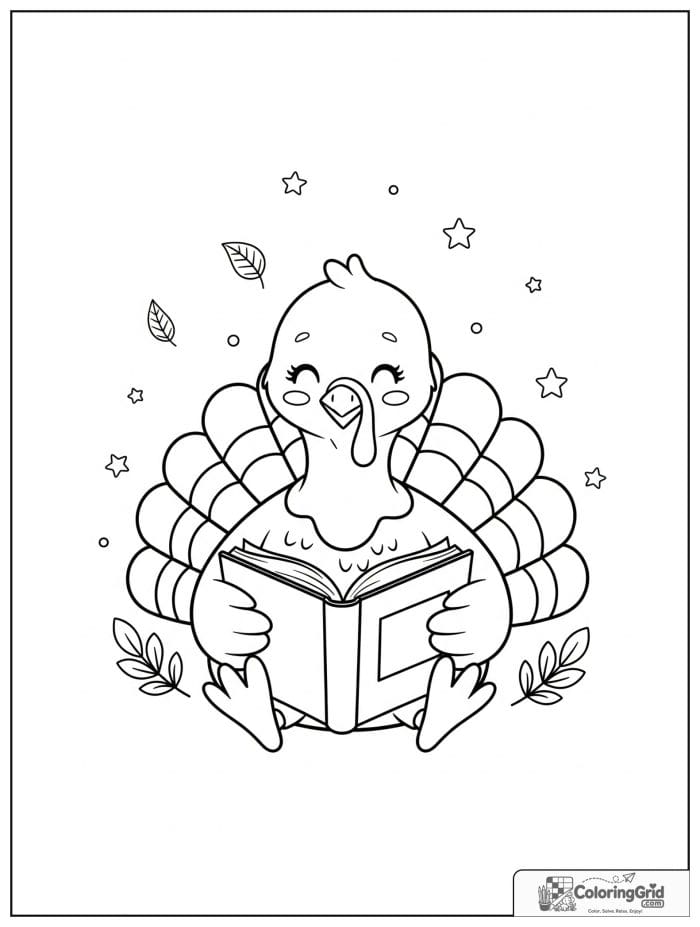
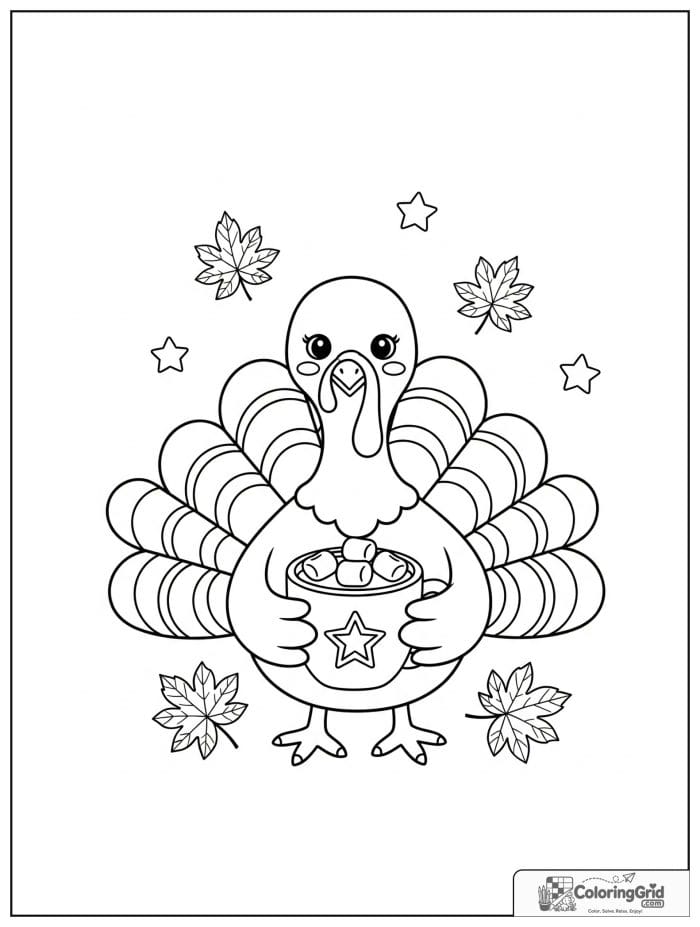
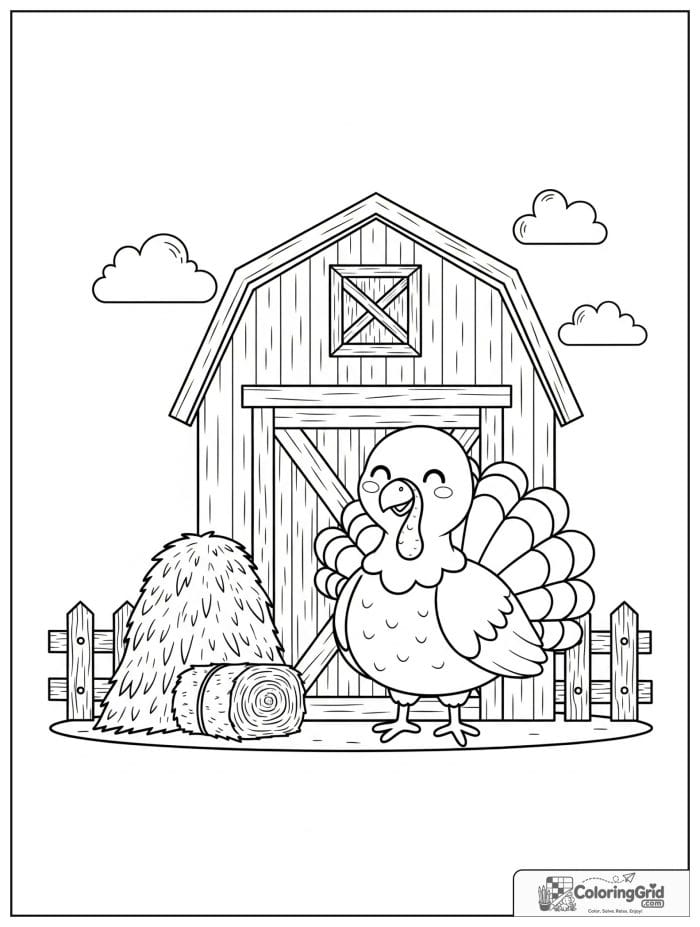
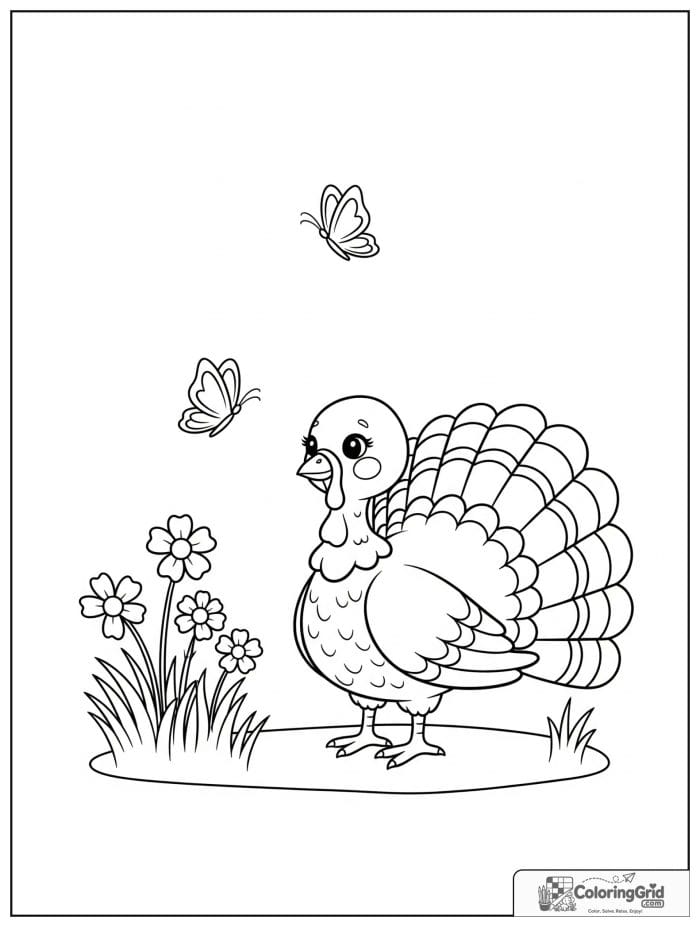
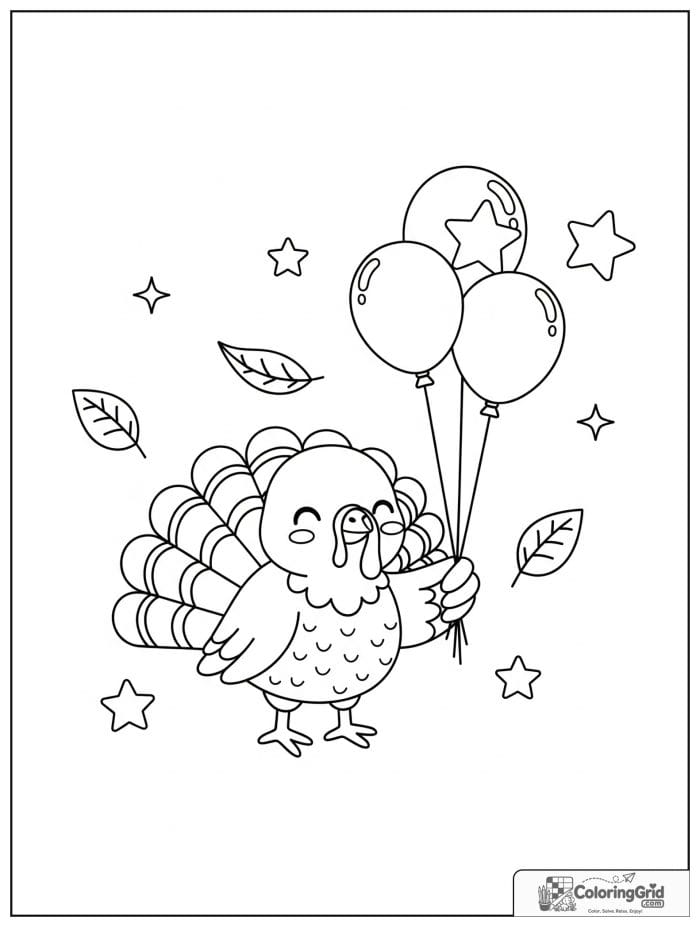
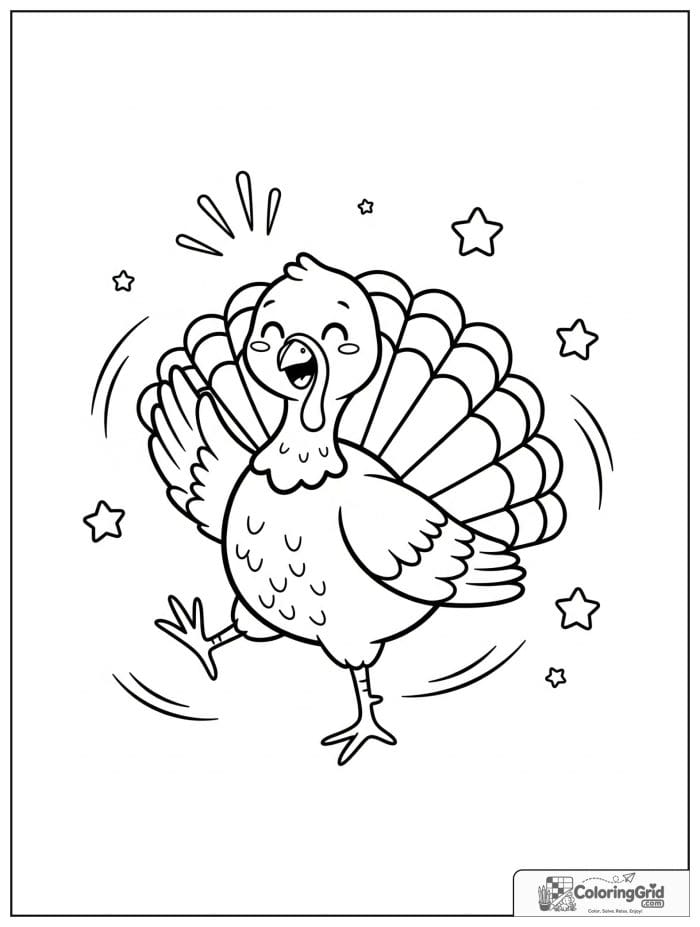
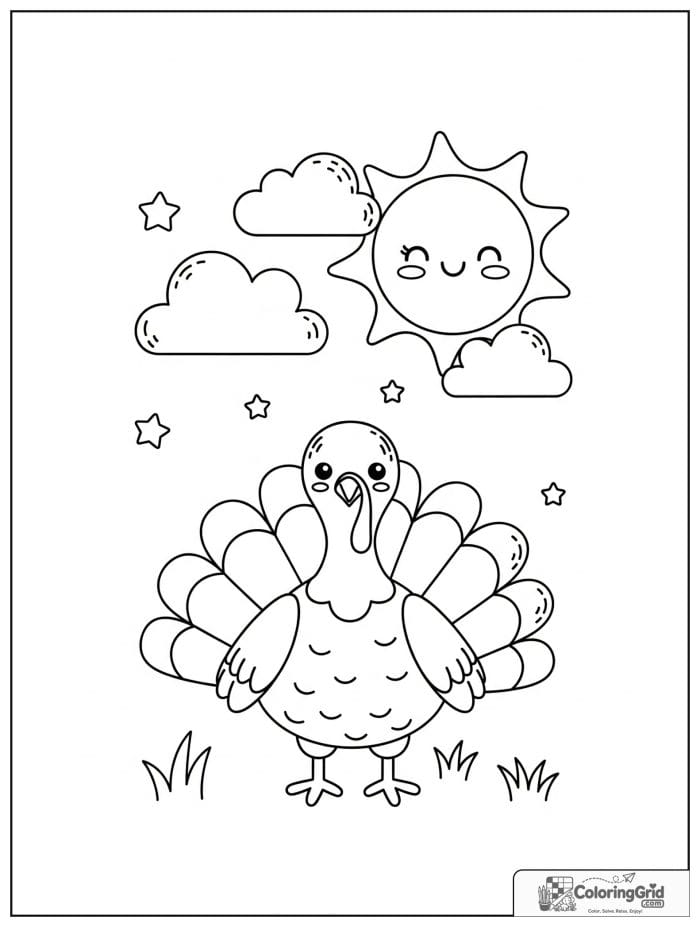
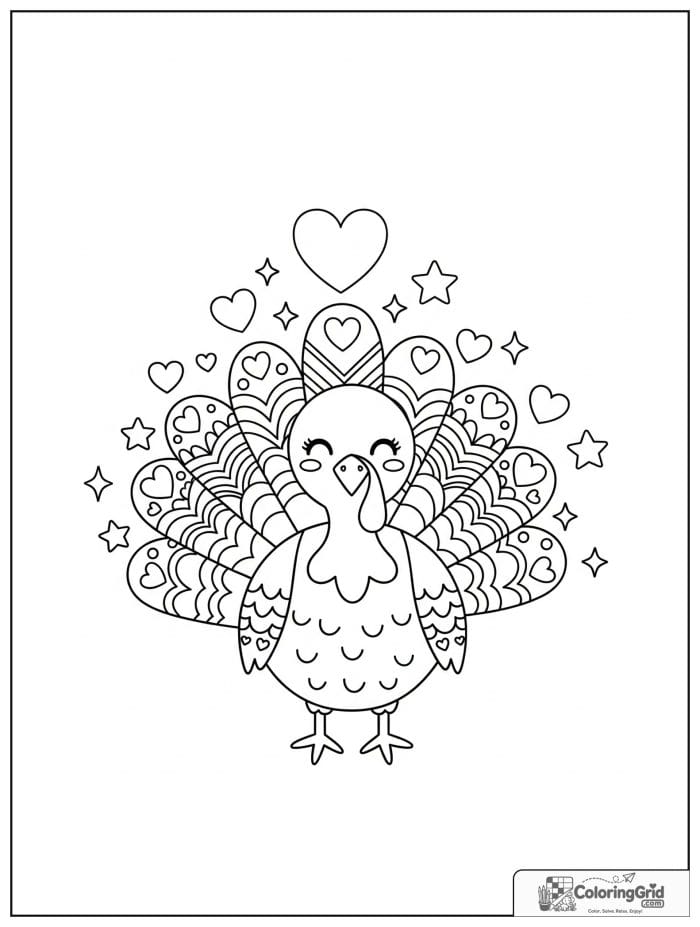
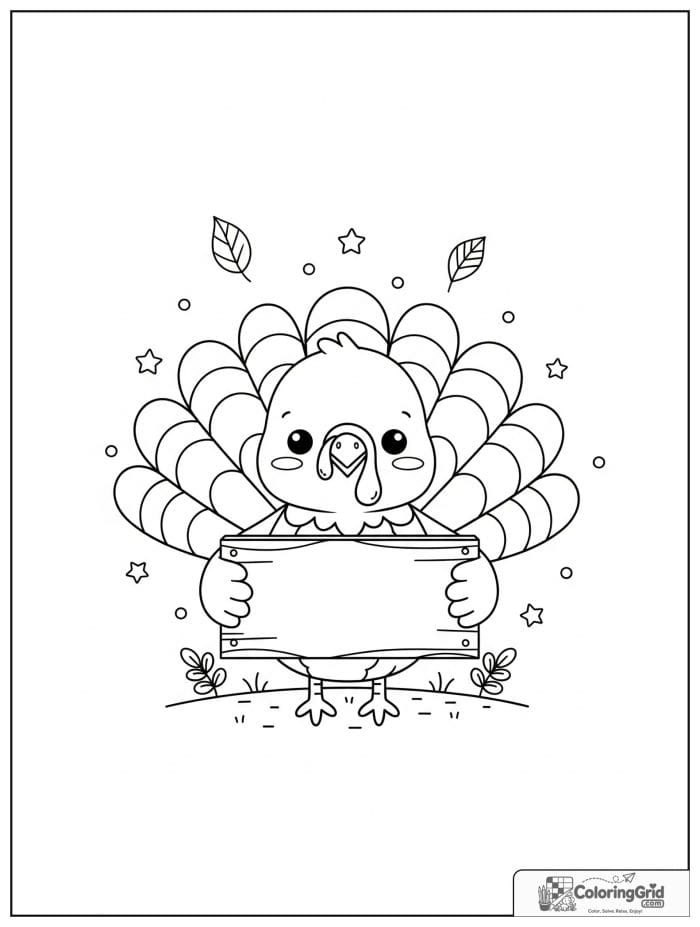
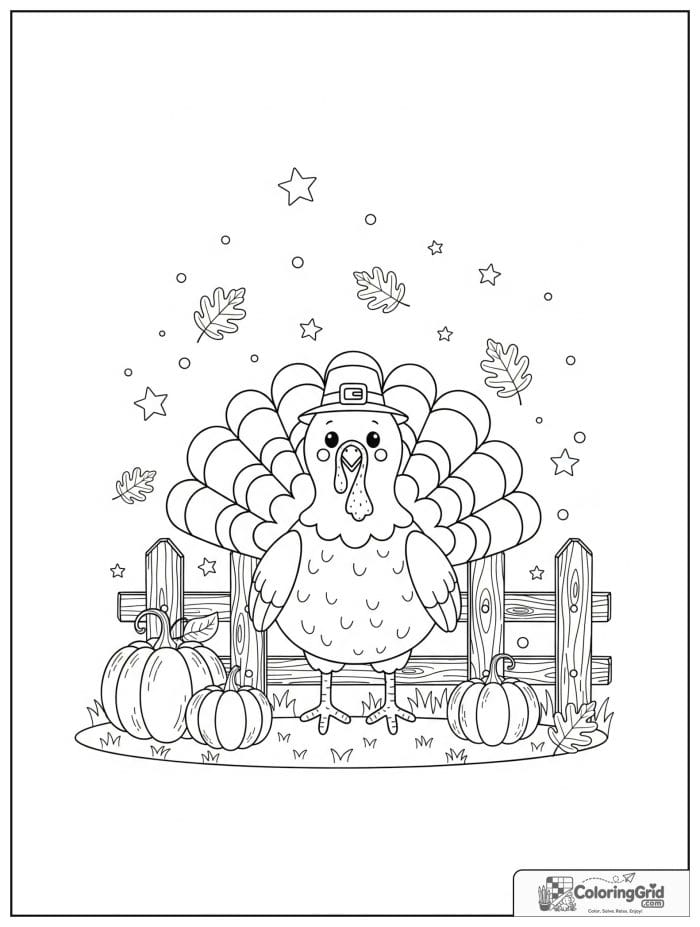
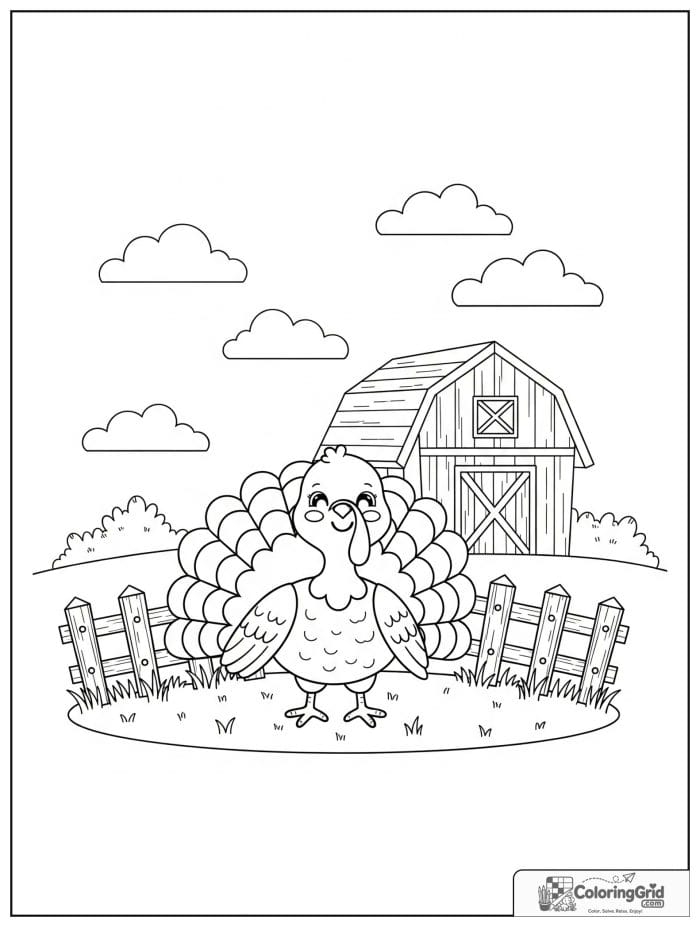
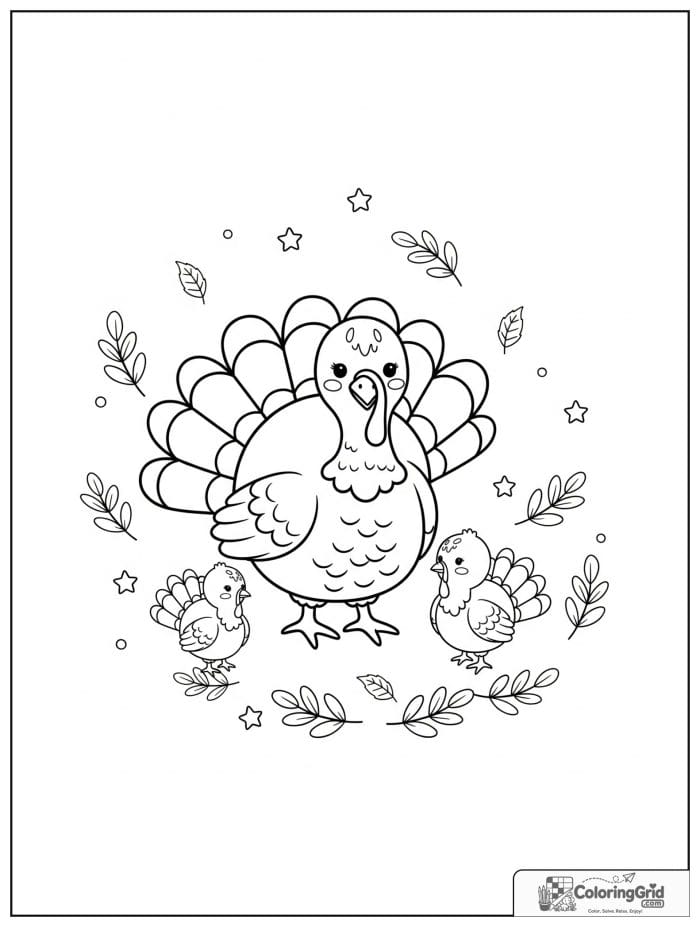
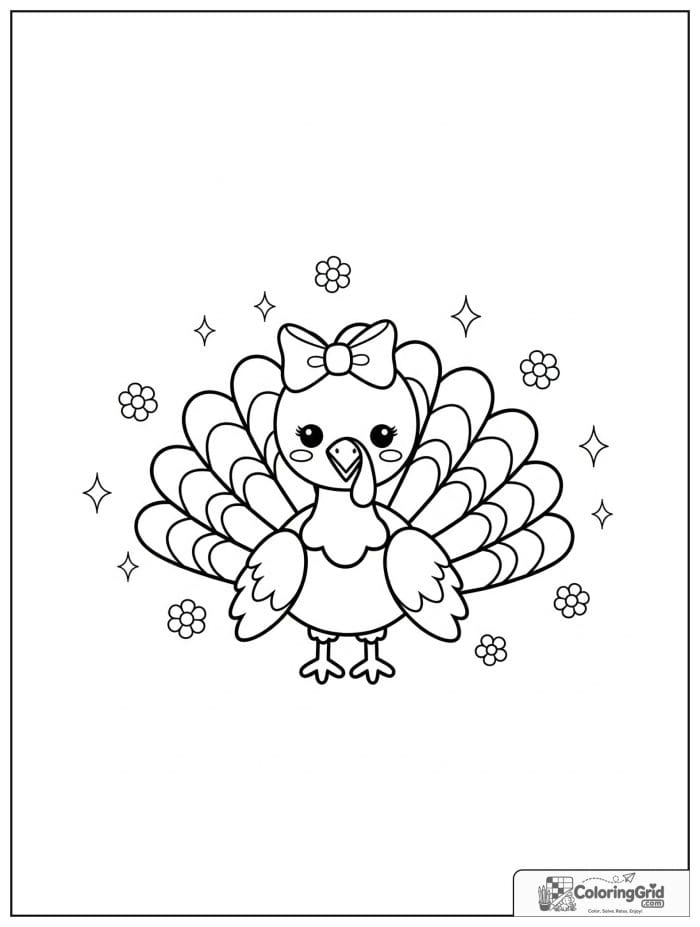
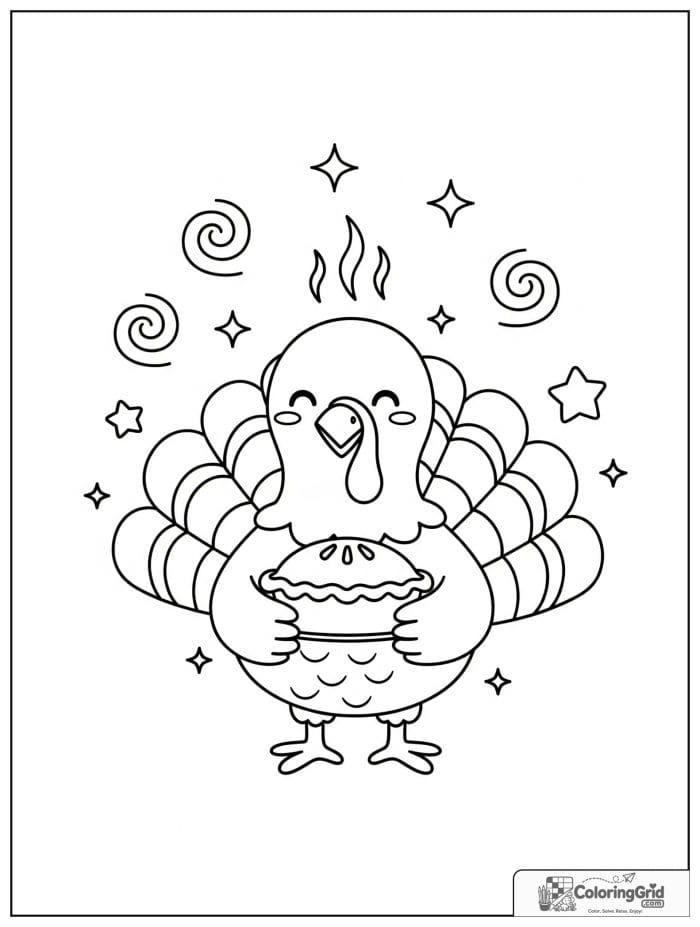
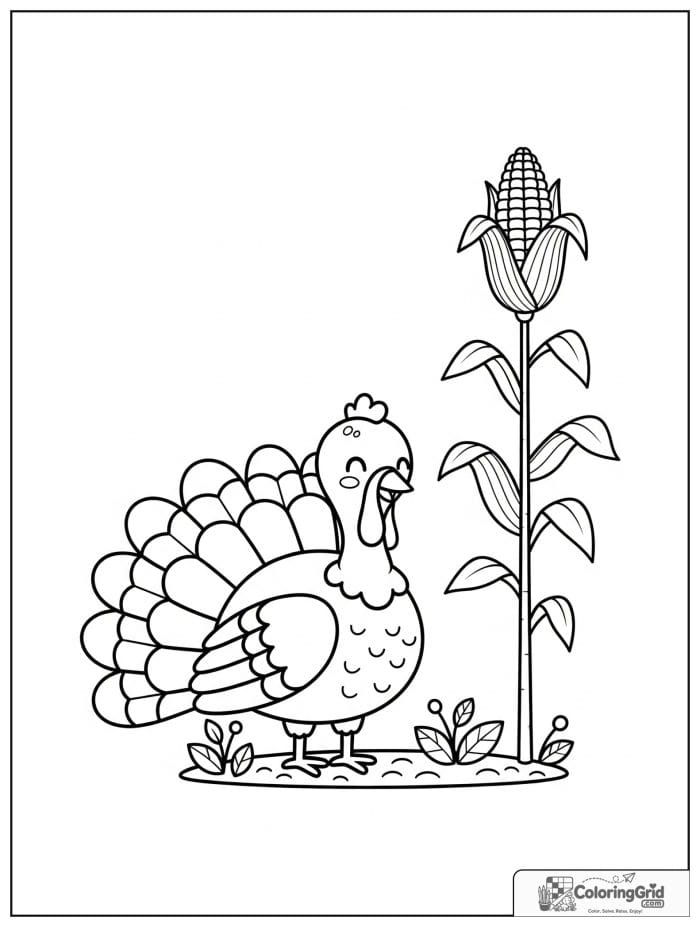
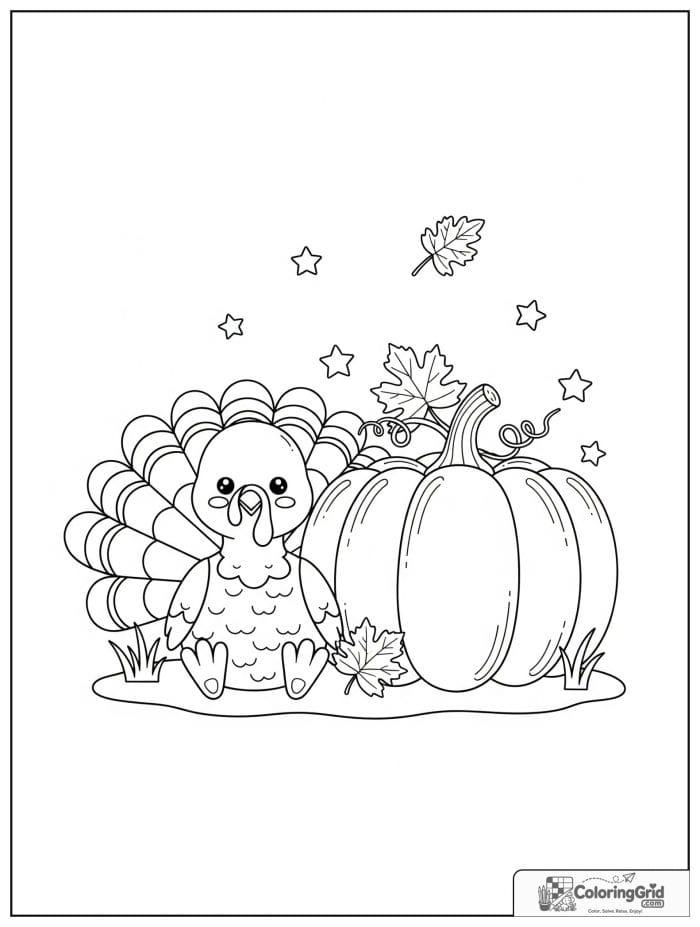
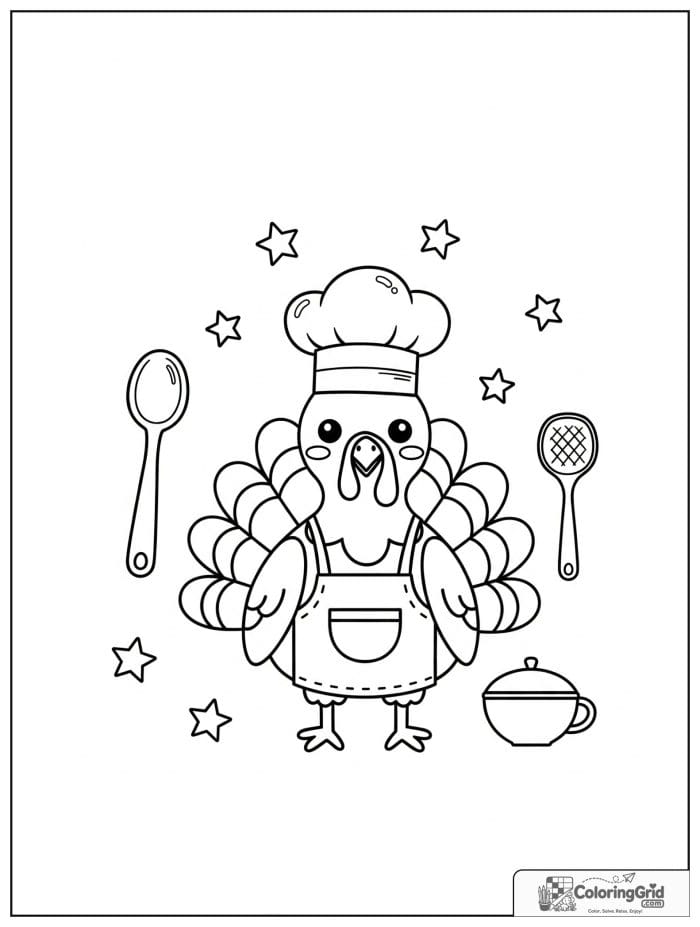
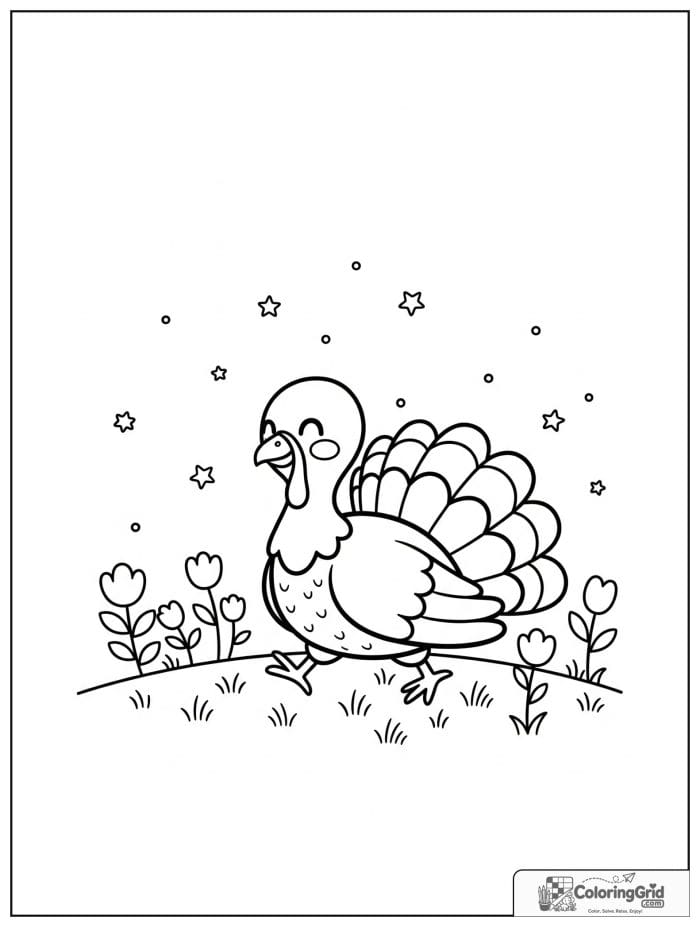
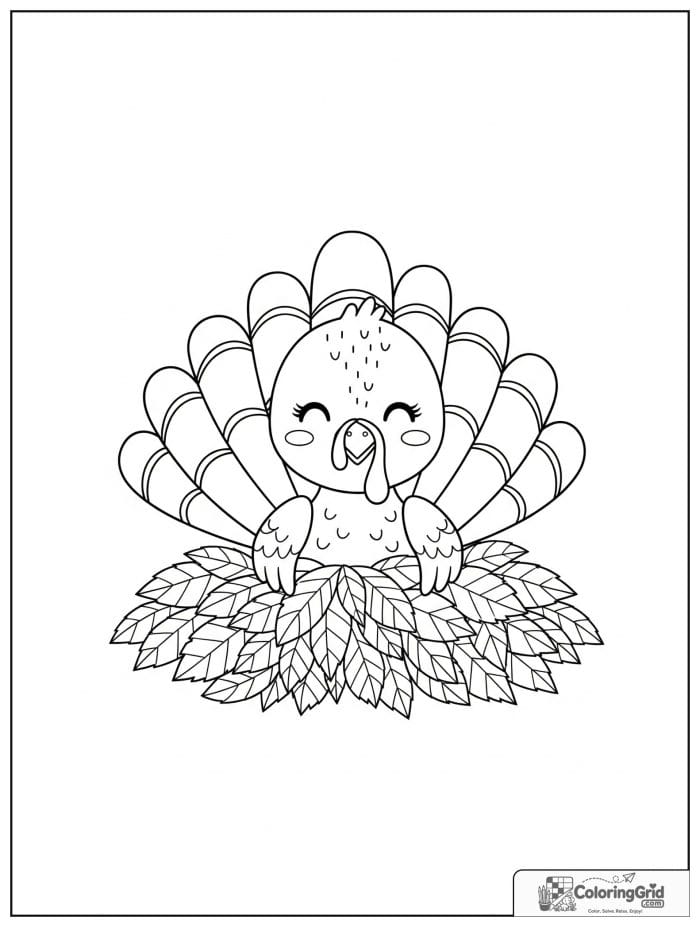
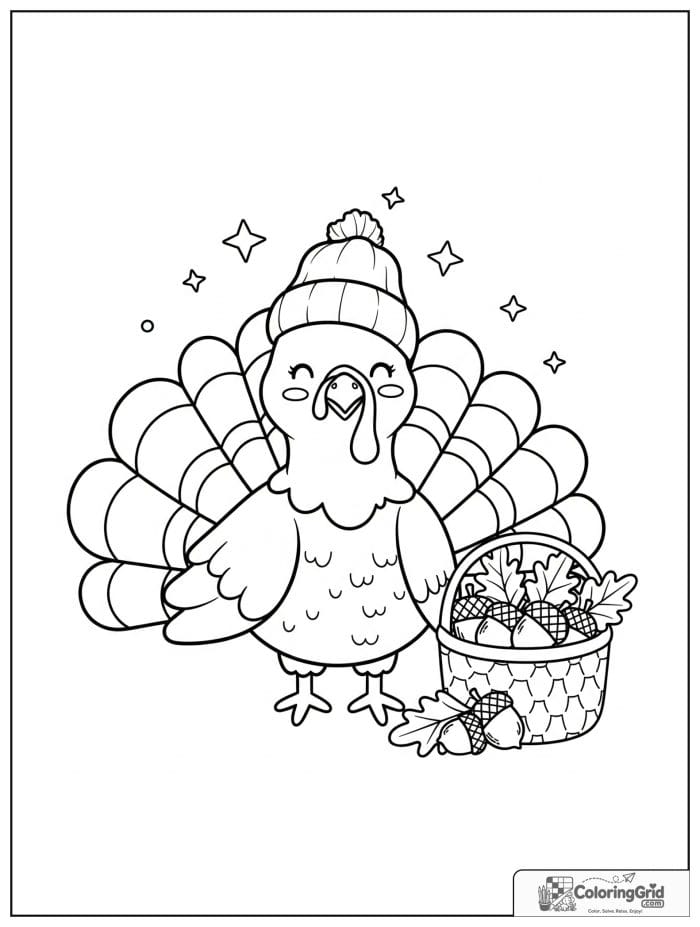
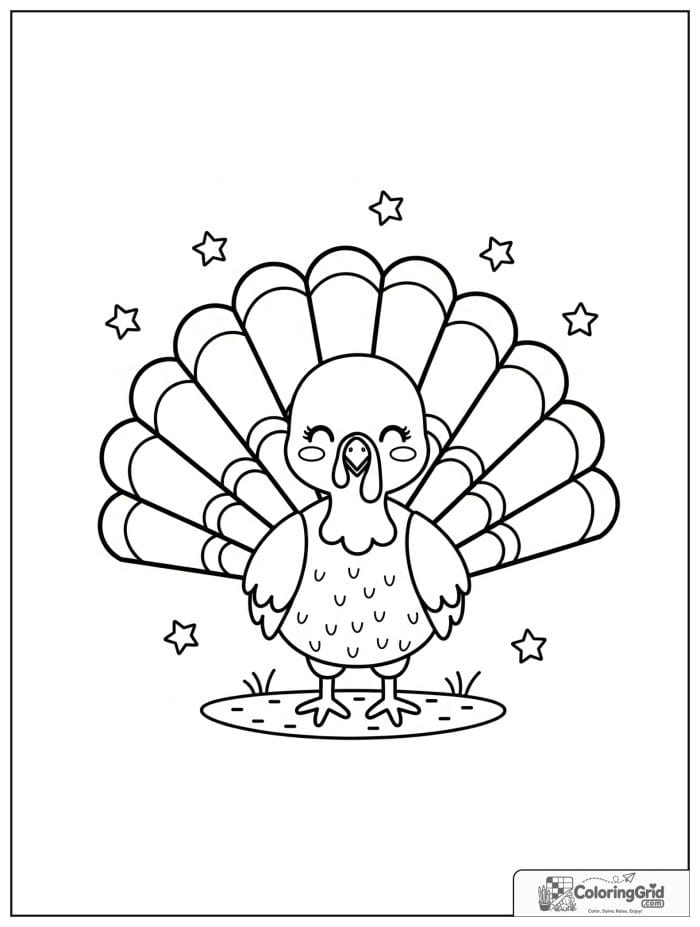
Choose by feather detail and scene
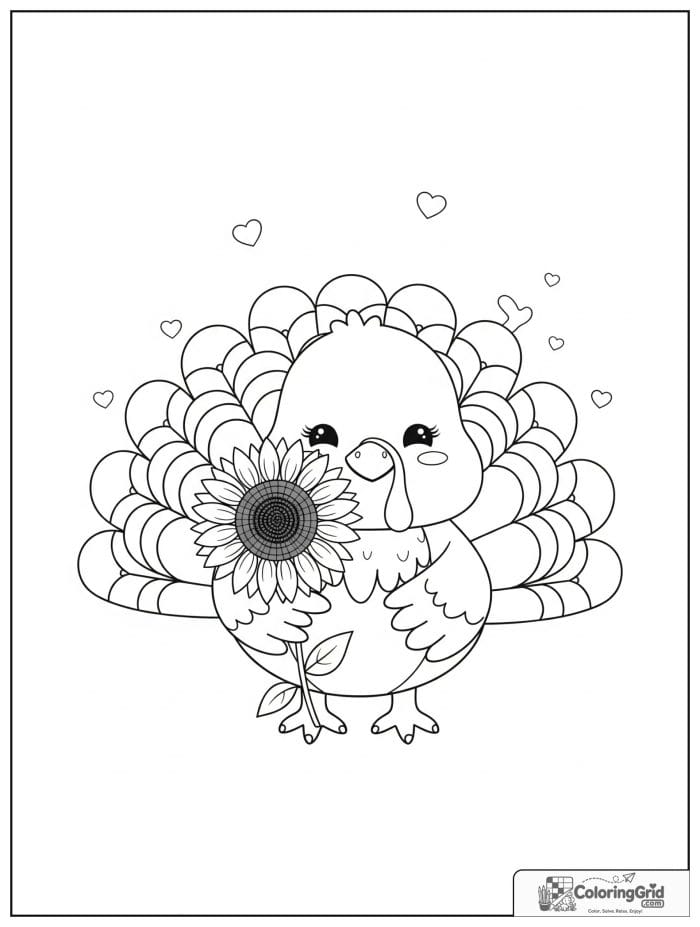
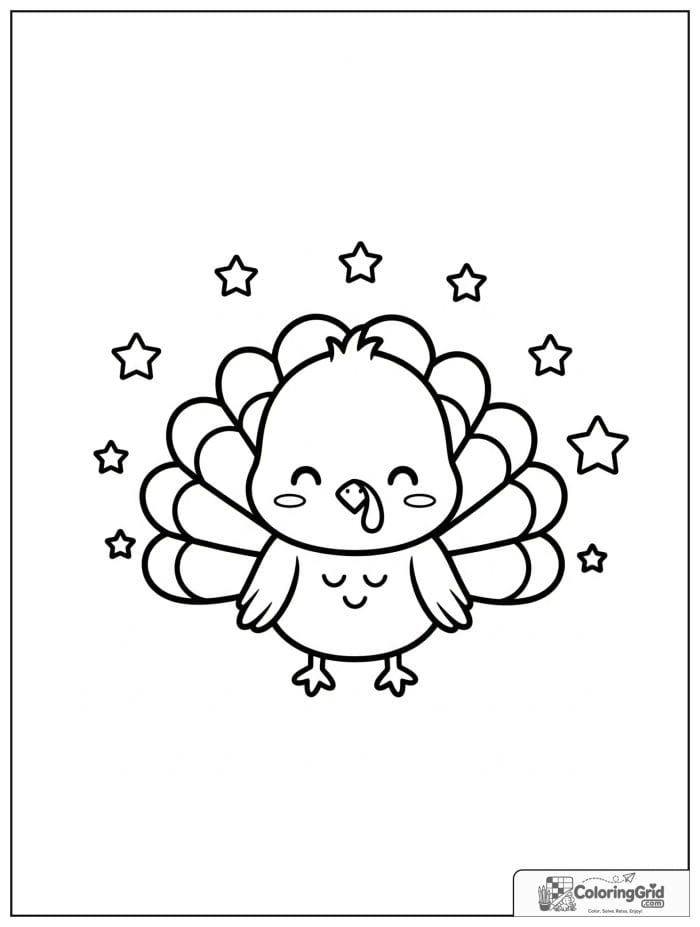
Large character designs: the baby turkey, bow-wearing turkey and turkey beside a pumpkin have a single main character with relatively open spaces. These are useful when you want the subject to be easy to find and color first.
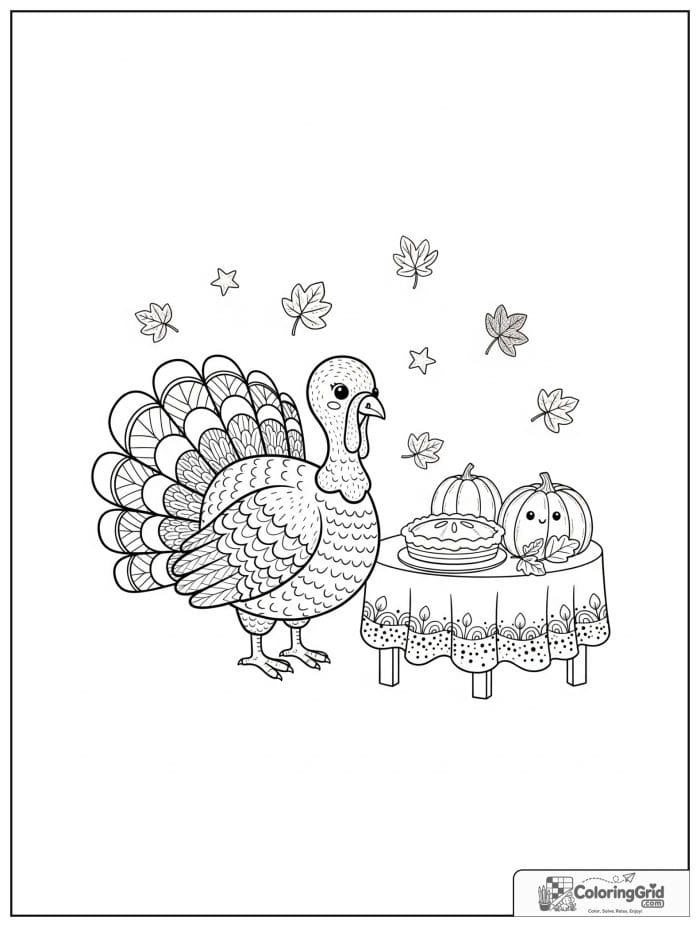
Story scenes: the gallery includes a turkey reading, carrying a pie, standing near a barn, cooking and meeting woodland animals. Choose one when you want to add a short spoken or written story after coloring.
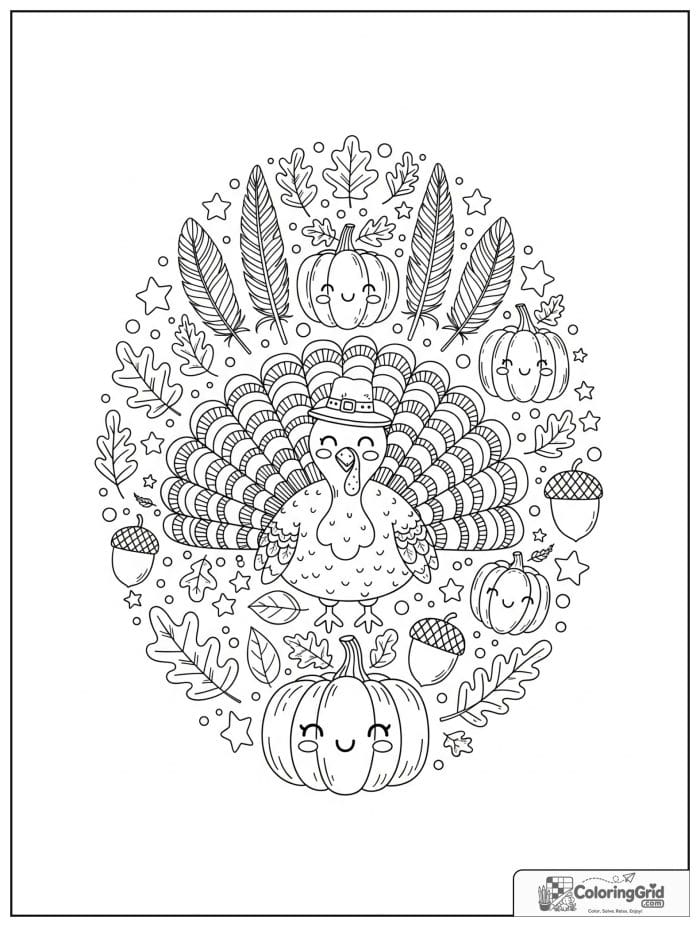
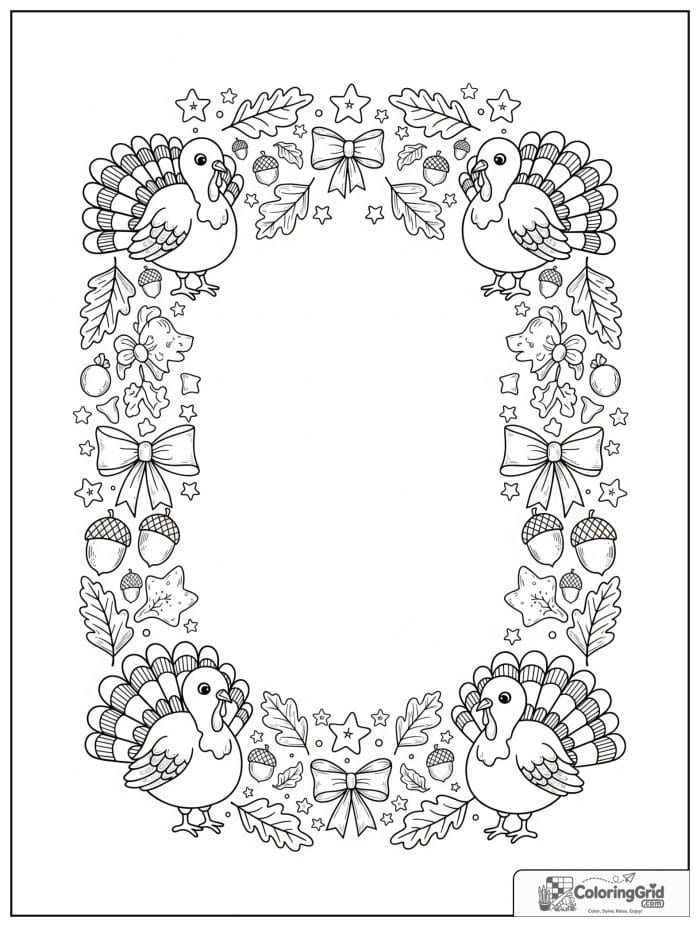
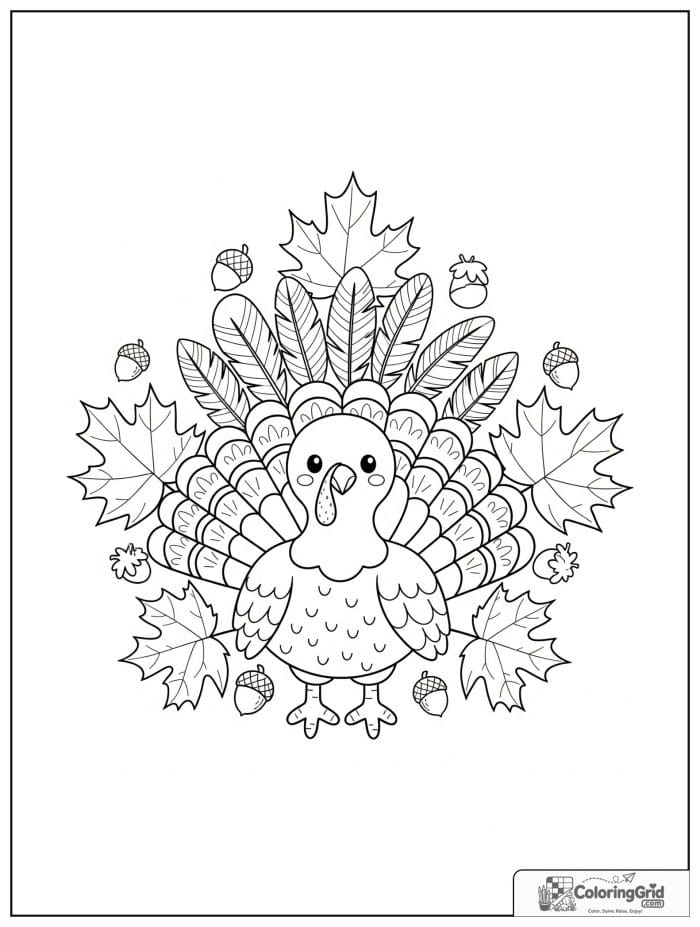
Decorative pages: the grand opening design combines a turkey with feathers, leaves, pumpkins and acorns. Wreath, heart and circular-frame designs also repeat small shapes. Use fewer colors in these pages so the central turkey remains visible.
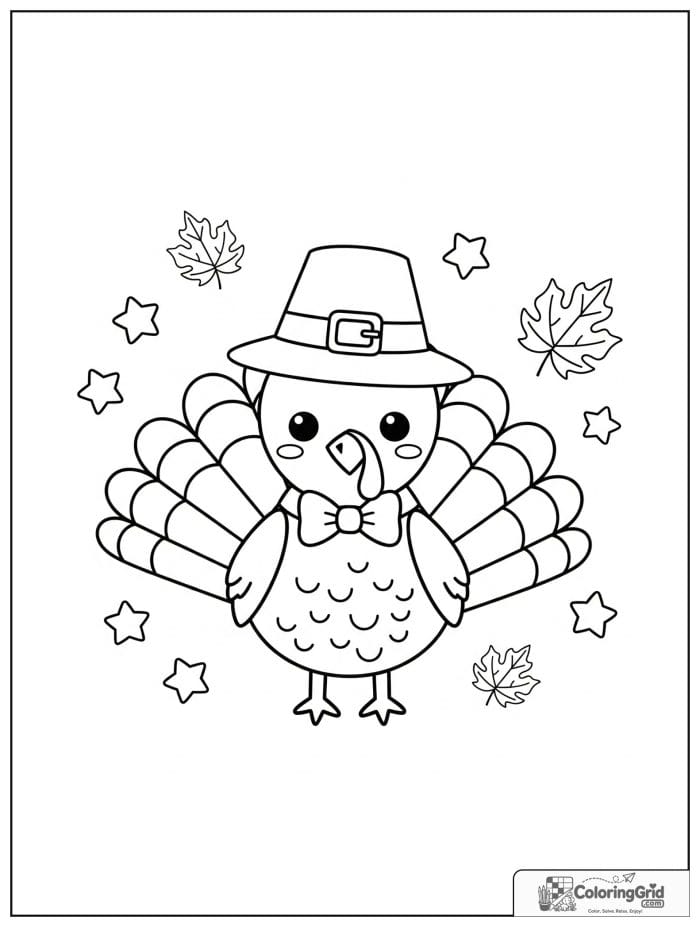
Holiday costumes: one sheet shows a turkey in a pilgrim-style hat. Treat it as a playful modern illustration, not as evidence about the clothing or history of Indigenous peoples or early colonial communities.
Plan the feather fan before filling it
Choose three or four colors and decide on a repeat, such as red-gold-brown. Start at the center feather and work outward, checking the sequence as you go. Another option is symmetry: use the same color on feathers equally far from the center.
Keep the body and feather fan distinct. A light brown or tan body can sit against stronger tail colors, while a darker outline or small shadow separates the wings. Patterns can be added to alternate feathers on a simple sheet, but detailed feathers already have enough visual structure.
Use the scene for a factual observation activity
Separate what the drawing shows from what it imagines. A real turkey has a body, wings, legs and feathers; reading a book, baking or wearing a hat belongs to the illustration’s story. Make two columns on separate paper—“animal features” and “story details”—and place three observed items in each.
This activity helps children describe the picture without turning decorative scenes into wildlife facts. If a question about real wild turkeys comes up, use an authoritative nature source rather than the coloring page itself.
Three ways to use a finished turkey page
- Feather-pattern display: choose several simple turkey sheets and give each person a different three-color sequence. Label the sequence under the finished page.
- Scene caption: write one sentence describing what the illustrated turkey is doing. Keep the caption on a separate card so it does not cover the artwork.
- Fall-subject comparison: pair one turkey sheet with an autumn leaves page. List what appears in both pictures and what appears in only one.
For a broader November theme that includes food, family and other seasonal subjects, use the Thanksgiving coloring collection. Keep this page for turkey-centered designs rather than treating every fall picture as the same activity.
Check the border and print settings
Use portrait orientation and inspect the preview so feather tips and outer frames stay inside the printable area. Fit-to-page can help when a printer uses wide margins. Print a test copy before making a group set, especially for the dense opening design.