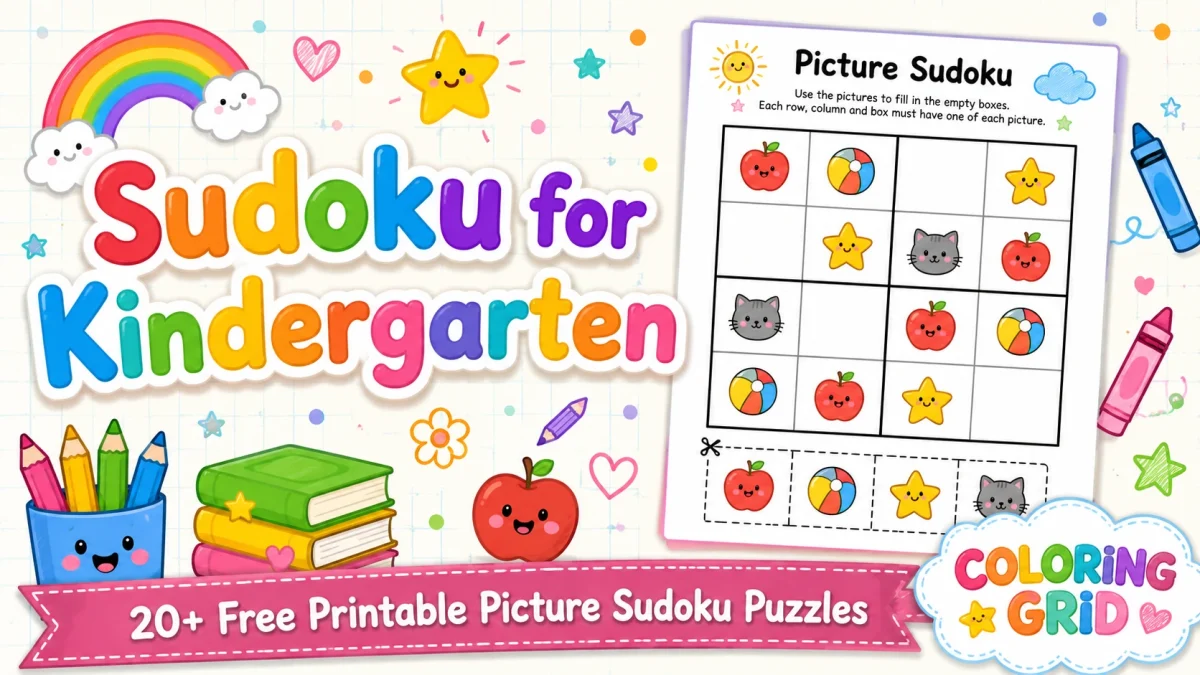
Sudoku for Kindergarten should feel simple, clear, and welcoming. At this age, many children are not ready for full number sudoku, but they can begin with picture sudoku puzzles that use shapes, objects, or small images instead of long number grids. These printable pages give young learners a gentle way to practice matching, noticing patterns, and finishing a row without repeating the same picture. Parents and teachers can use them for quiet table work, early finisher folders, homeschool warm-ups, or calm screen-free practice. These pages are free for personal or classroom activities, with answer keys included below for easy checking.
What's Inside
- Free Printable Sudoku for Kindergarten Picture Puzzles
- Jump to Sudoku Puzzle Free PDF & JPG Downloads
- Picture Sudoku Answers and Solutions
- Jump to Sudoku Answer Keys Free PDF & JPG Downloads
- What Is Kindergarten Picture Sudoku?
- Why Sudoku for Kindergarten Works for Young Children
- How to Teach Shape Sudoku Kids Can Understand
- Age and Readiness Guide
- Printing Tips for Little Hands
- Simple Ways to Use Picture Sudoku at Home or School
- Conclusion
Free Printable Sudoku for Kindergarten Picture Puzzles
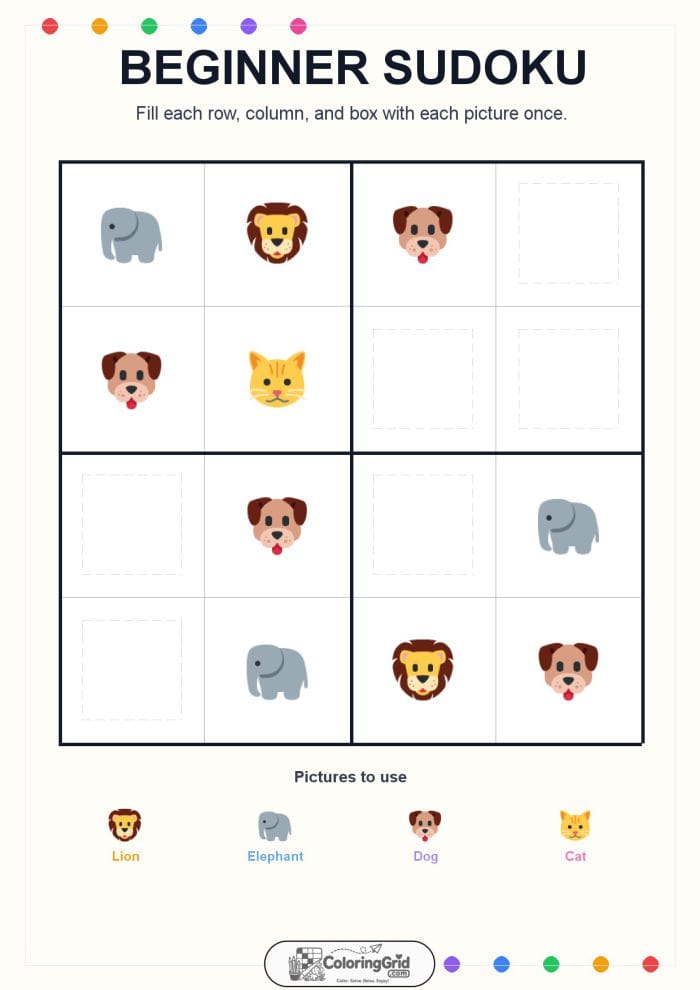
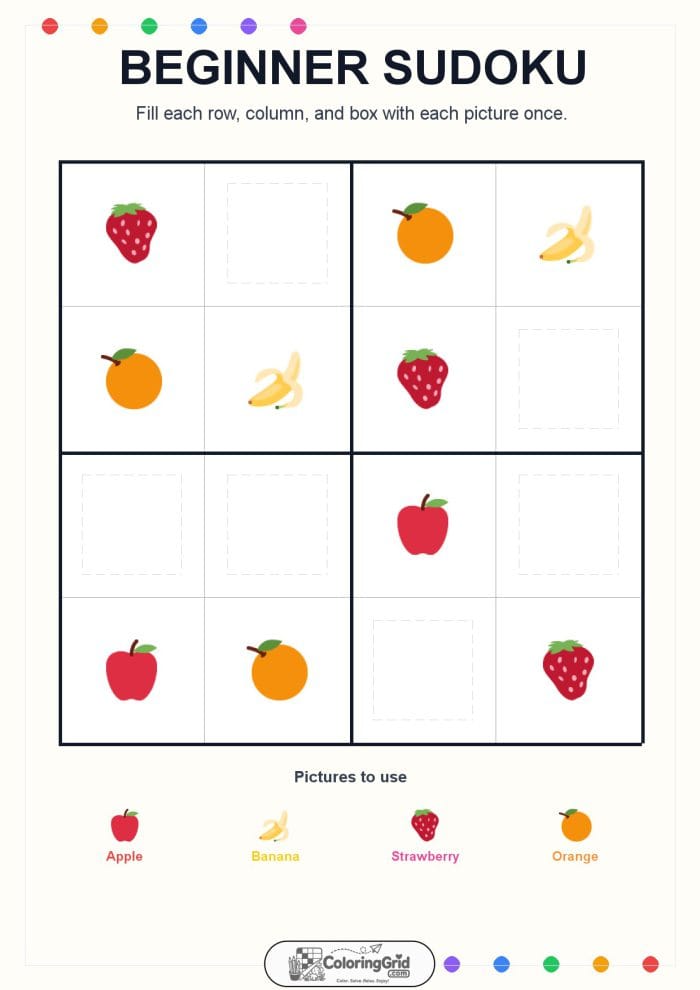
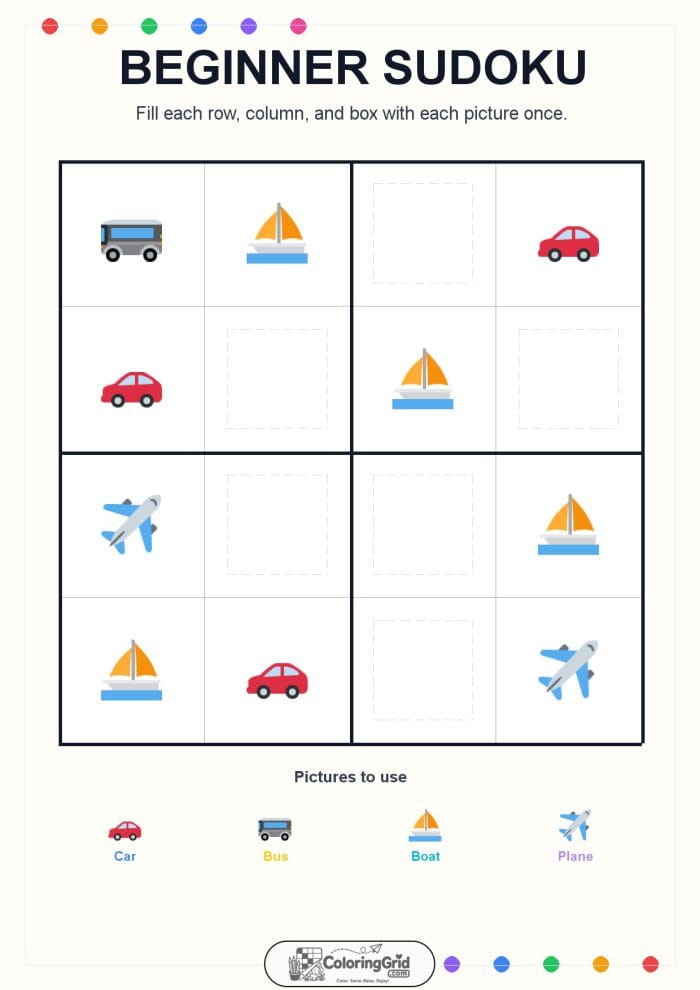
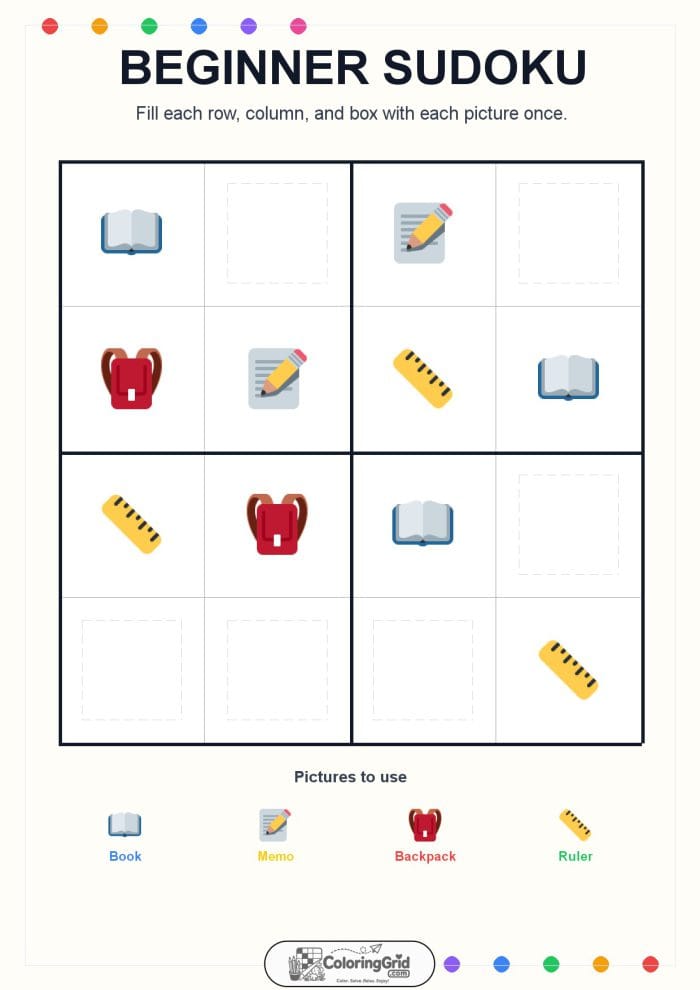
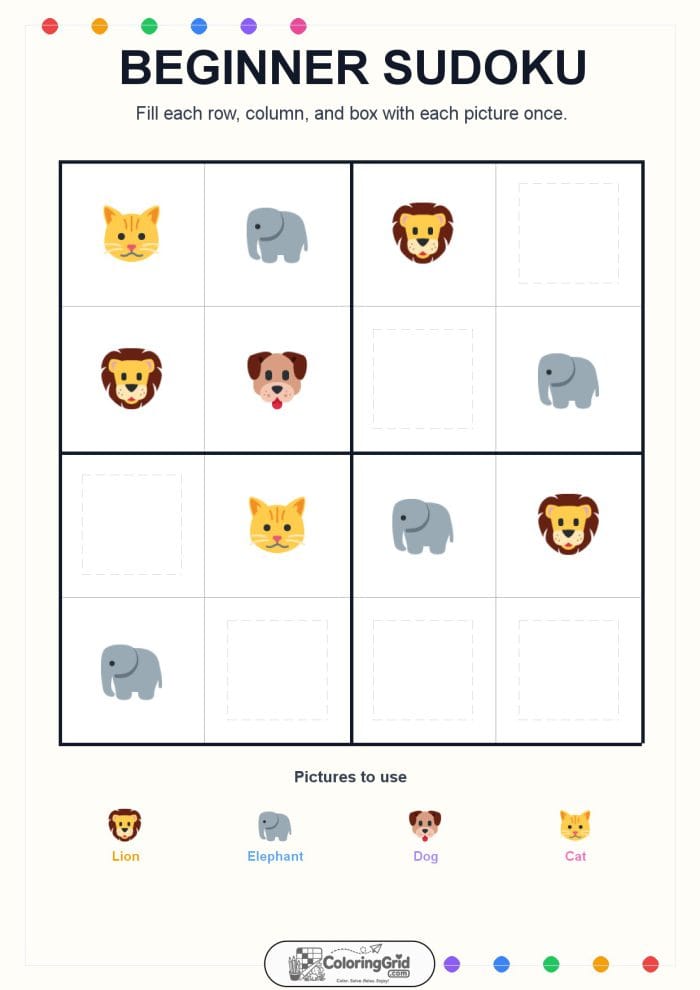
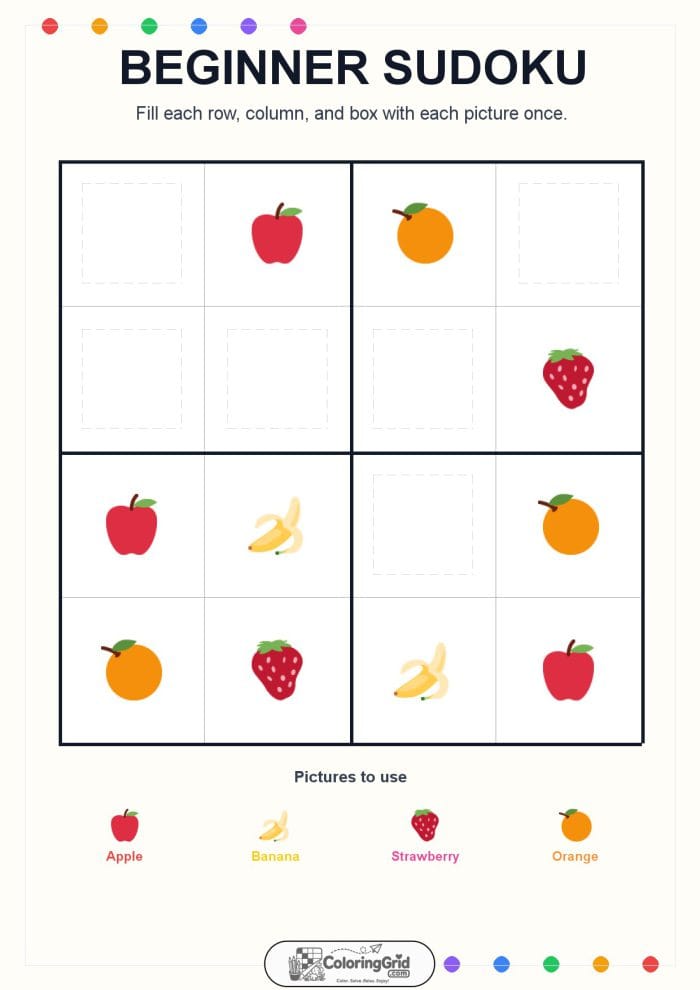
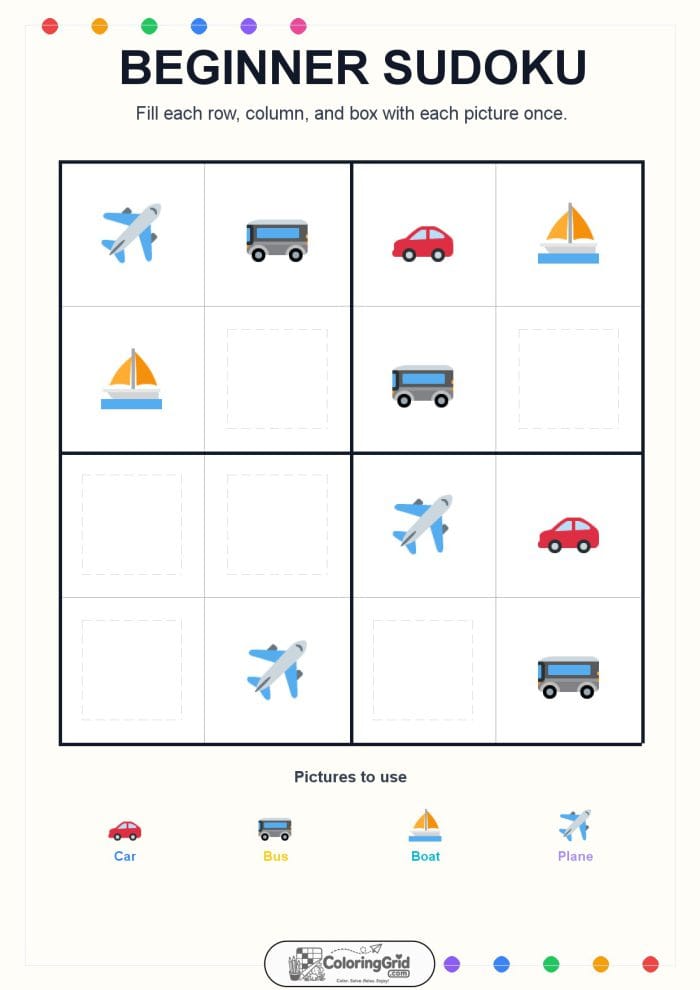
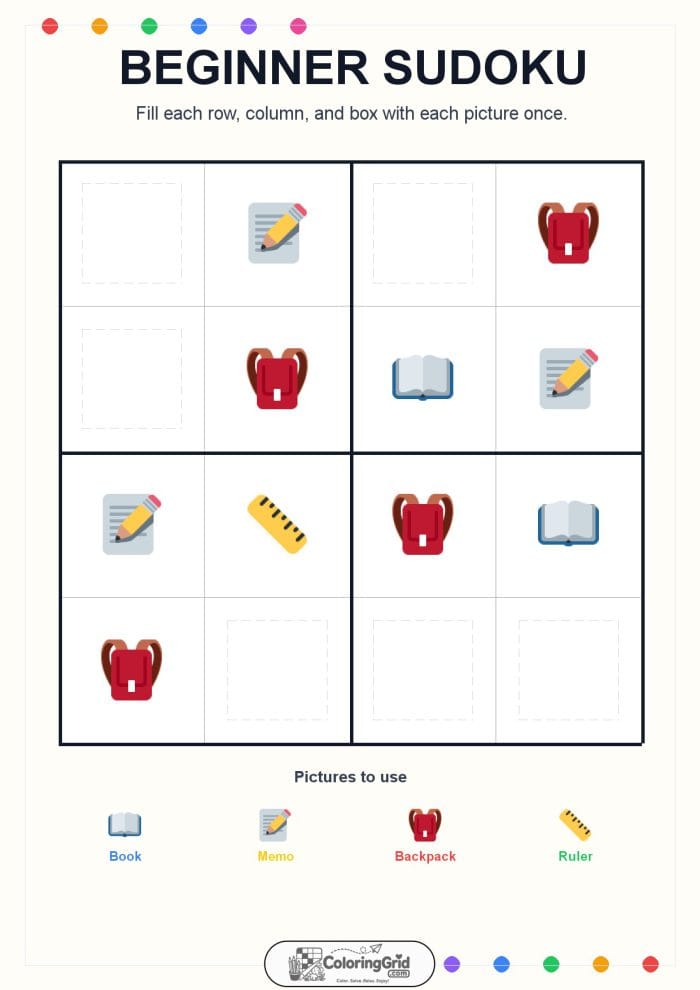
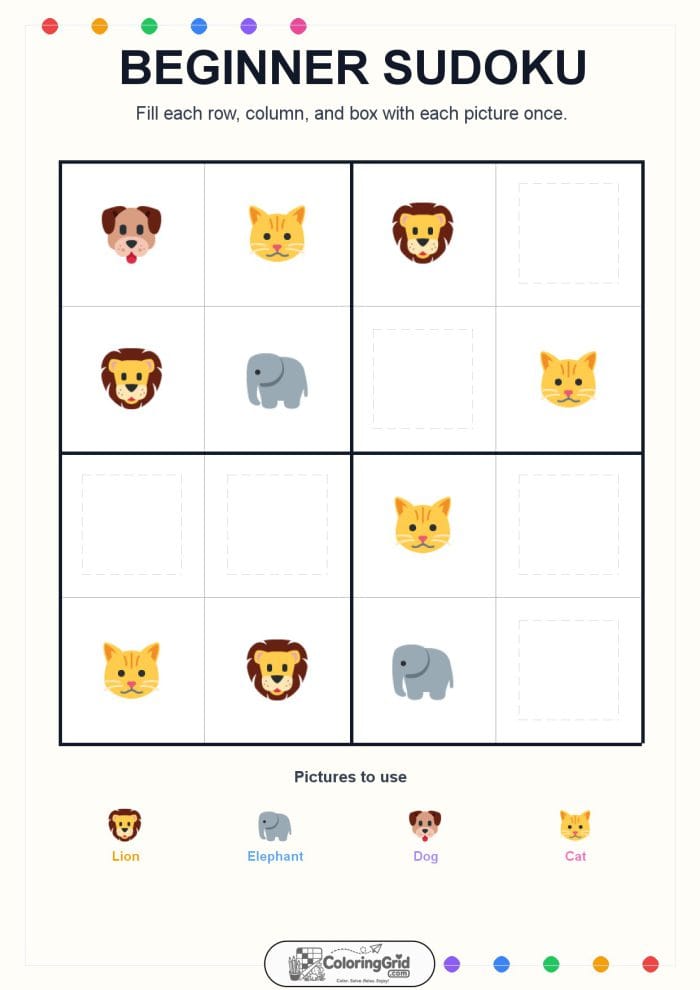
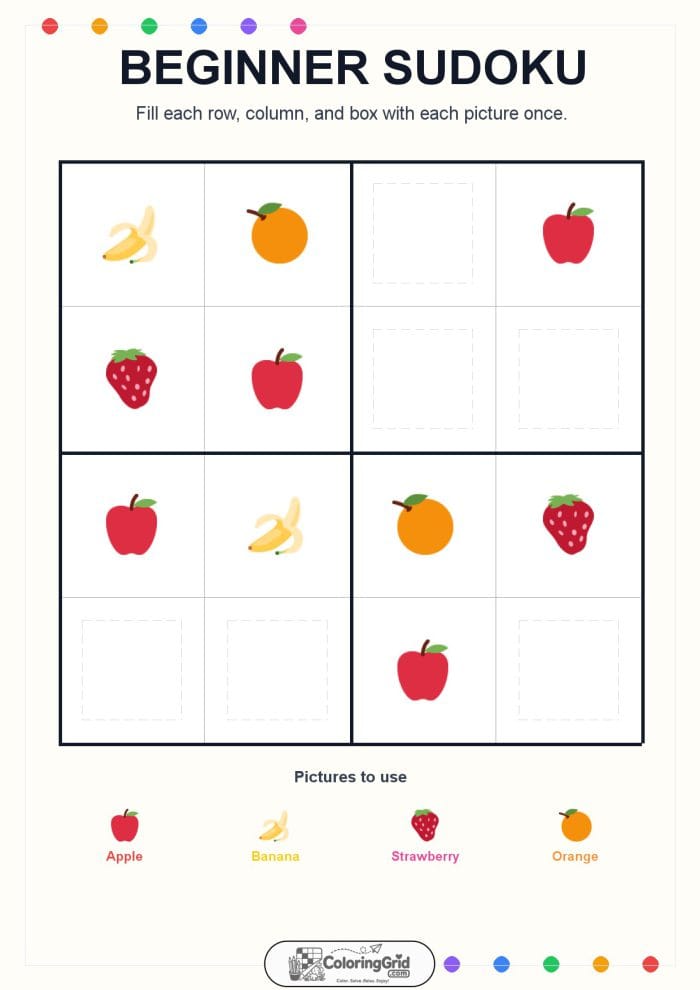
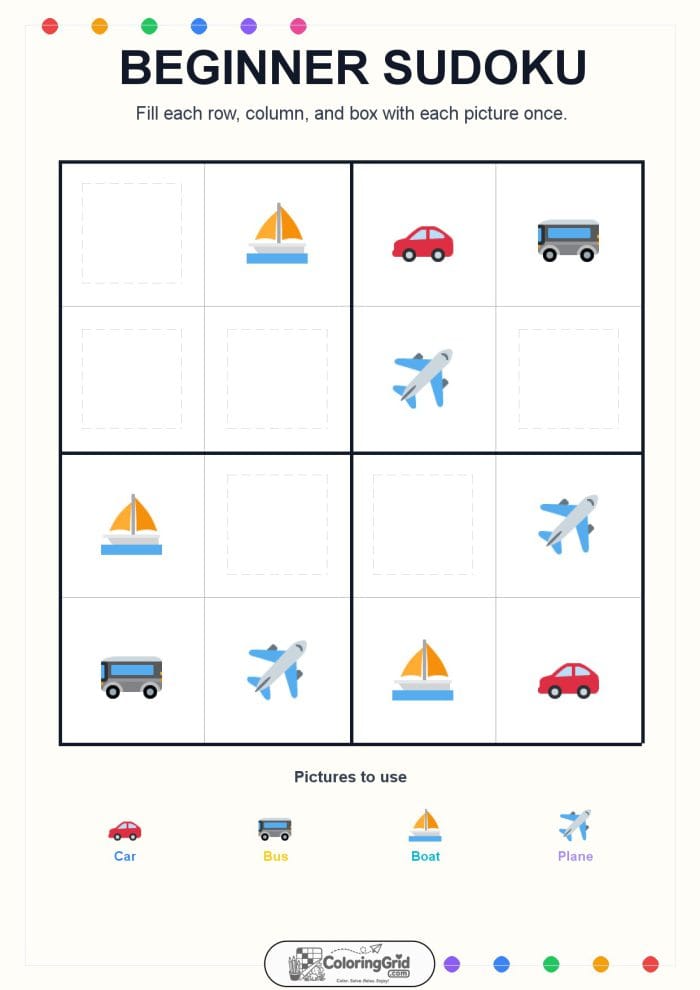
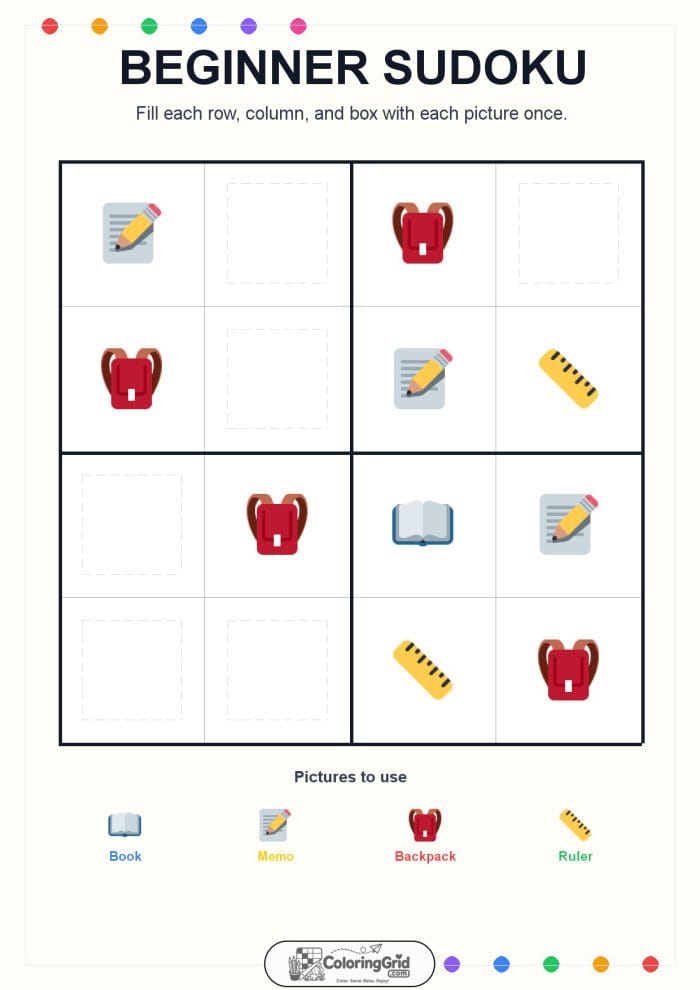
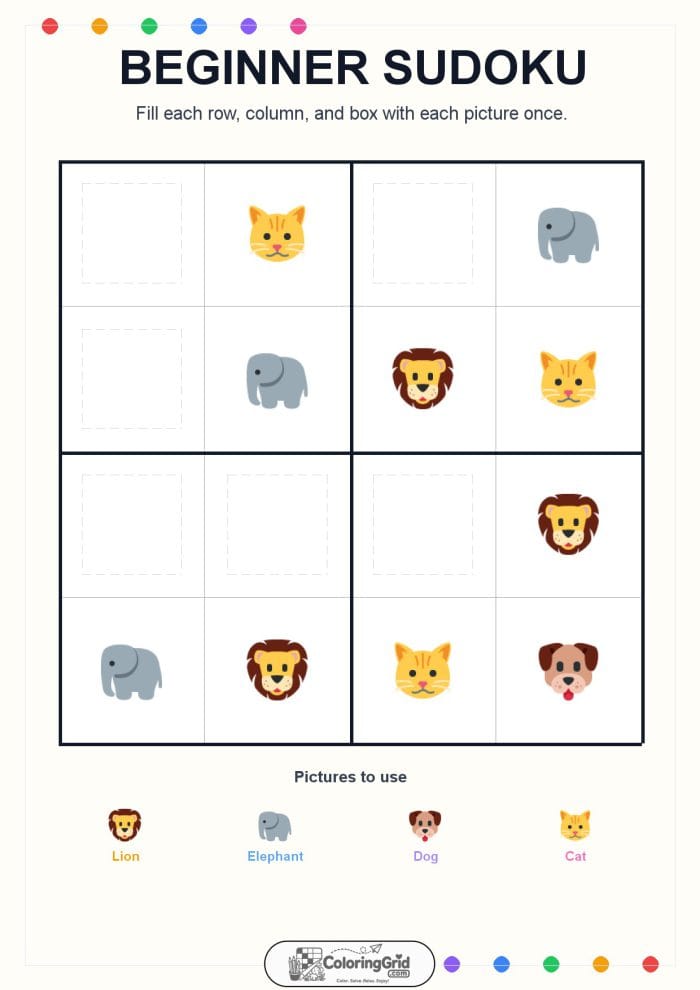
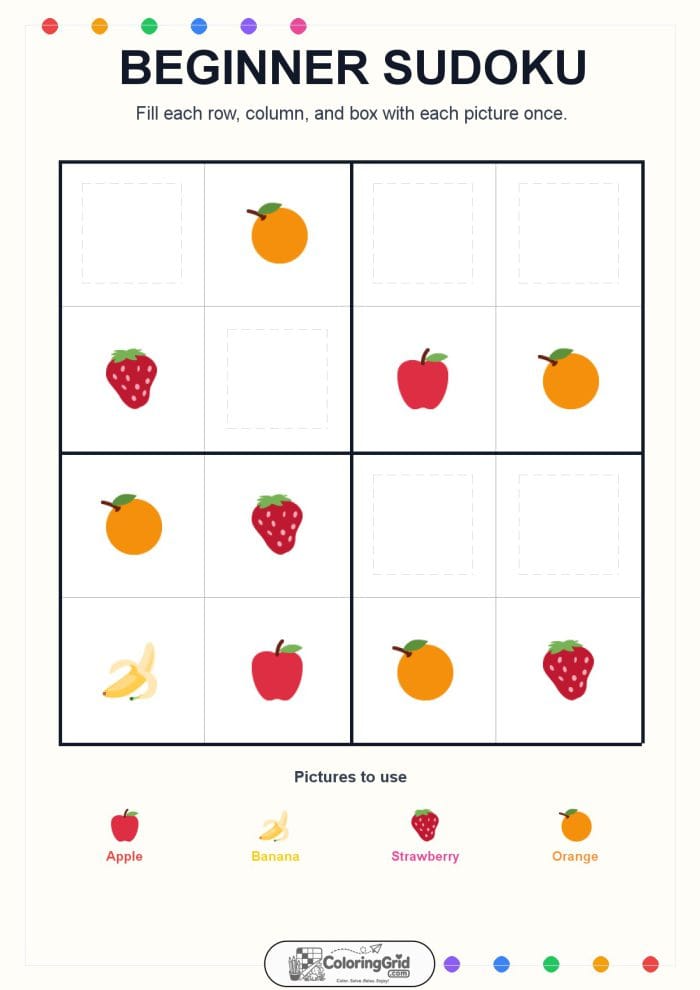
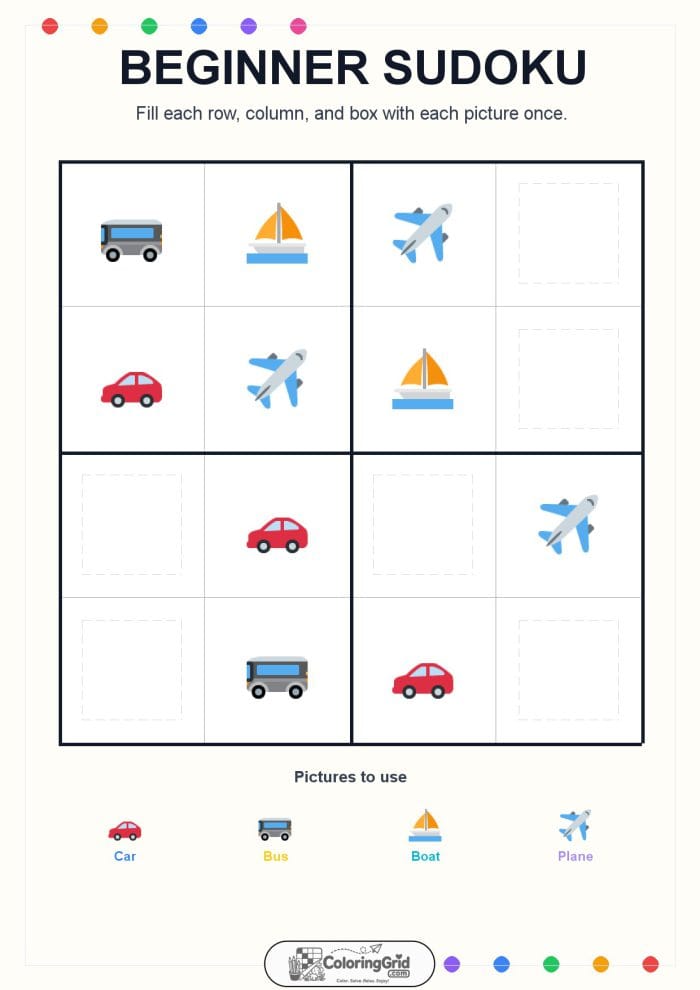
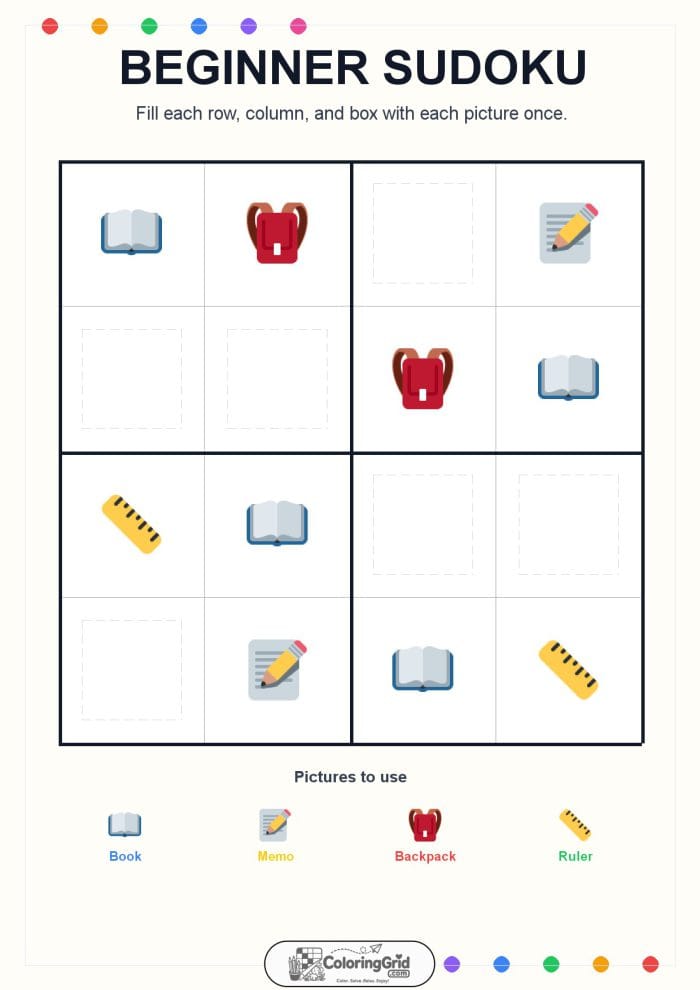
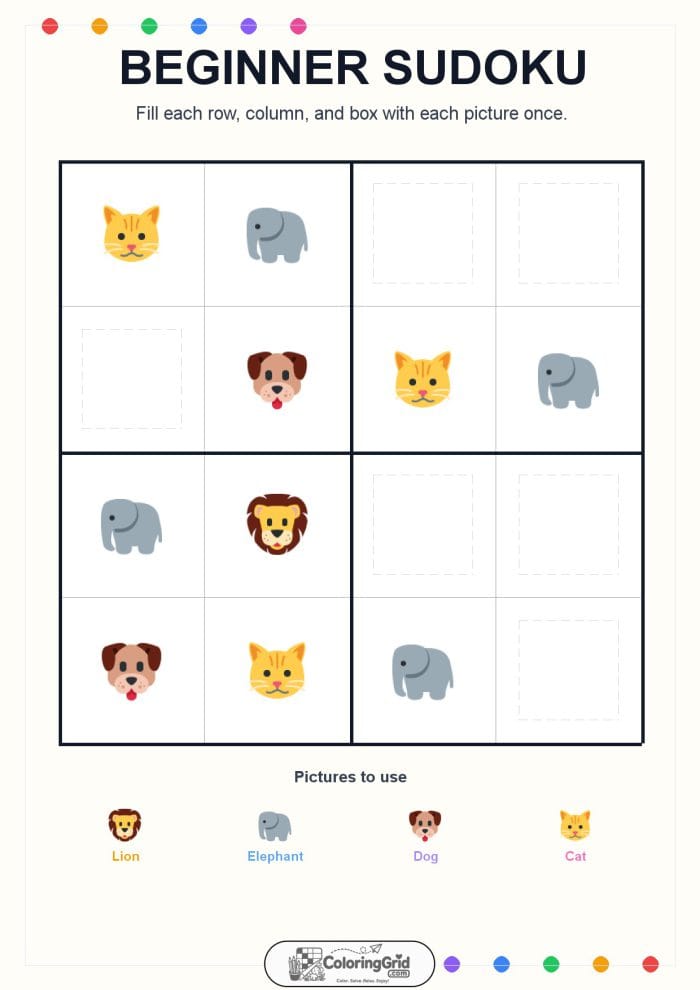
This is where the Sudoku for Kindergarten puzzle pages belong. Add the picture sudoku printable grids below, along with the PDF and JPG download links, so parents and teachers can print one puzzle quickly or save a few for the week.
While you're here, explore these fun related sudoku puzzles too!
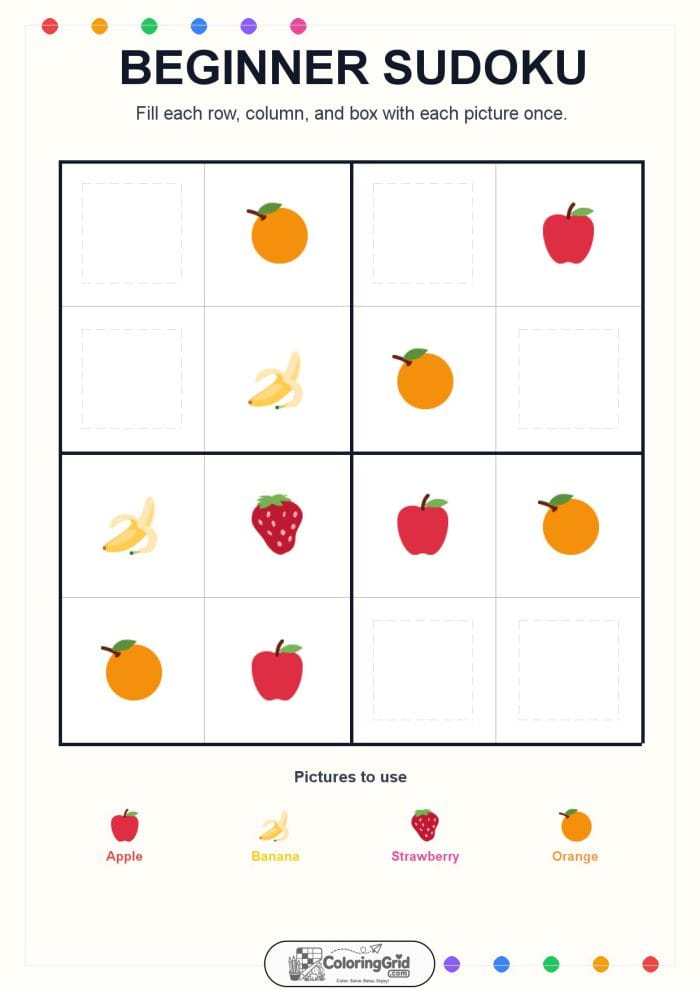
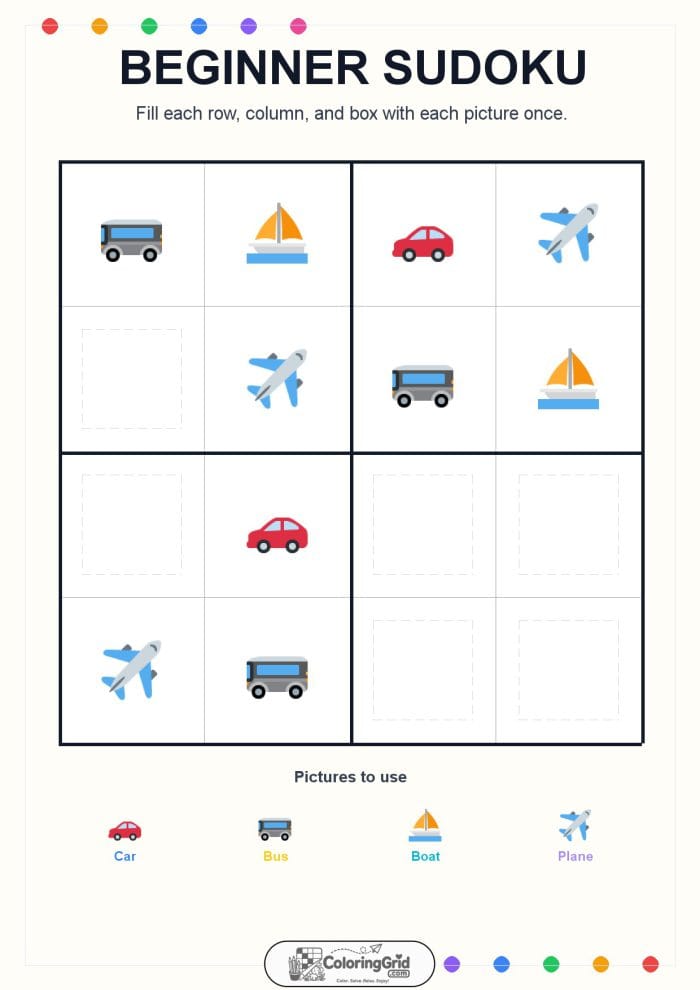
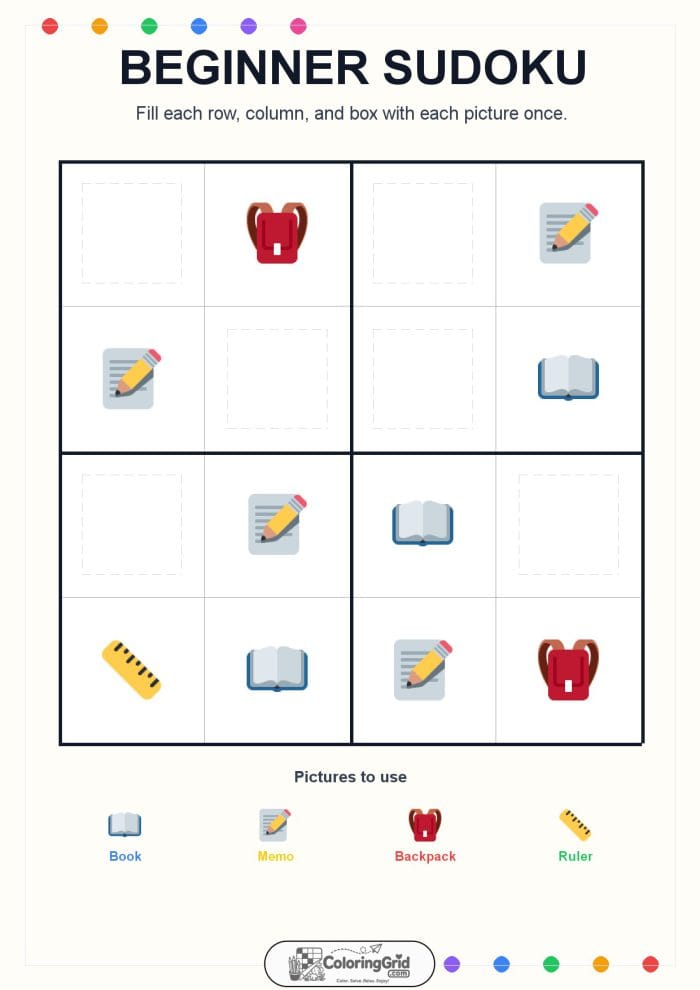
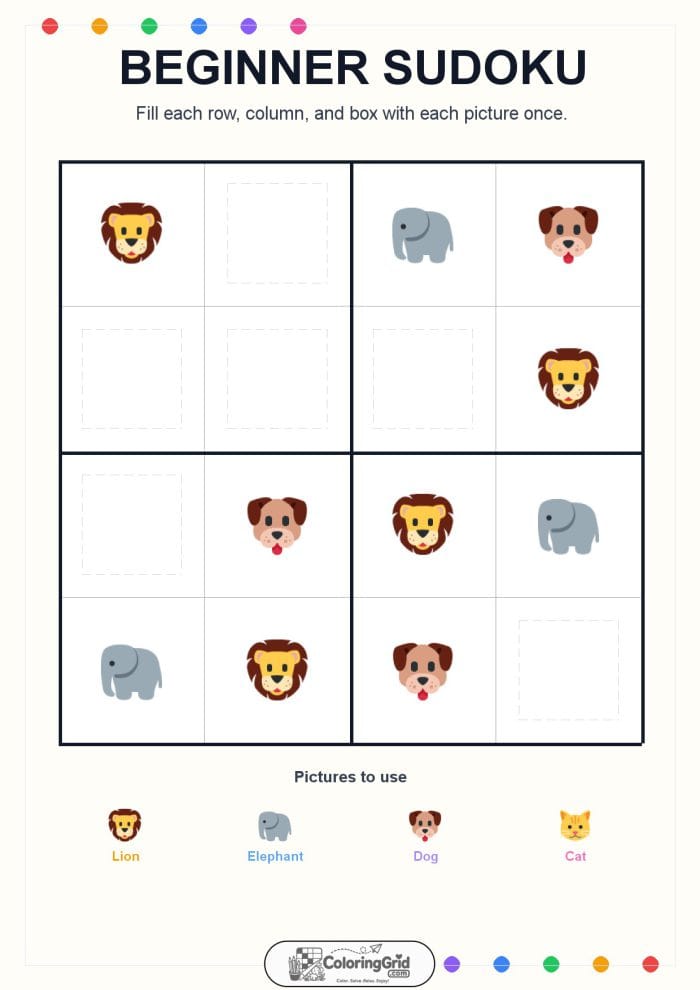
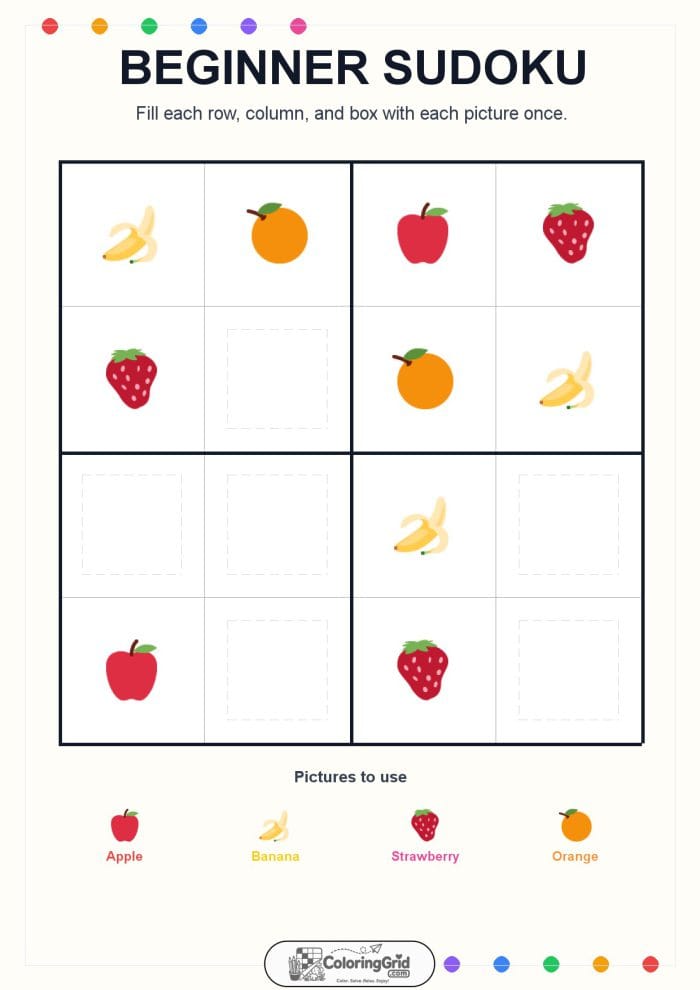
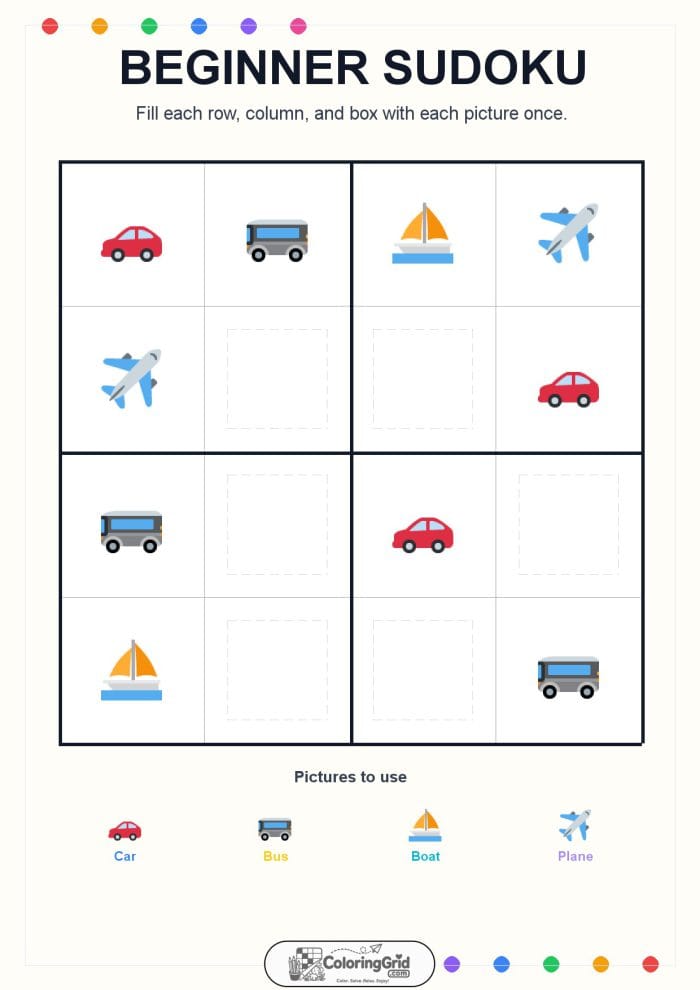
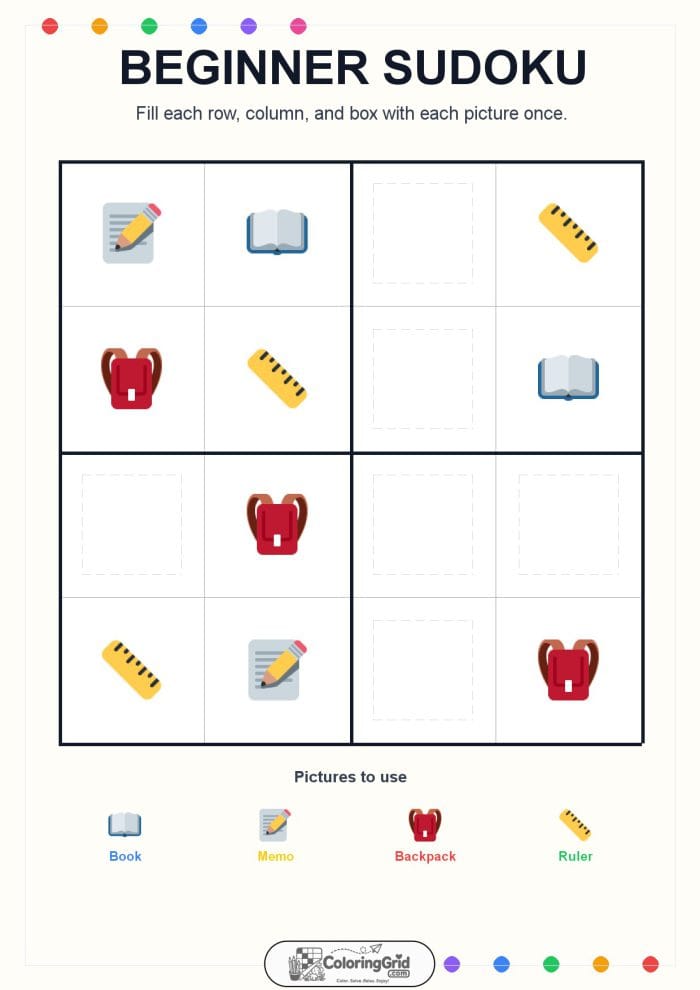
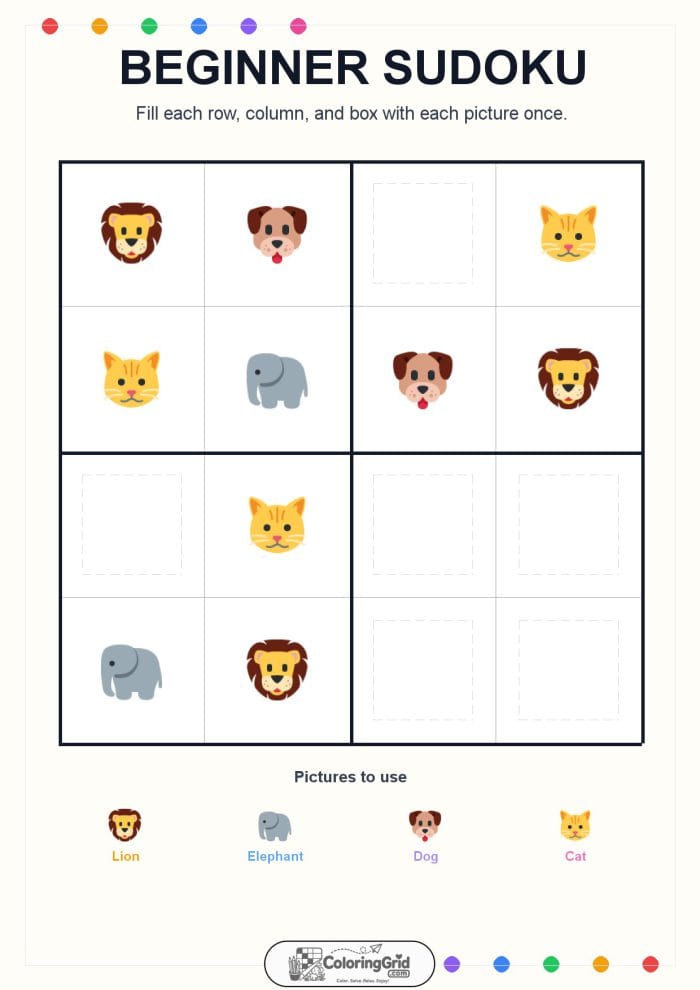
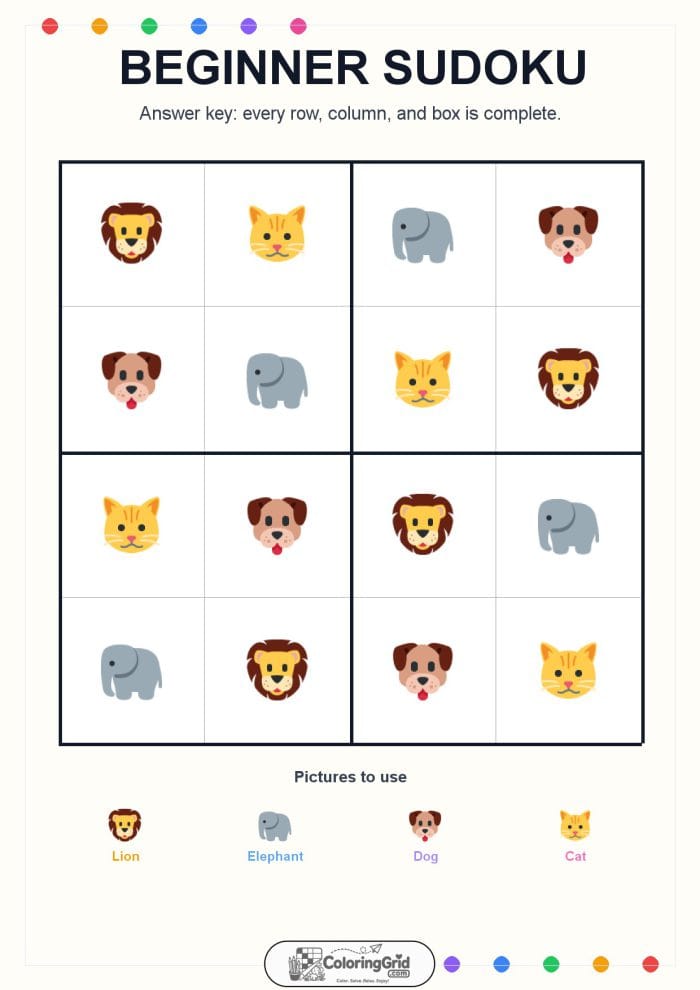
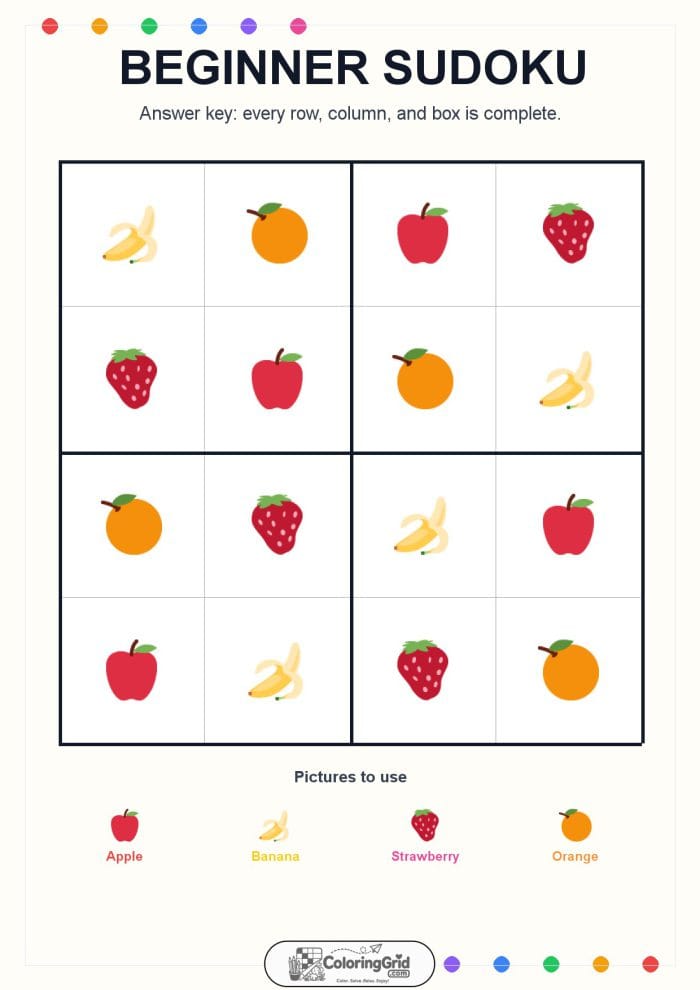
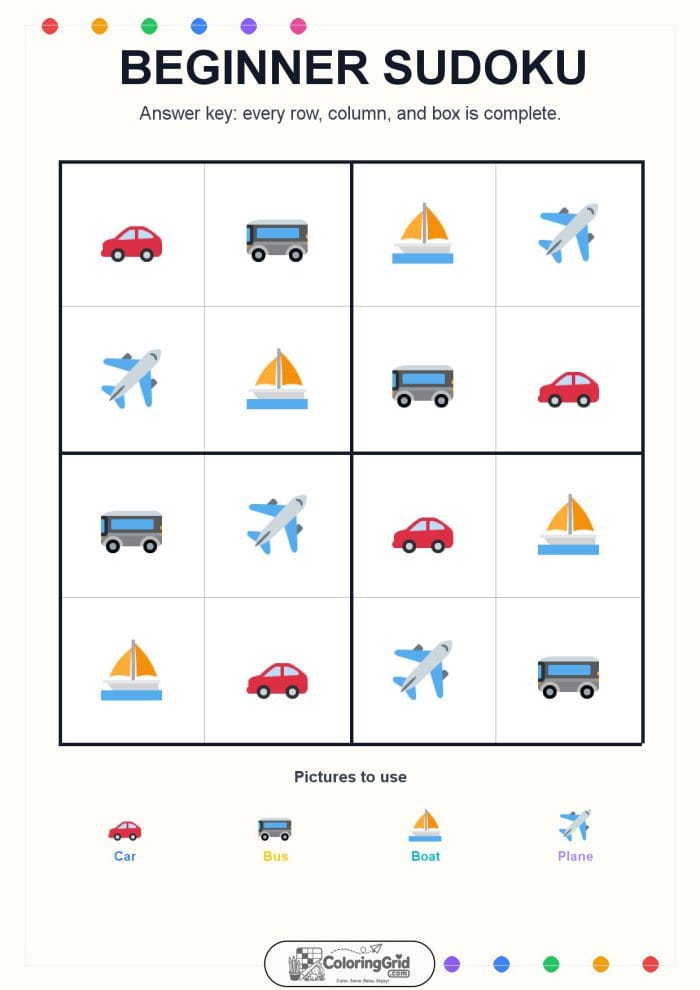
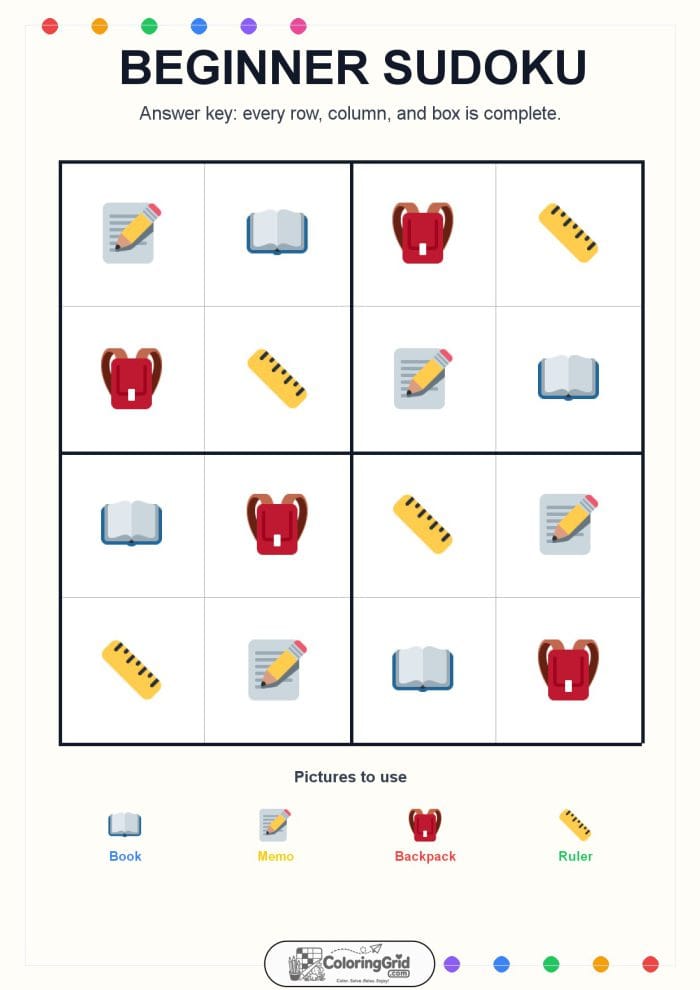
Picture Sudoku Answers and Solutions
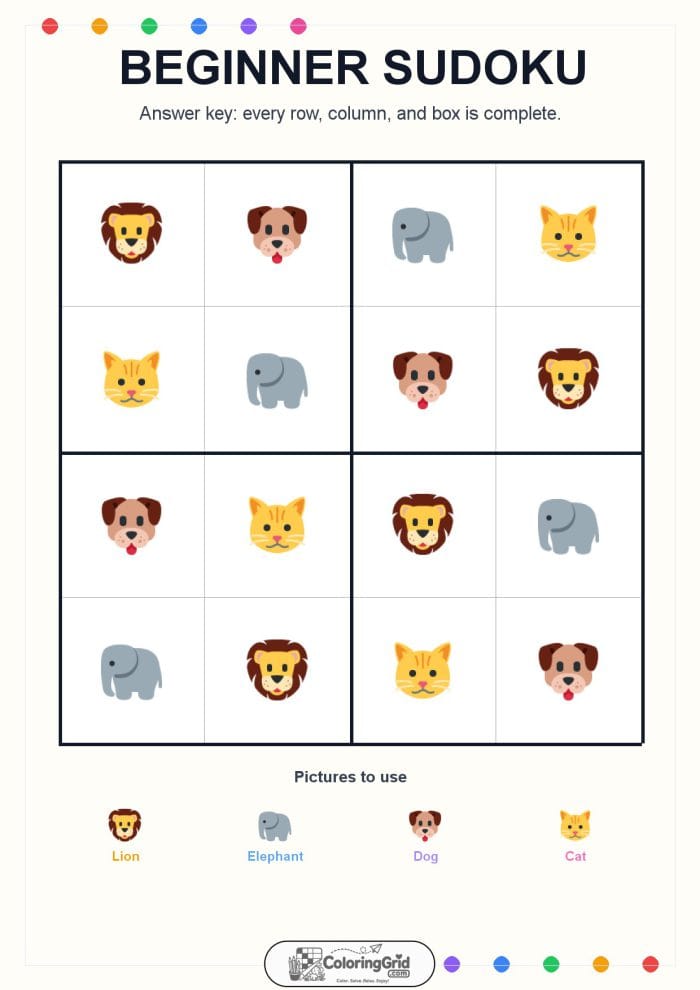
Solution pages are especially helpful with young children. Add the matching Sudoku for Kindergarten answer keys below so grown-ups can check the picture grids quickly and give gentle hints when a child gets stuck.
While you're here, explore these fun related sudoku puzzles too!
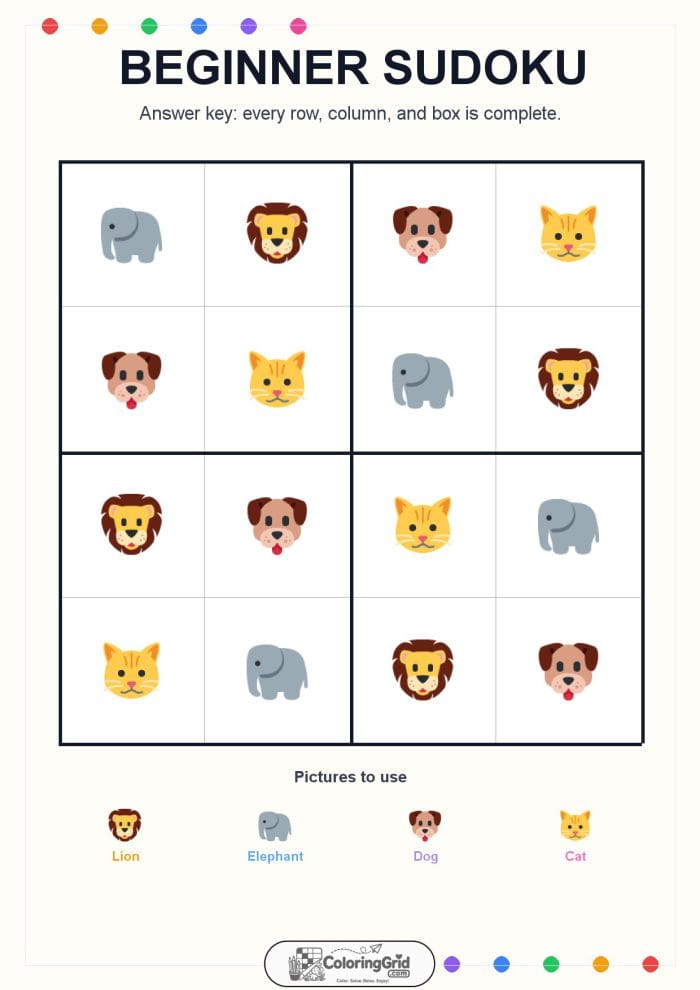
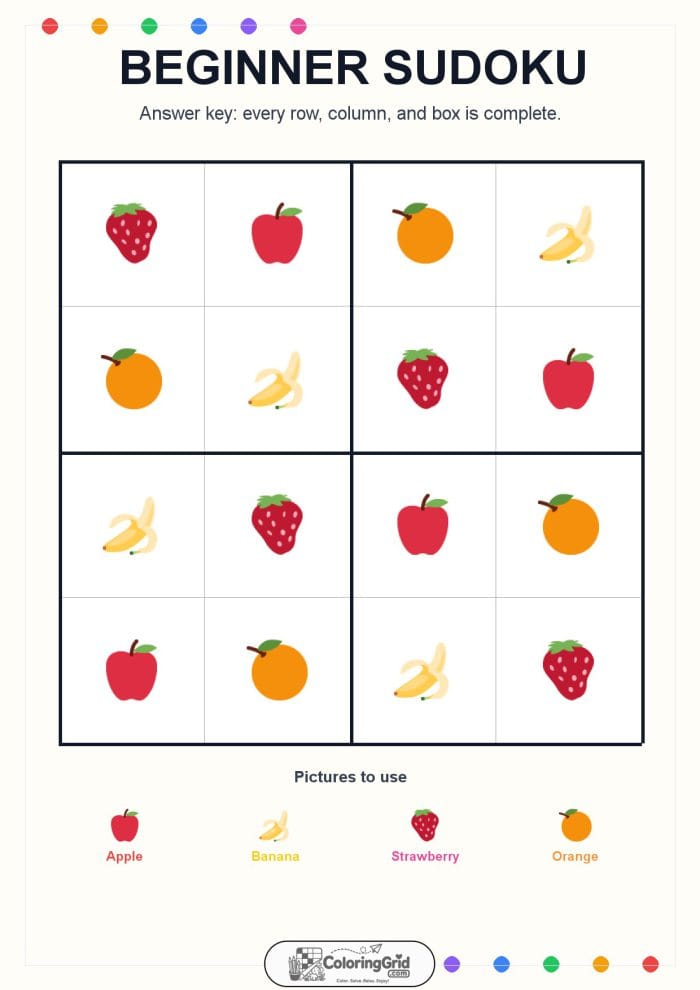
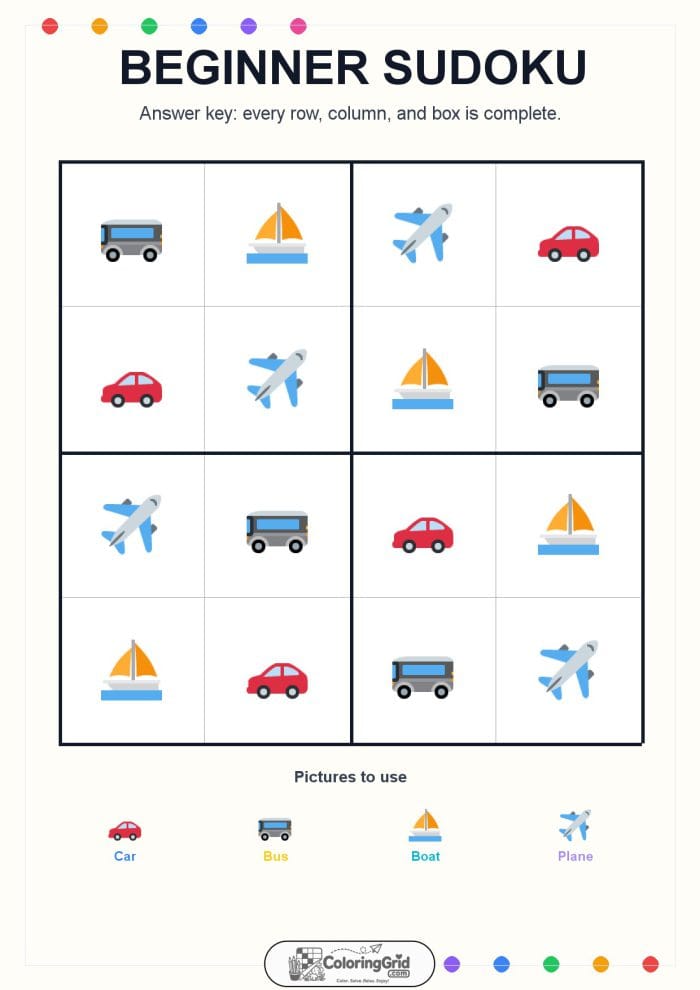
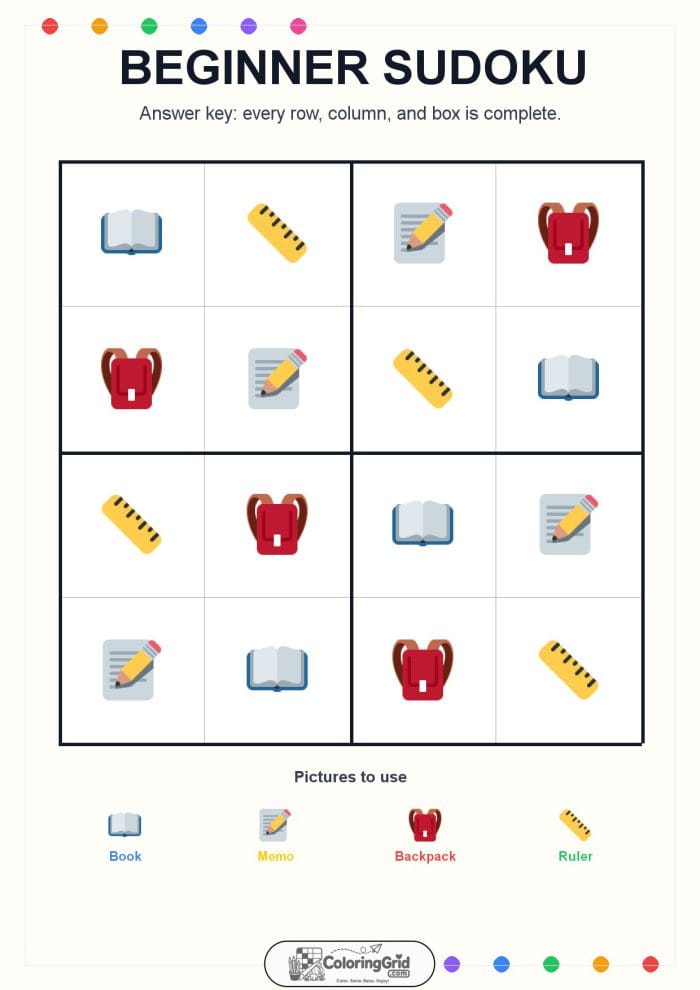
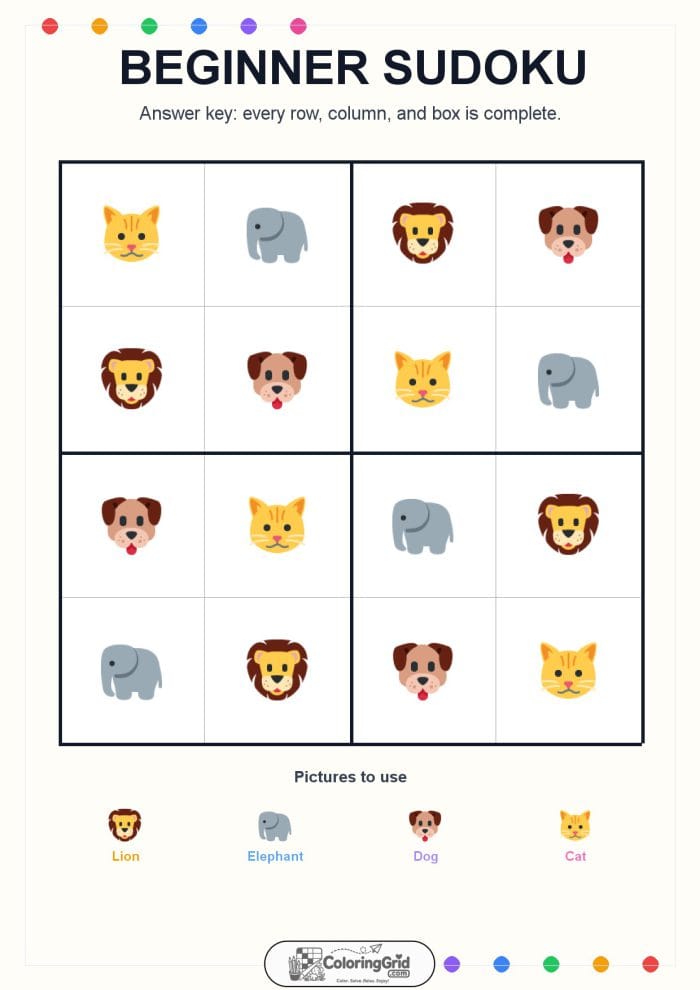
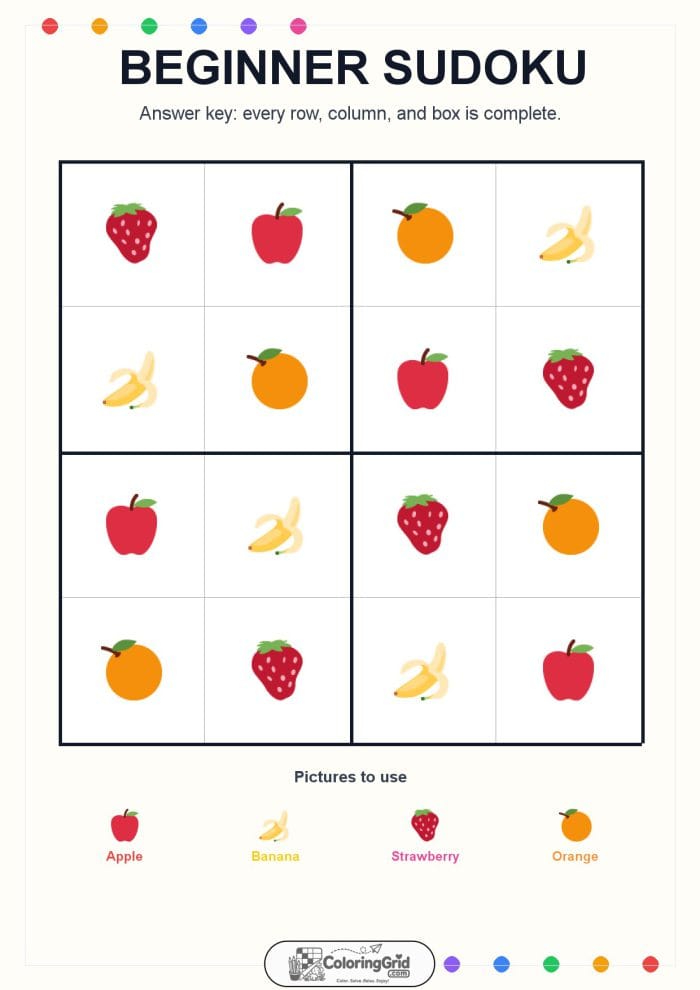
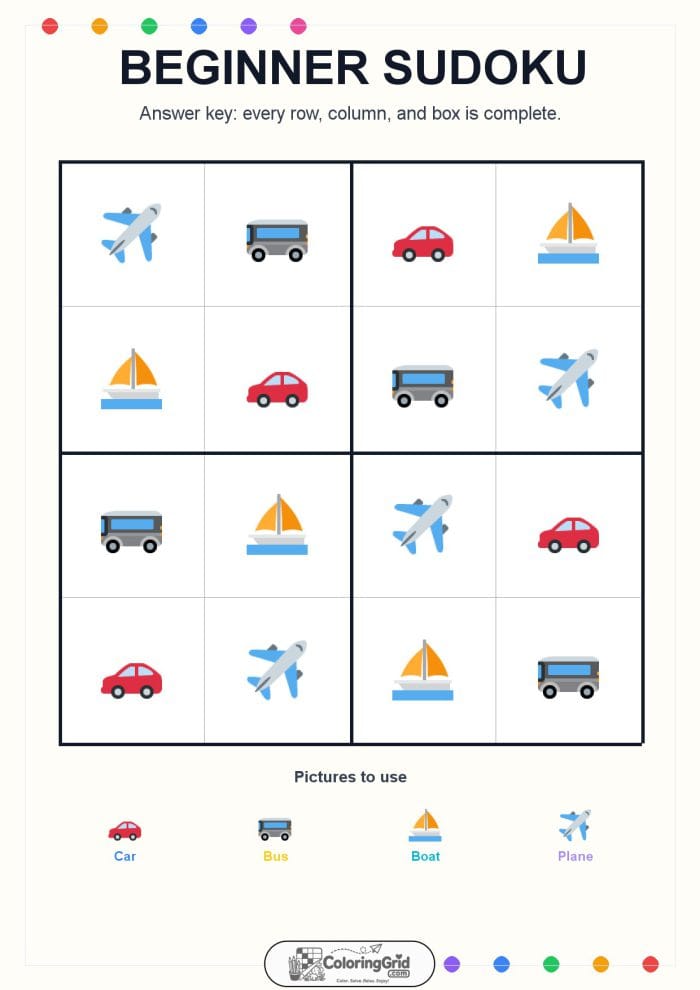
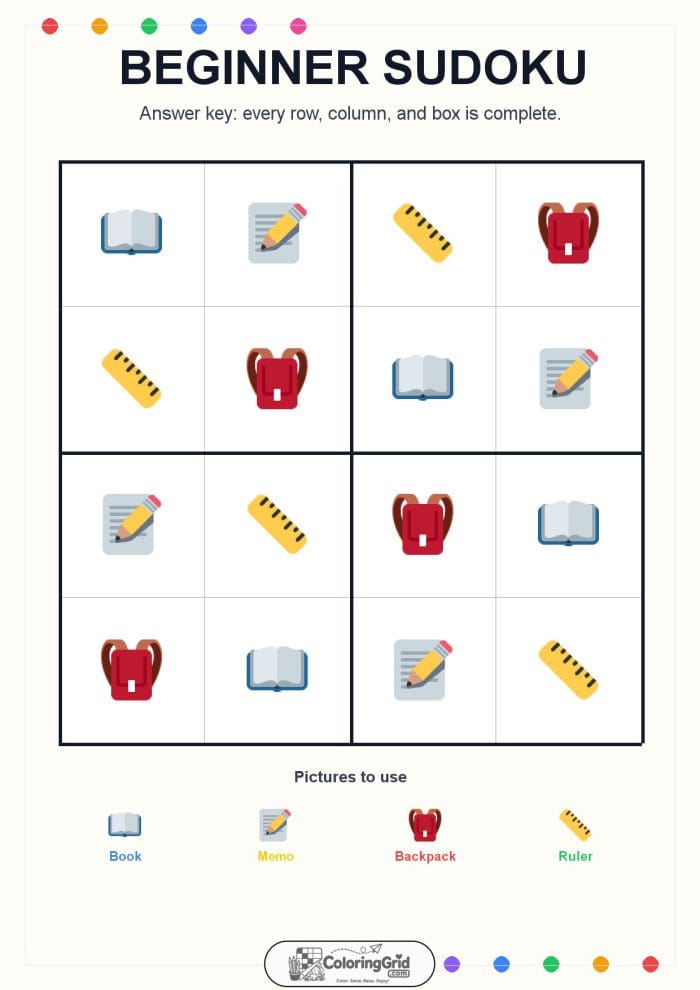
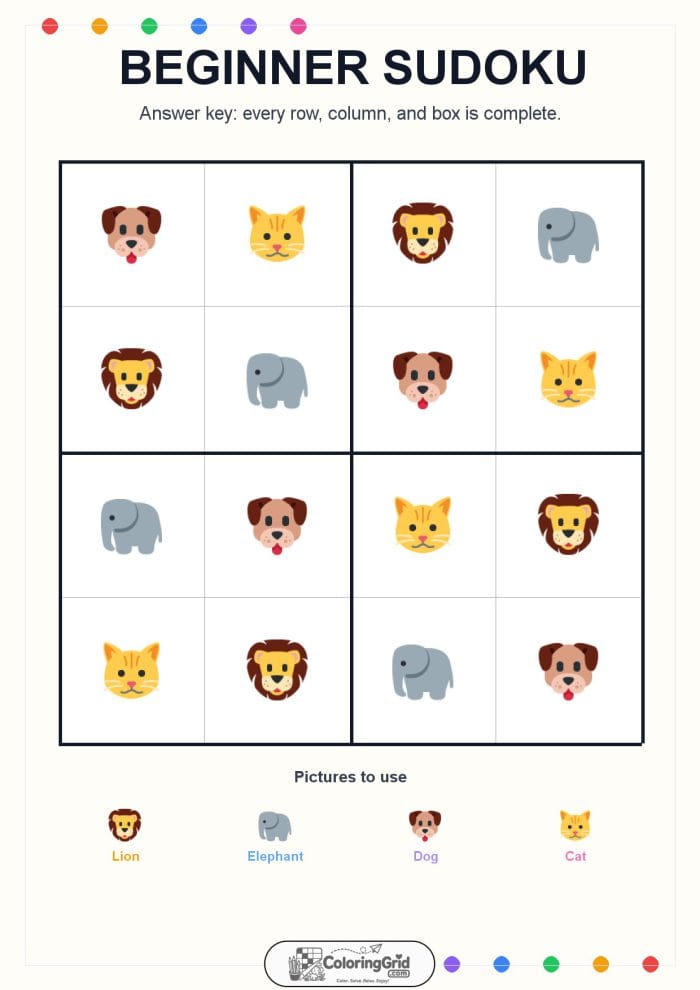
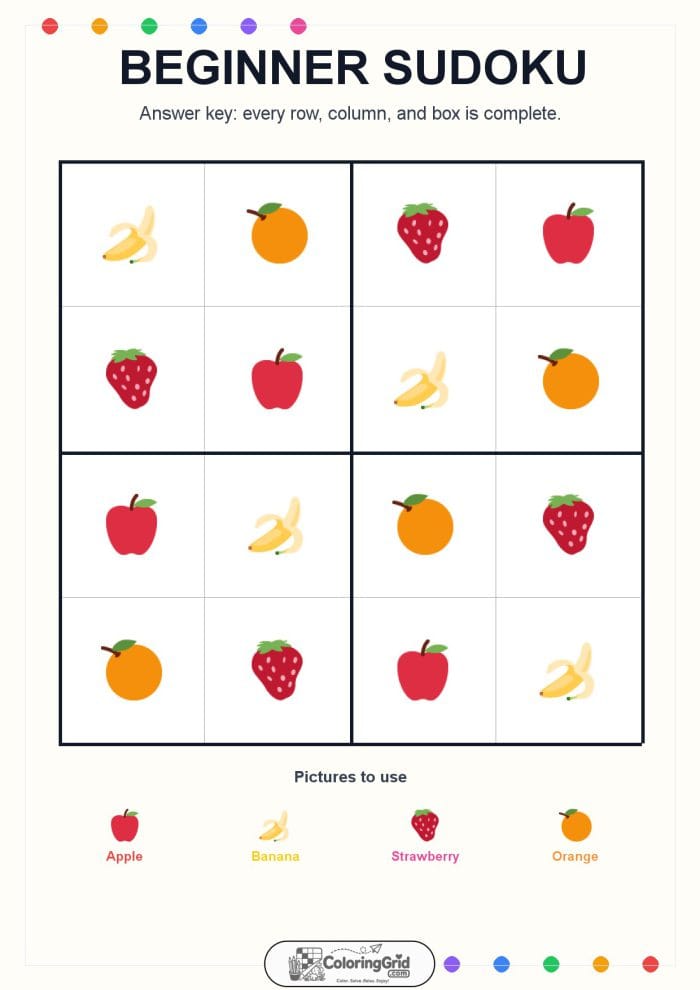
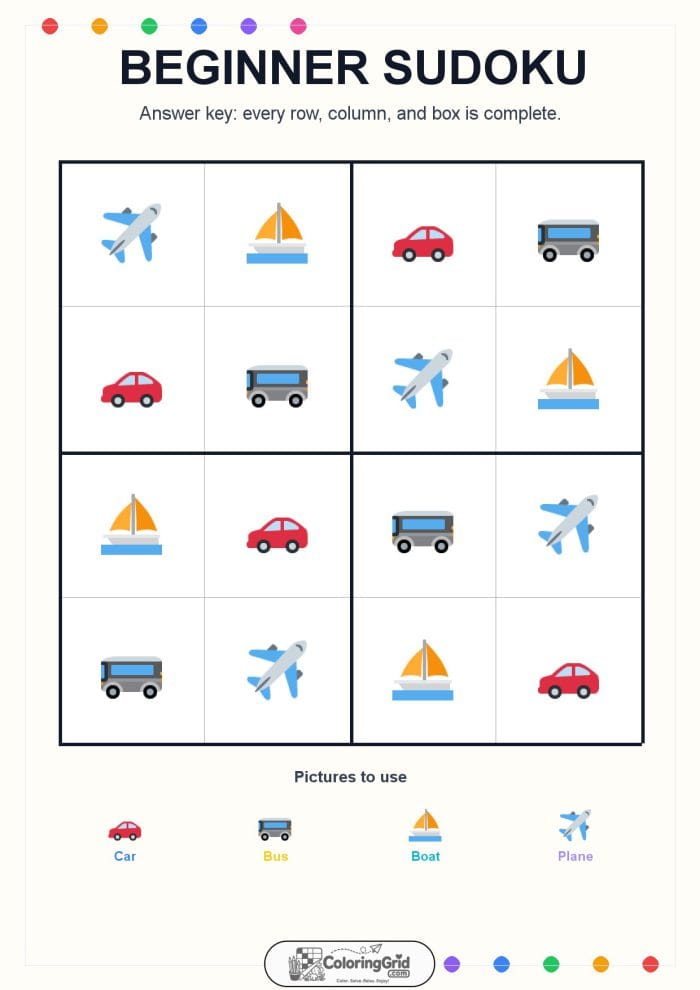
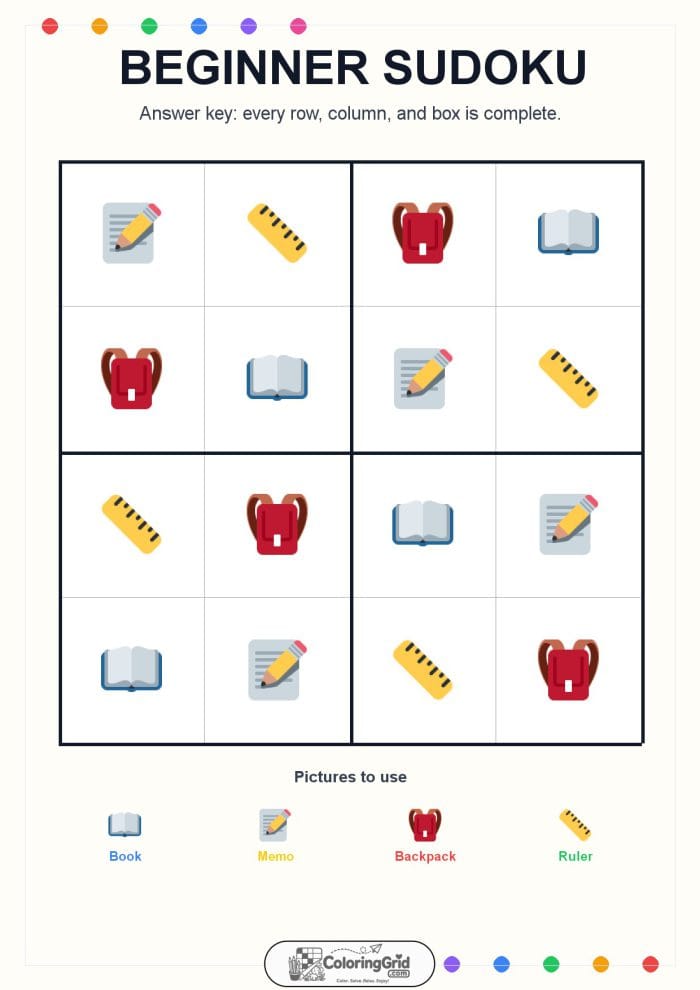
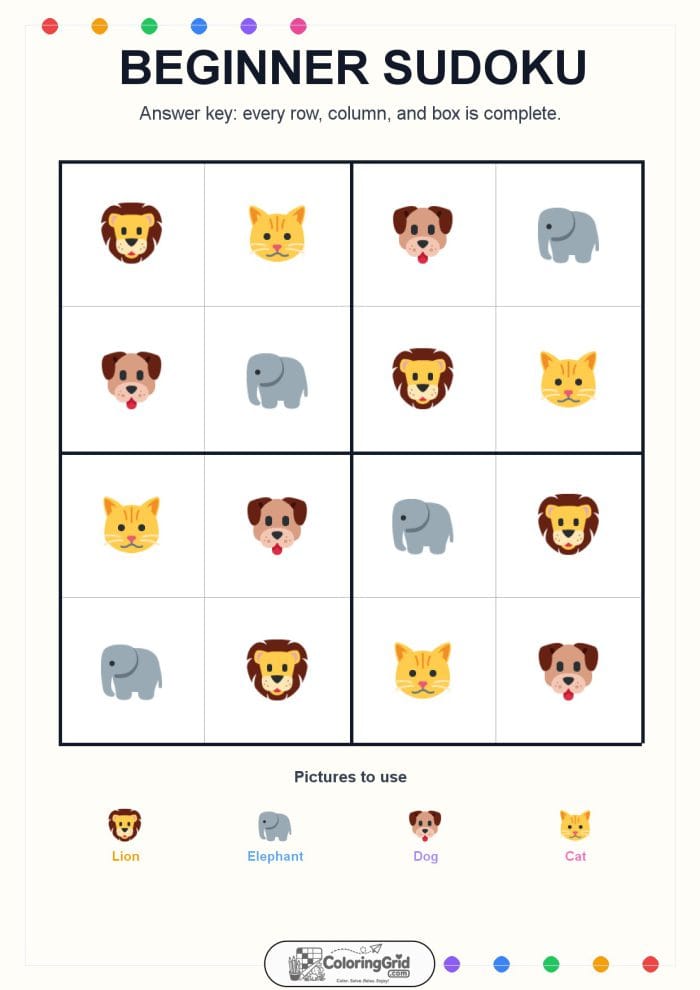
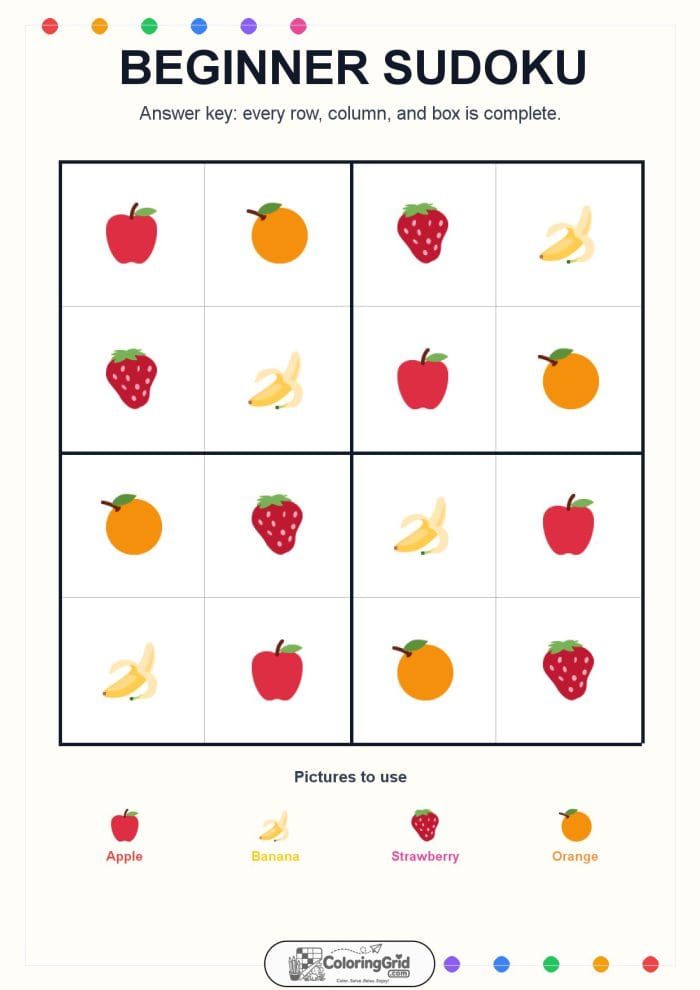
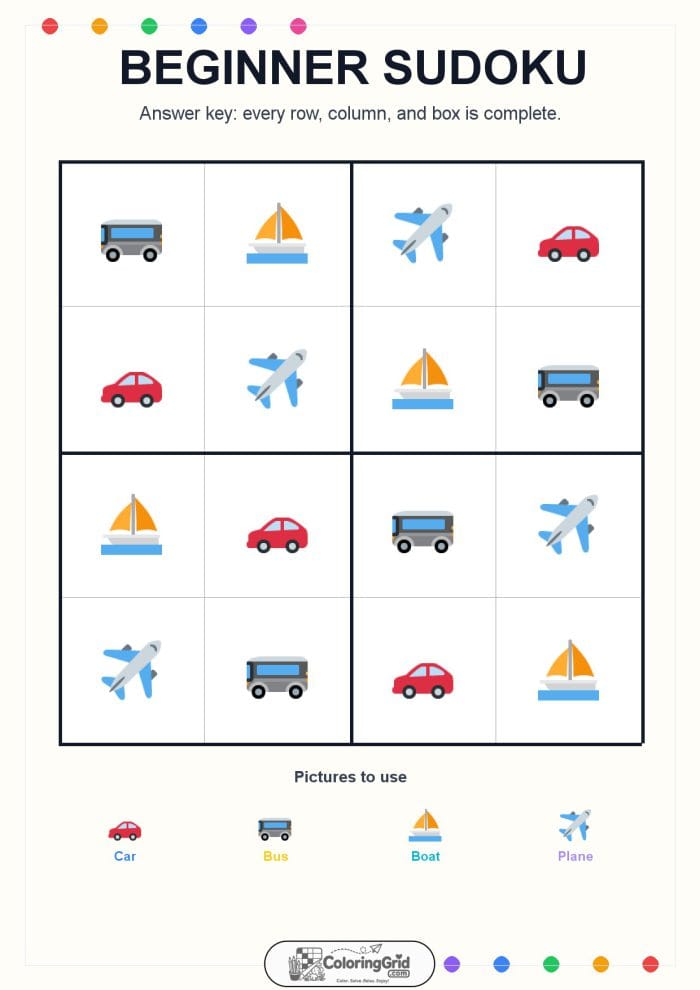
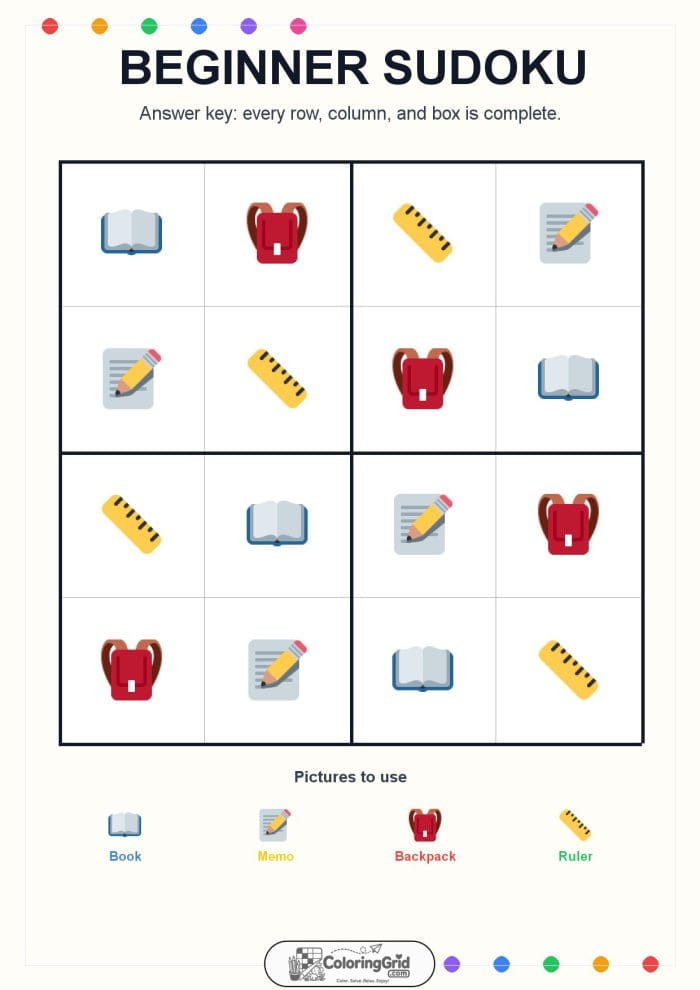
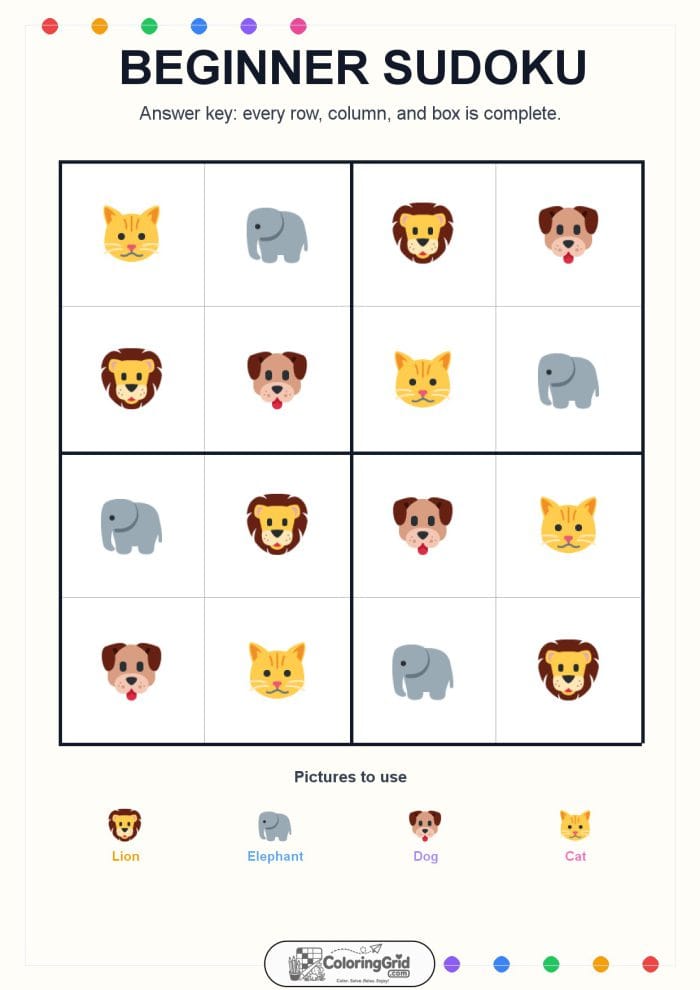
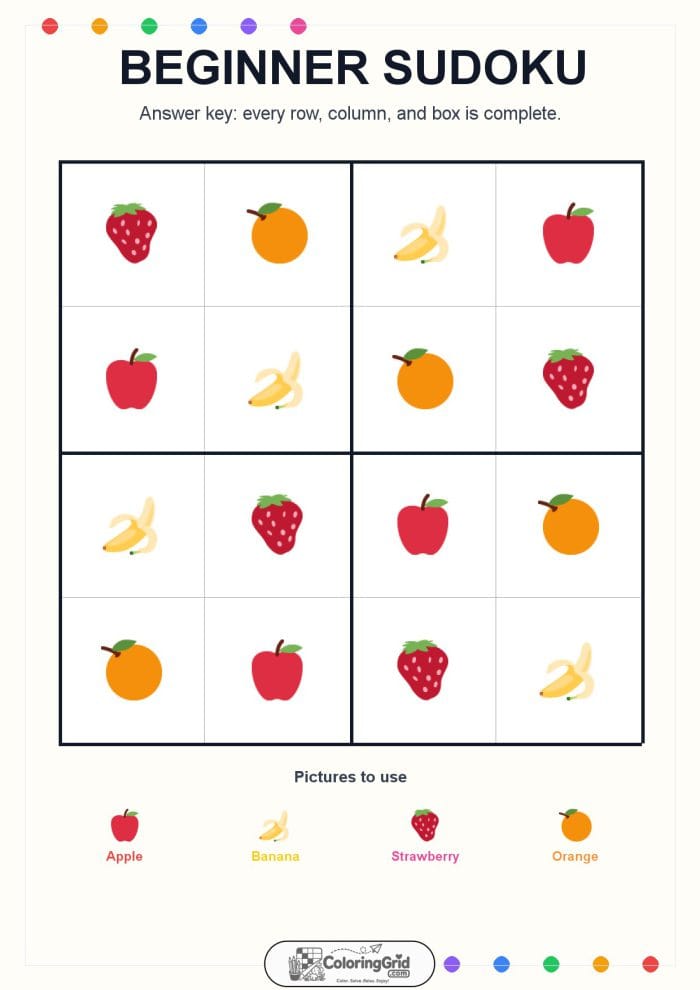
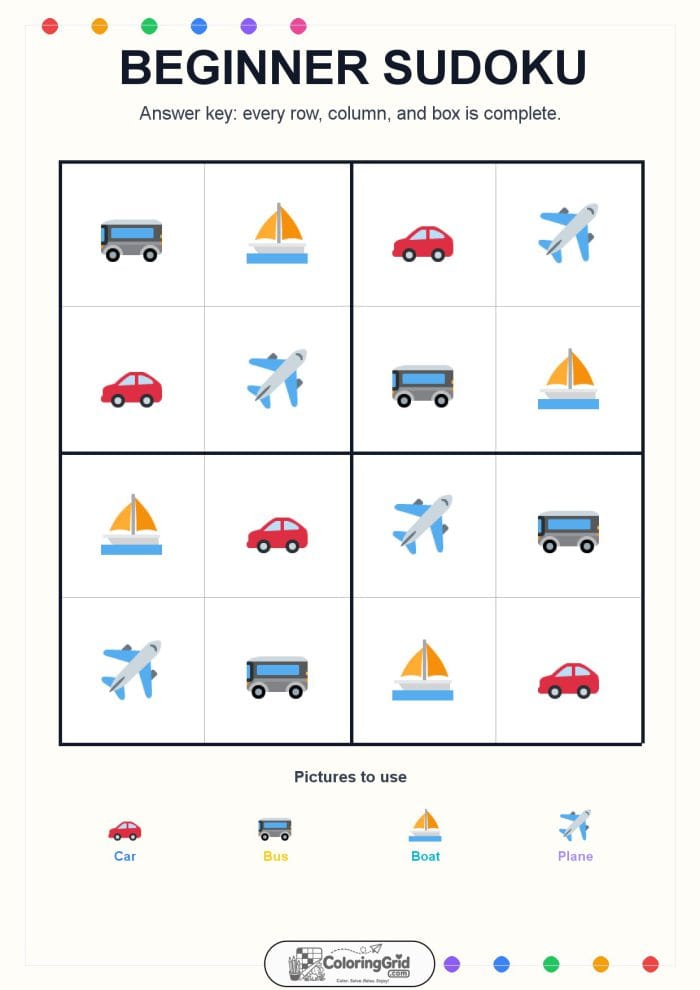
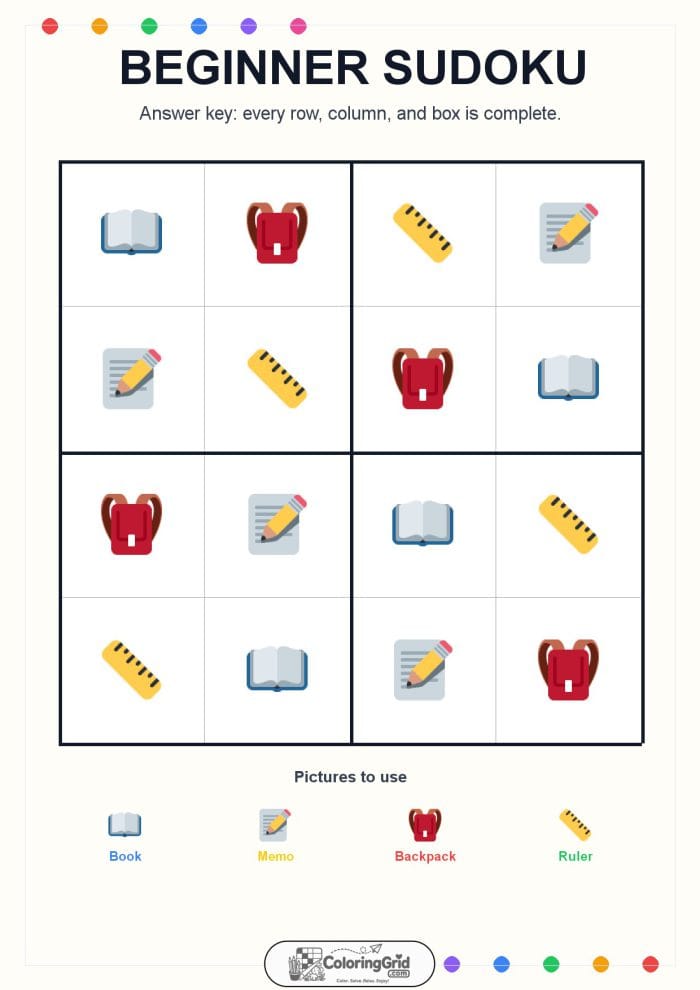
What Is Kindergarten Picture Sudoku?
Picture Sudoku is a beginner logic puzzle that uses images instead of regular Sudoku numbers. A child looks at each row, column, or small box and works out which picture is missing. The rule stays simple: each picture should appear only once in that row or section.
For kindergarten learners, that change matters. Numbers can still feel abstract, but a circle, square, star, leaf, apple, or triangle is easy to see and compare. A good Sudoku for Kindergarten page lets children solve by looking carefully, not by memorizing a complicated rule.
Many shape sudoku kids puzzles use 4×4 grids before moving into larger grids. That smaller size gives children room to think. Too many boxes too soon can turn a nice puzzle into a guessing game.
Why Sudoku for Kindergarten Works for Young Children
Little learners are still building the habit of looking closely before answering. Picture Sudoku supports that beautifully. The child has to pause, compare, and notice what is already in the row.
- Pattern practice: Children look for what is missing instead of simply naming pictures one by one.
- Visual attention: A picture sudoku printable asks children to scan across and down, which takes careful looking.
- Gentle logic: Sudoku for Kindergarten introduces “only one of each” without making the page feel too grown-up.
- Pencil control: If children draw or mark the missing shape, they get small fine motor practice too.
- Quiet confidence: Finishing a small grid feels achievable, which is important for young children learning a new kind of puzzle.
How to Teach Shape Sudoku Kids Can Understand
Start with one row. That is enough. Young children do not need a long explanation before they begin.
Use matching language first
Point to a row and say, “We need one of each picture.” Then name the pictures already there. This keeps Sudoku for Kindergarten concrete and easy to follow.
Ask what is missing
A helpful question is, “Which shape do we not see yet?” That question teaches the heart of Sudoku without using puzzle vocabulary too early.
Cover extra rows if needed
Some children get overwhelmed by a full page. Cover part of the grid with another sheet of paper and focus on one section. Small steps work best.
Let children use tokens
For a first picture sudoku printable, small paper counters or cut-out shapes can help. Children can move the pieces before writing or coloring anything in. Less erasing. Less frustration.
Keep guessing gentle
If a child guesses, simply ask them to check the row again. The goal is not catching mistakes. The goal is teaching careful looking.
Age and Readiness Guide
Preschool ages 3–4: Some preschoolers can try a very simple shape Sudoku kids puzzle with help. Keep the grid small, use familiar pictures, and solve together. At this stage, matching matters more than finishing independently.
Kindergarten ages 5–6: This is the best fit for Sudoku for Kindergarten. Children can usually understand “one of each” when the pictures are clear and the grid is not crowded. Many will need help with the first puzzle, then begin spotting missing shapes on their own.
First-grade beginners: Older beginners can still use picture sudoku printable pages, especially if number sudoku feels too hard. Once the picture version makes sense, they can move toward simple number grids.
Mixed-age groups: Give younger children picture sudoku and older children number sudoku at the same table. Everyone works on logic, but each child gets the right level of challenge. That makes the activity much easier to manage.
Printing Tips for Little Hands
A clean grid makes a real difference. Kindergarten children need enough room to see the boxes, mark their answers, and correct mistakes without the page becoming messy.
- Print at full size: Larger boxes are easier for children who are still developing pencil control.
- Use regular paper for practice: Standard printer paper works well for everyday Sudoku for Kindergarten pages.
- Choose PDF for neat printing: PDF files usually keep the picture sudoku grid clean and easy to read.
- Use JPG for quick saving: JPG downloads are helpful when you want to preview or save a puzzle image.
- Keep answers separate: Store the solution pages in a parent binder or teacher folder so children focus on solving first.
For very young learners, print one puzzle per page instead of shrinking several grids together. Tiny boxes are hard on little hands. Big spaces invite better thinking.
Simple Ways to Use Picture Sudoku at Home or School
Sudoku for Kindergarten works best in short, calm moments. It does not need to become a full lesson. A few quiet minutes at the table are often enough.
- Morning table work: Place one picture sudoku printable on the table as children arrive.
- Math center practice: Add shape sudoku kids pages to a simple logic or pattern center.
- Early finisher folder: Keep extra Sudoku for Kindergarten pages ready for children who finish work early.
- Homeschool warm-up: Use one small grid before handwriting, counting, or reading time.
- Travel activity: Print a few pages for waiting rooms, car rides, or quiet restaurant moments.
Short is fine. A child who solves one row thoughtfully has practiced something useful. The full puzzle can wait until they are ready.
FAQ About Sudoku for Kindergarten
What is the best Sudoku for Kindergarten?
The best Sudoku for Kindergarten uses pictures, shapes, or simple symbols instead of difficult number grids. A 4×4 picture sudoku printable is usually the easiest place to start.
Can kindergarten kids really solve Sudoku?
Yes, many kindergarten children can solve simple picture Sudoku with guidance. They are not doing advanced math. They are matching, comparing, and noticing which picture is missing.
Is picture sudoku better than number sudoku for beginners?
For young beginners, picture sudoku is often easier. Shapes and pictures are more concrete than numbers, so children can focus on the logic rule first.
How do I explain Sudoku to a kindergartener?
Use simple words: “Each row needs one of every picture.” Then point, name the pictures, and ask what is missing. Keep the explanation short and let the child try.
Can I use these puzzles in the classroom?
Yes. Sudoku for Kindergarten pages work well for classroom centers, early finishers, quiet work, and homeschool activities. Keep the answer keys nearby for quick checking.
Conclusion
Sudoku for Kindergarten gives young children a gentle first step into logic puzzles. The picture grids feel friendly, the rules stay simple, and the small sections help children practice careful looking without too much pressure. Print a picture sudoku printable page, keep the answer key nearby, and let children work at a slow, steady pace. One row at a time is enough. That is how early puzzle confidence begins.