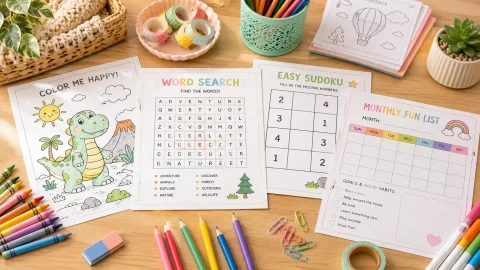
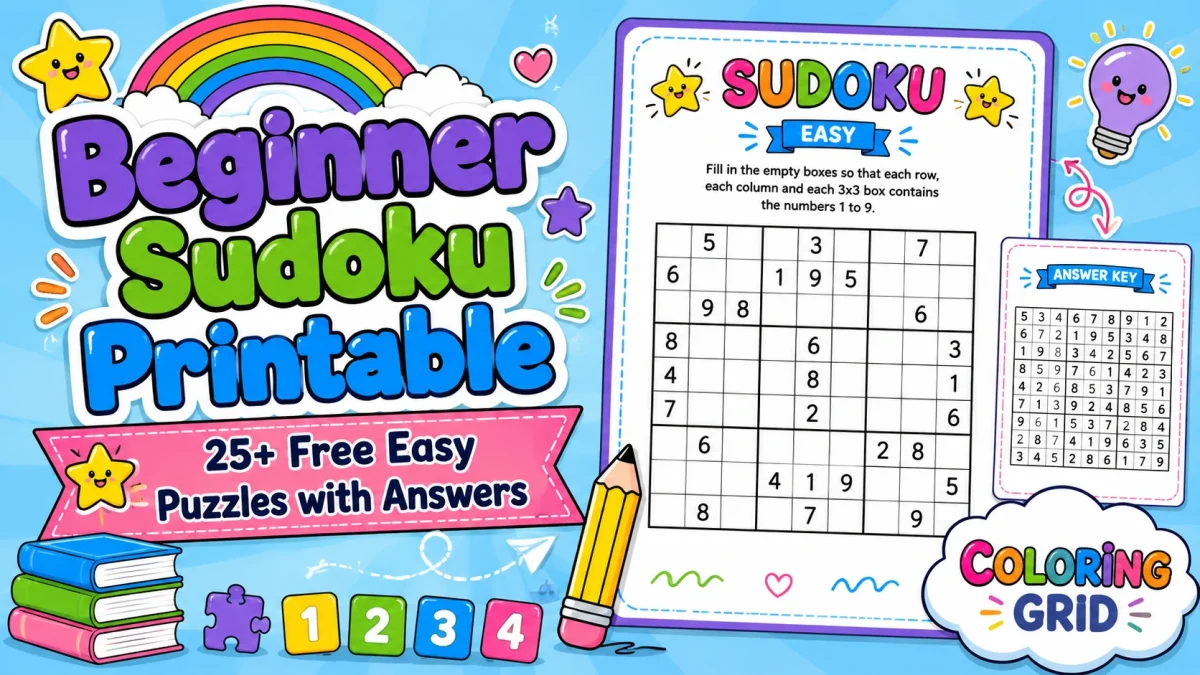
This free beginner Sudoku collection contains 35 puzzles arranged as a clear learning path: 20 mini 4×4 puzzles, 10 easy 6×6 puzzles and five classic 9×9 puzzles. Each puzzle has a matching answer sheet directly below the puzzle gallery. Start with 4×4 if the solver is learning the rule for the first time, move to 6×6 for a longer challenge, and use the 9×9 pages as an introduction to the standard grid. Every sheet can be opened as a printable PDF from its Download button and is available for personal or classroom use.
What's Inside
- Free Beginner Sudoku Printable Puzzles
- Jump to Sudoku Puzzle Free PDF & JPG Downloads
- Beginner Sudoku Answers and Solutions
- Jump to Sudoku Answer Keys Free PDF & JPG Downloads
- Which Grid Should a Beginner Choose?
- How to Solve Sudoku for Beginners
- How to Print the Sudoku PDFs
- Age and Difficulty Guide
- Ways to Use Beginner Sudoku at Home or School
- Conclusion
Free Beginner Sudoku Printable Puzzles
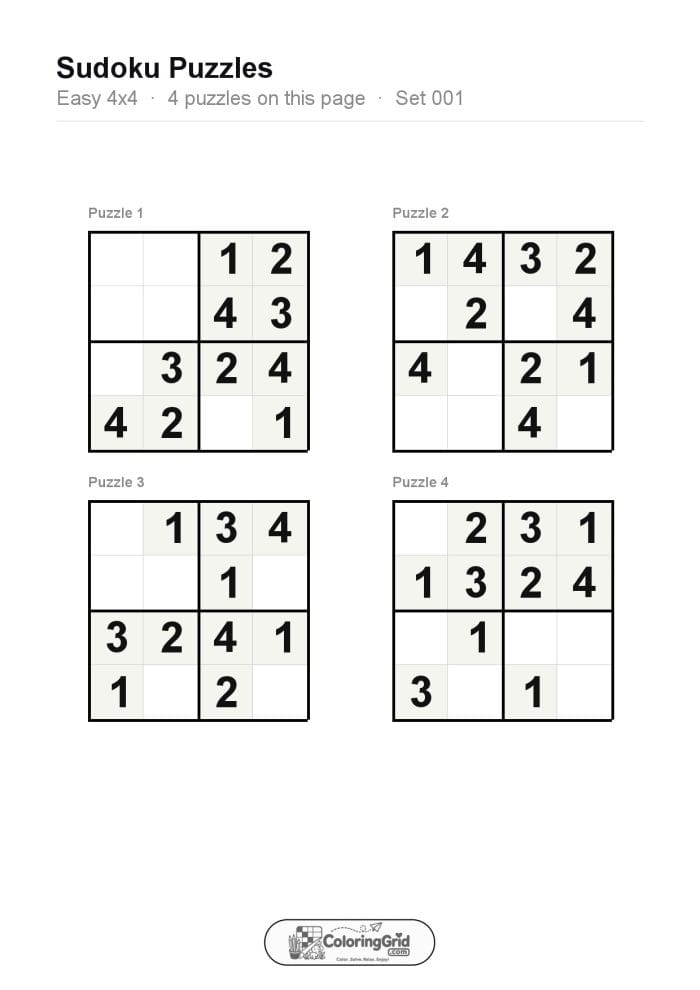
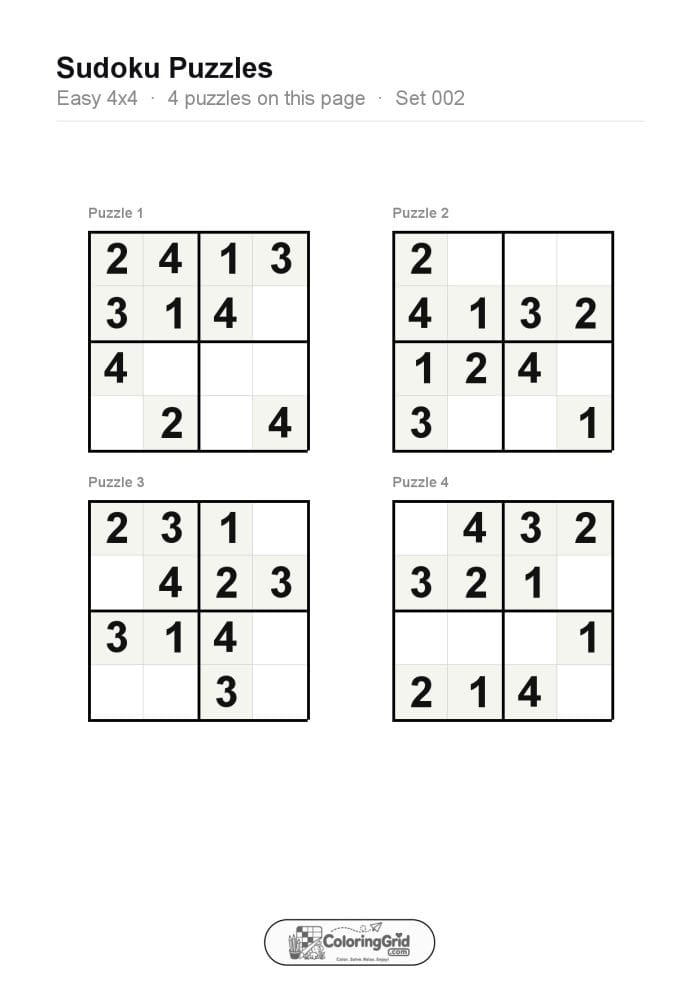
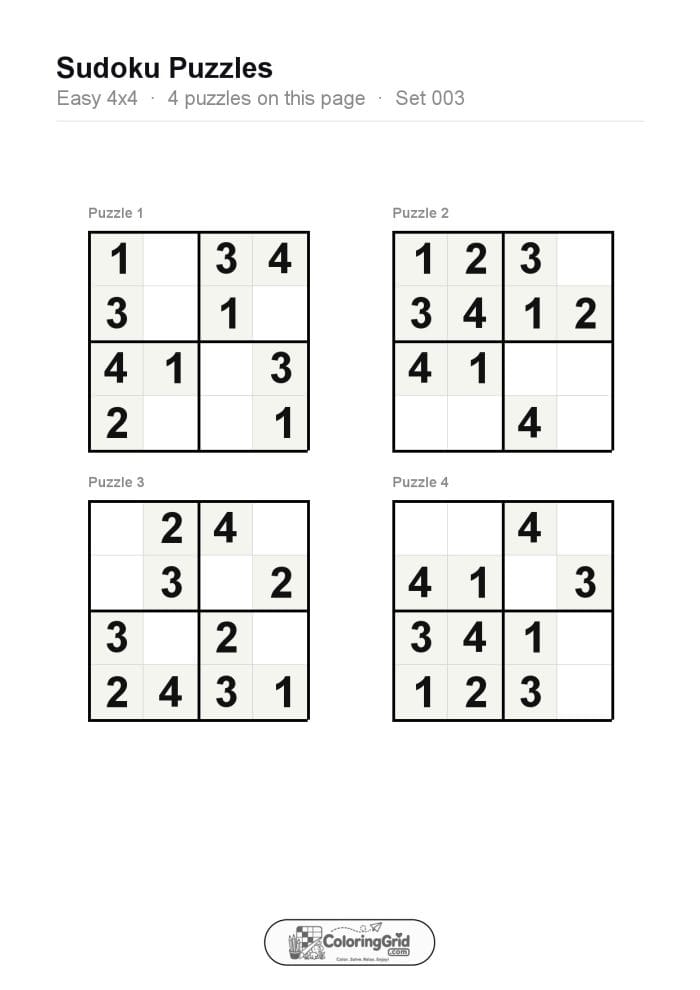
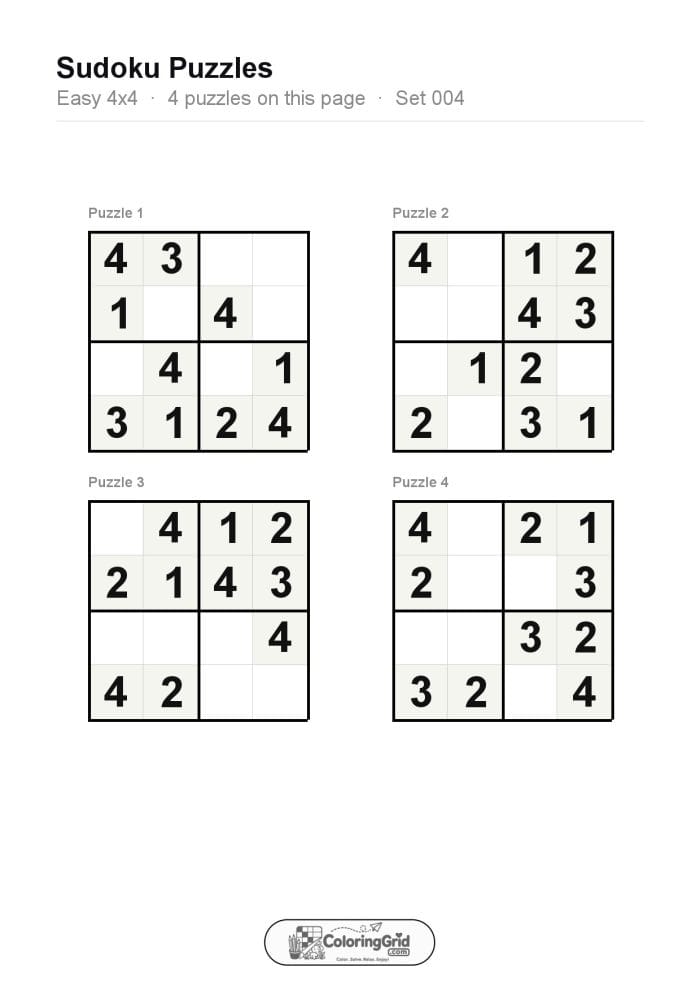
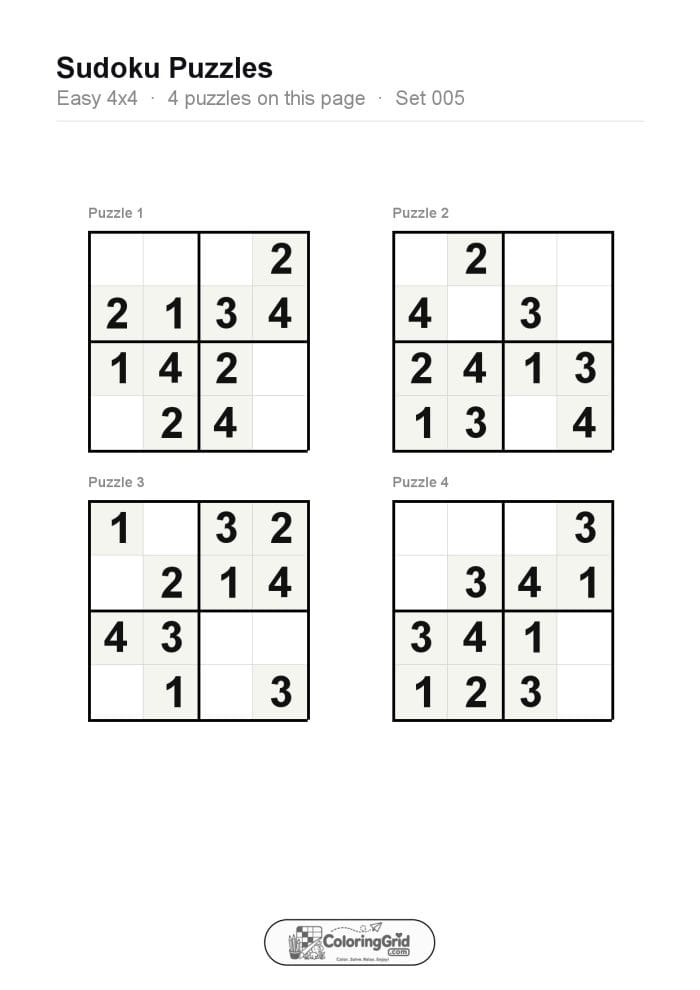
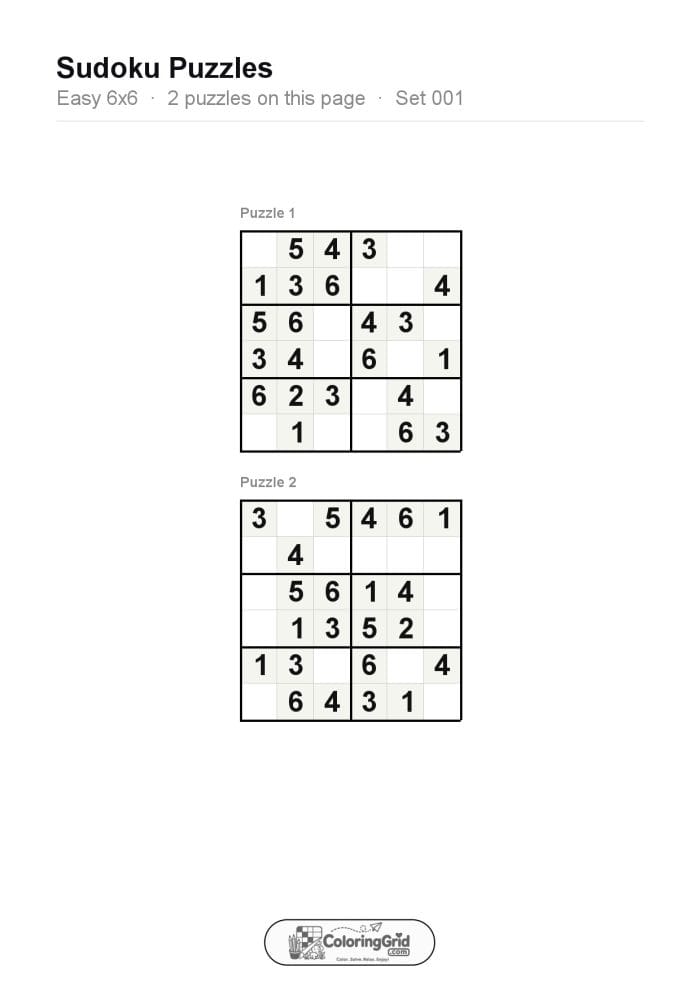
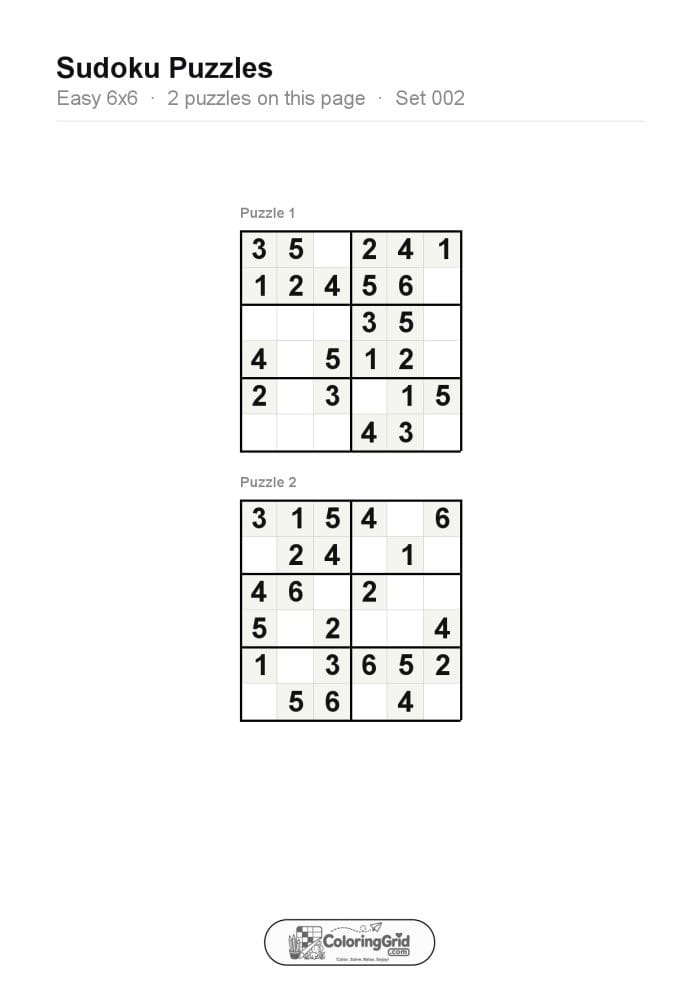
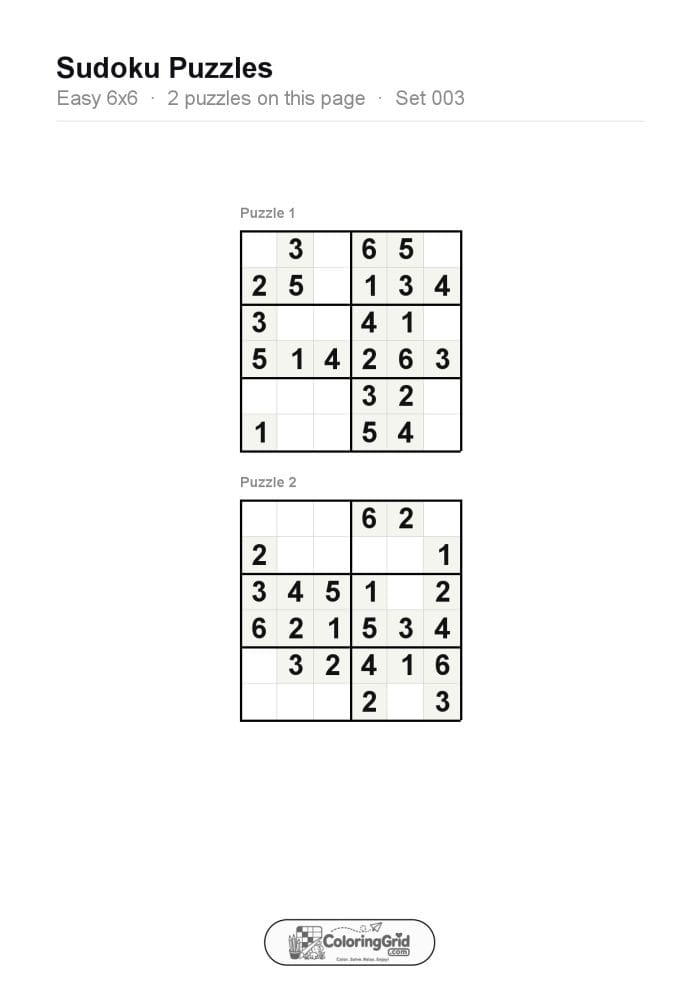
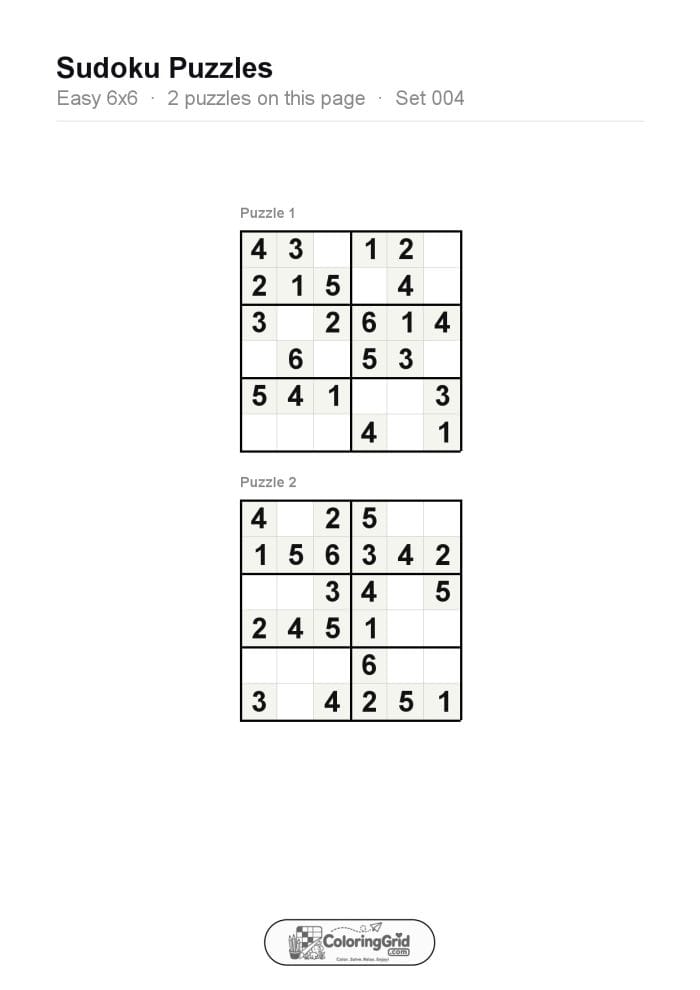
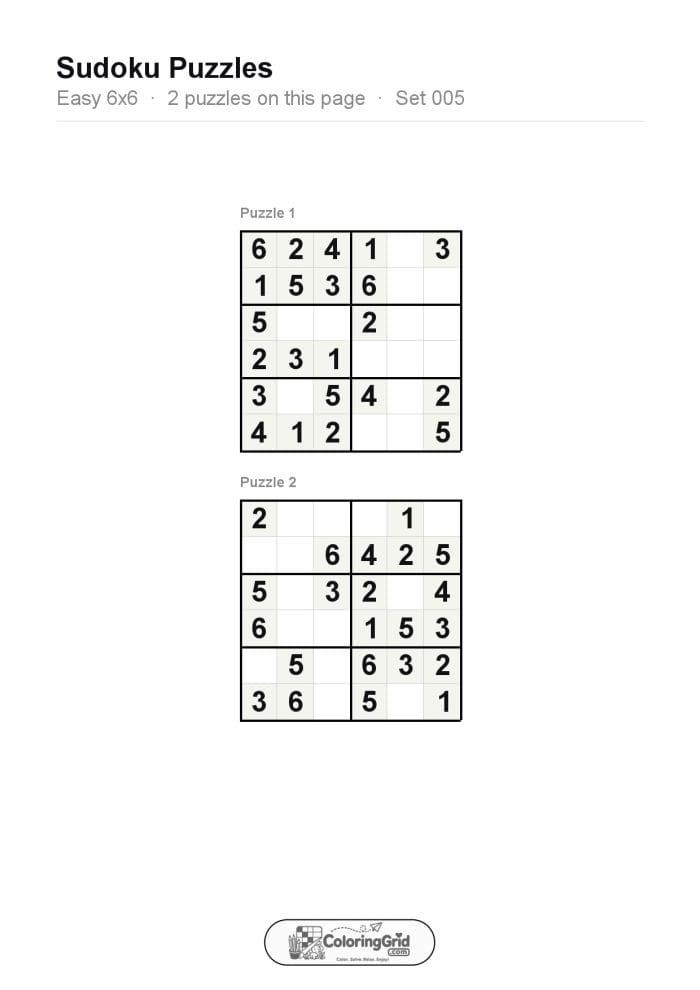
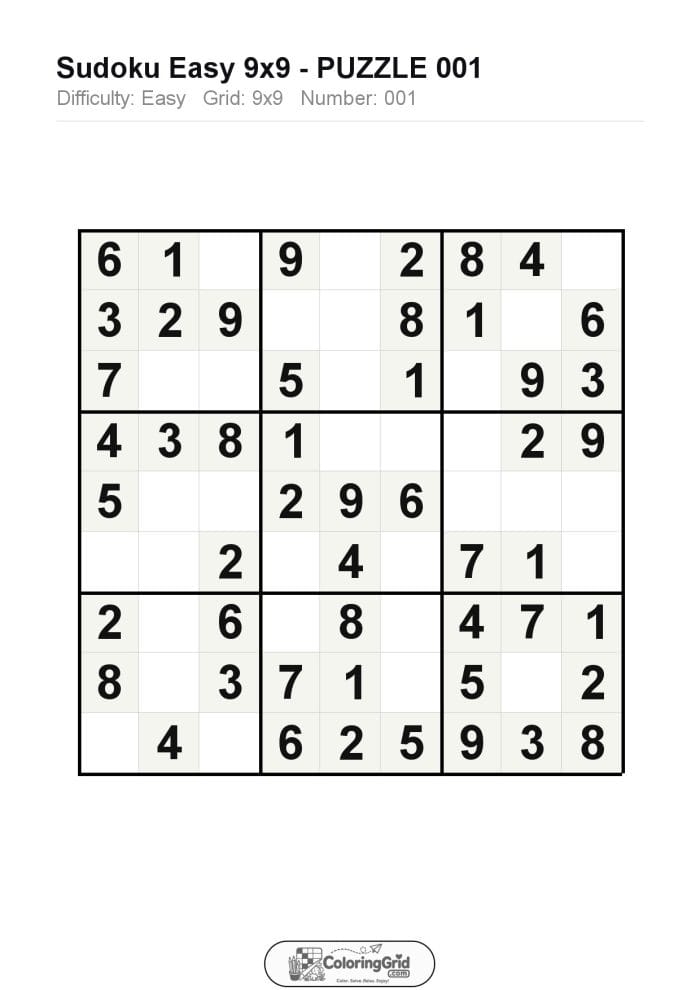
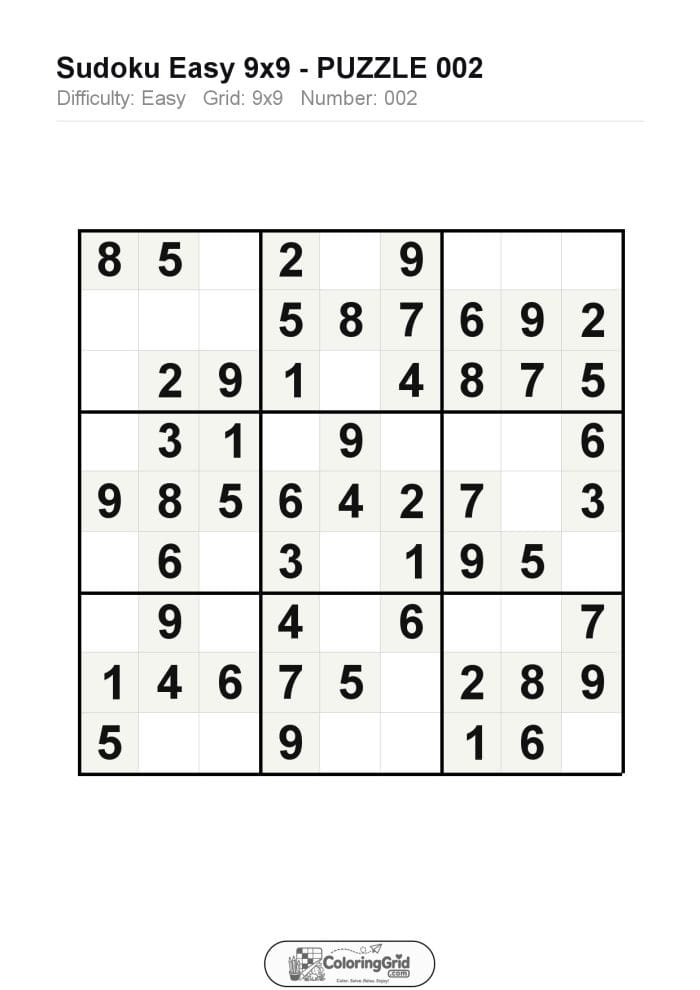
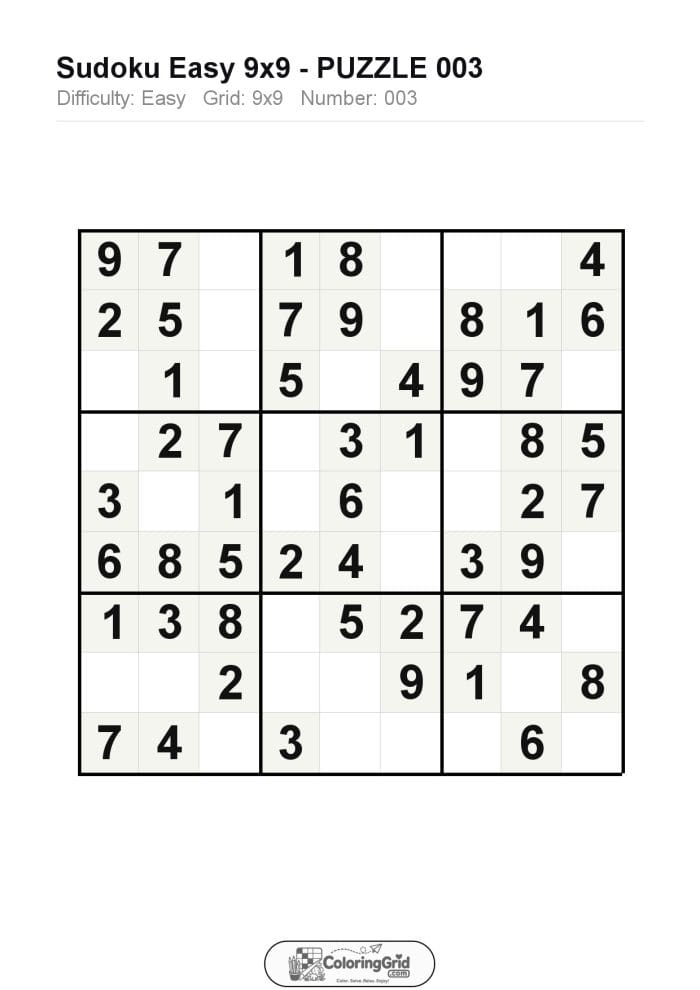
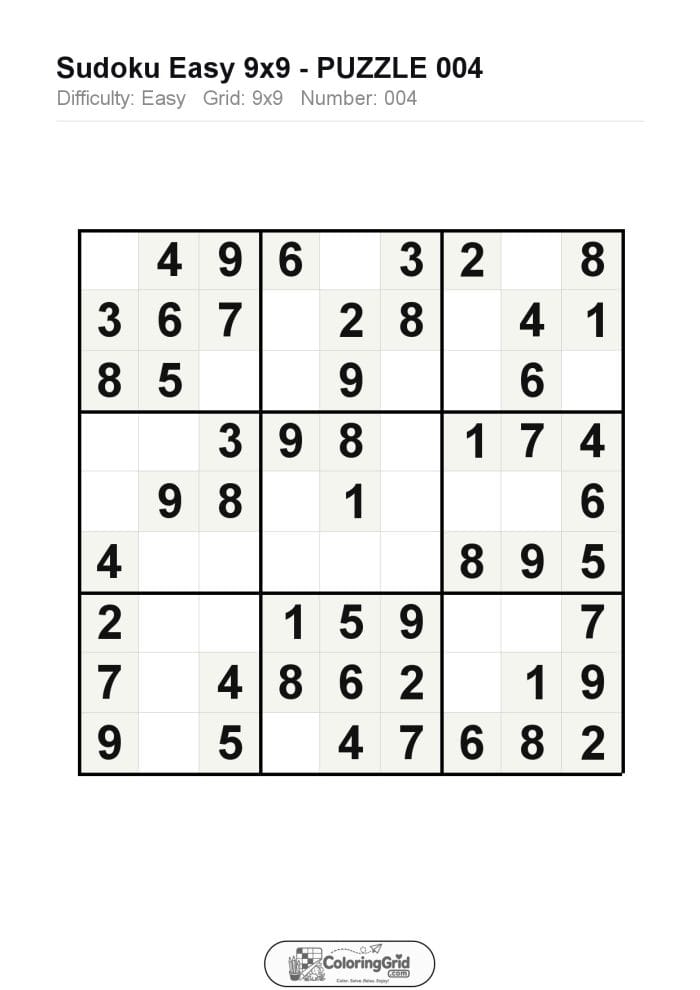
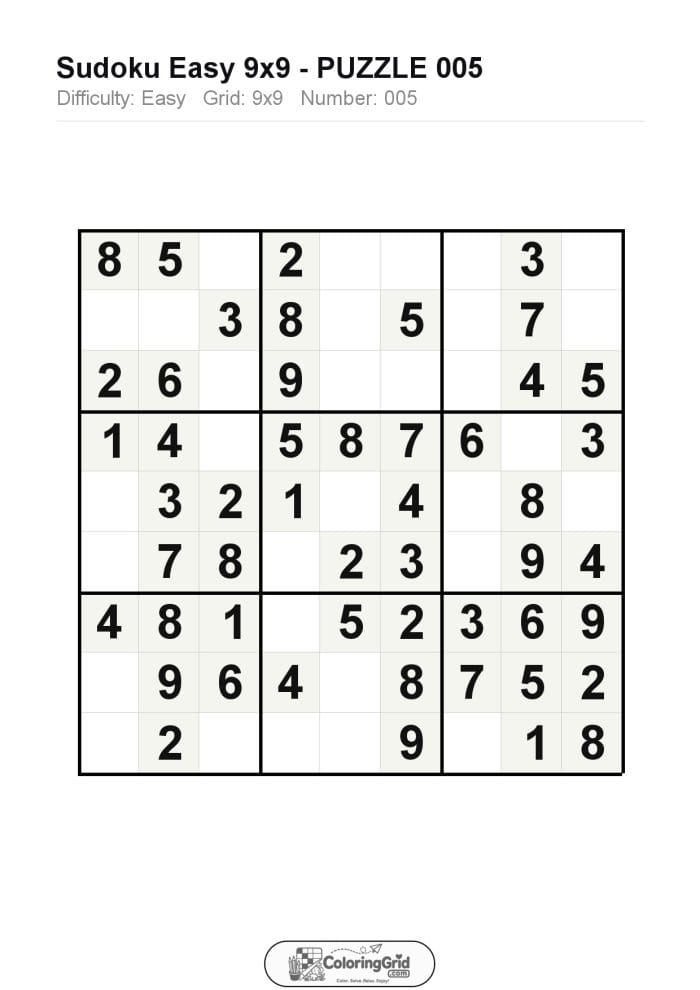
Choose the grid size that matches the solver’s experience. The first five sheets contain four 4×4 puzzles each, the next five contain two 6×6 puzzles each, and the final five contain one 9×9 puzzle each. Open Download PDF/JPG below any preview to get the printable file. The answer section follows in exactly the same order, so Puzzle 001 always matches Answer Key 001.
| Grid | Included | Best starting point | Rule |
|---|---|---|---|
| 4×4 | 20 puzzles on 5 sheets | First-time solvers | Use 1–4 once in each row, column and 2×2 box |
| 6×6 | 10 puzzles on 5 sheets | Solvers ready for a longer grid | Use 1–6 once in each row, column and outlined box |
| 9×9 | 5 puzzles on 5 sheets | Beginners moving to standard Sudoku | Use 1–9 once in each row, column and 3×3 box |
Browse more printable Sudoku levels or try color Sudoku for kids for a picture-based alternative.
While you're here, explore these fun related sudoku puzzles too!
Beginner Sudoku Answers and Solutions
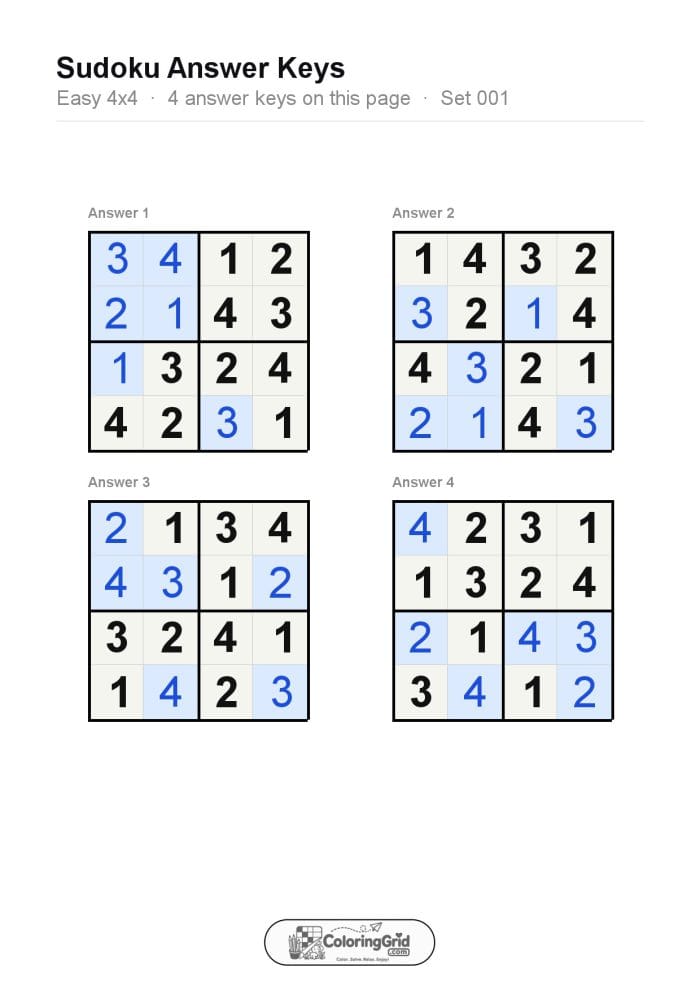
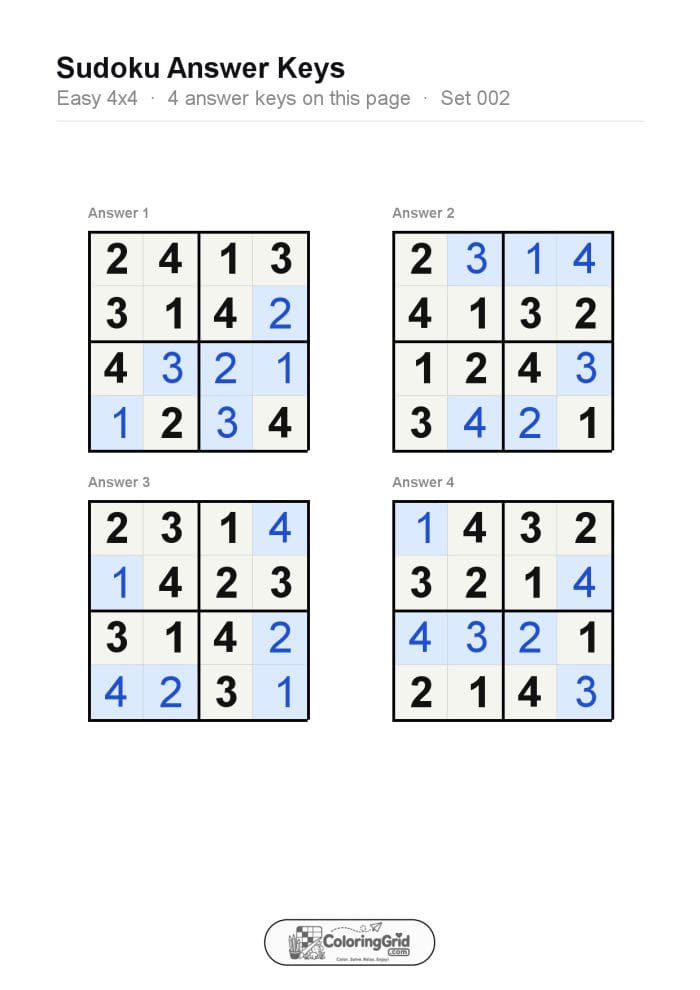
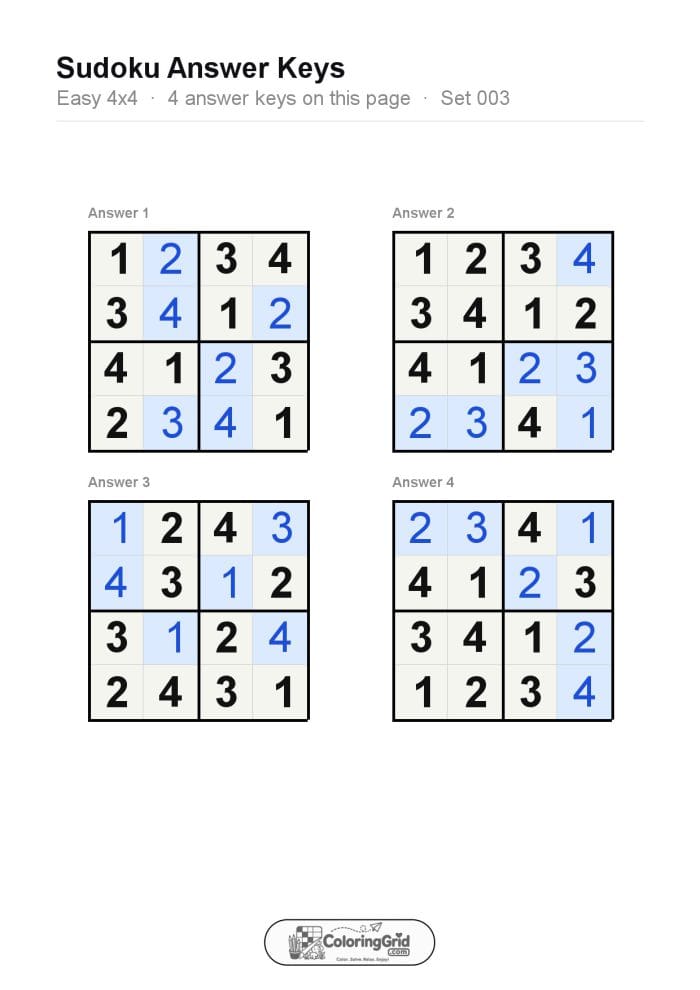
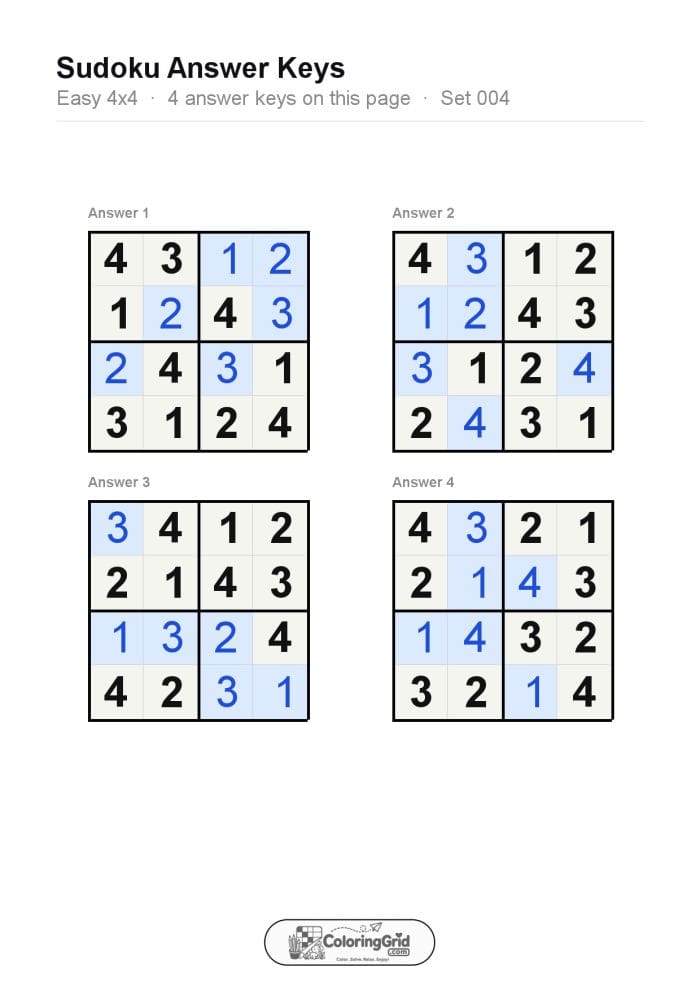
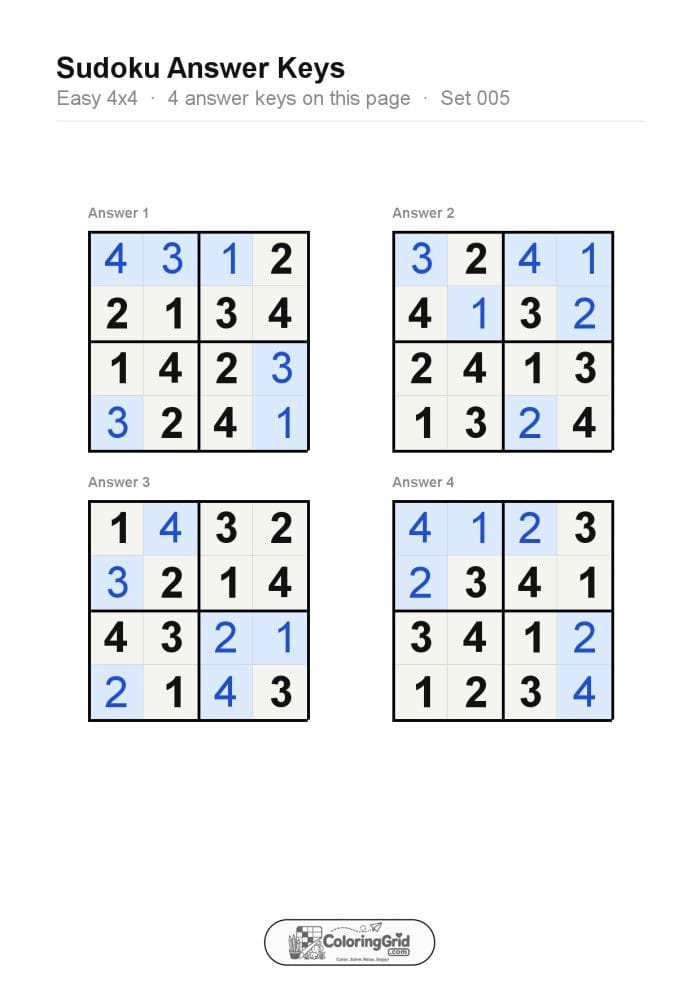
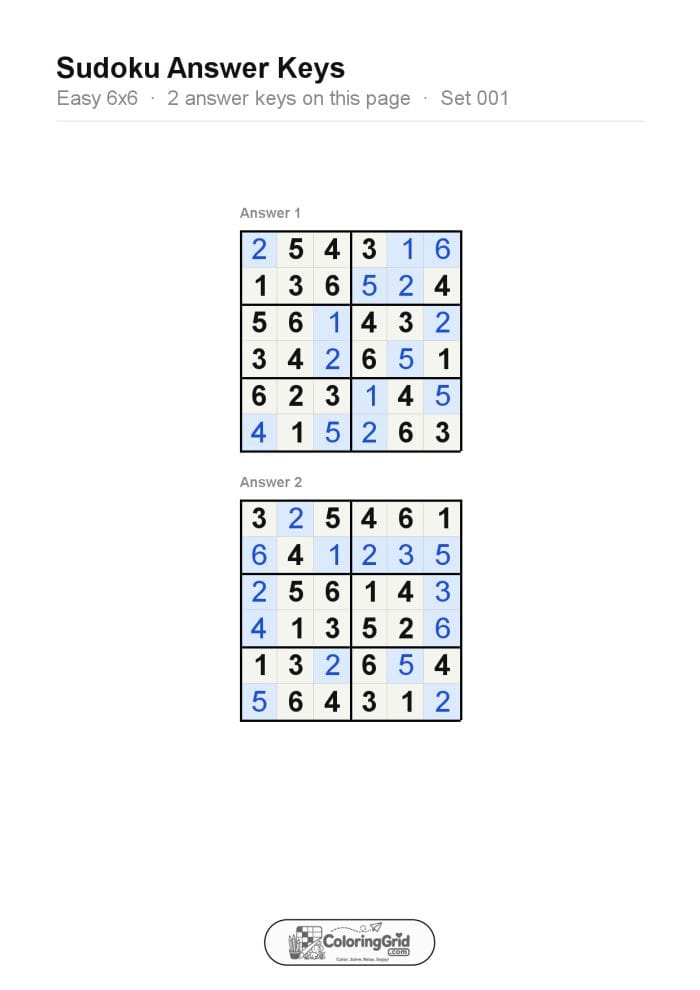
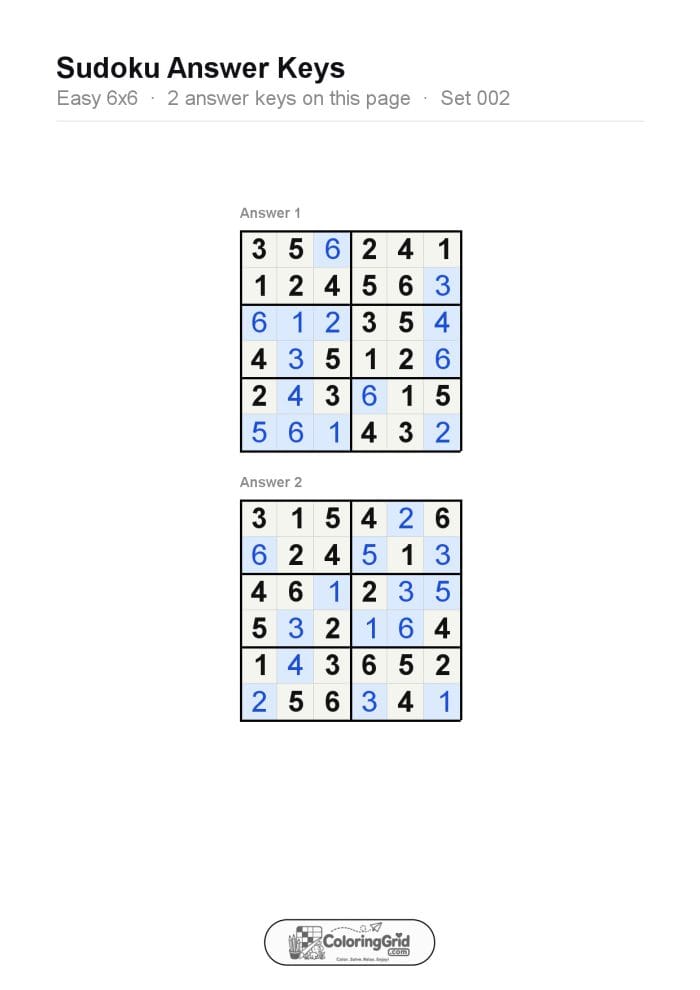
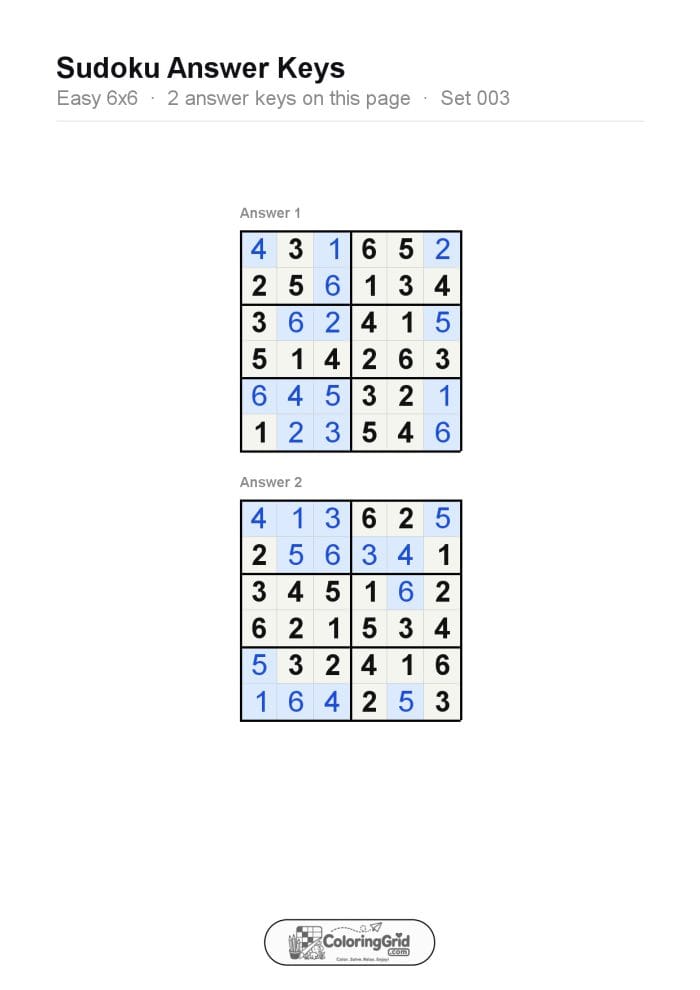
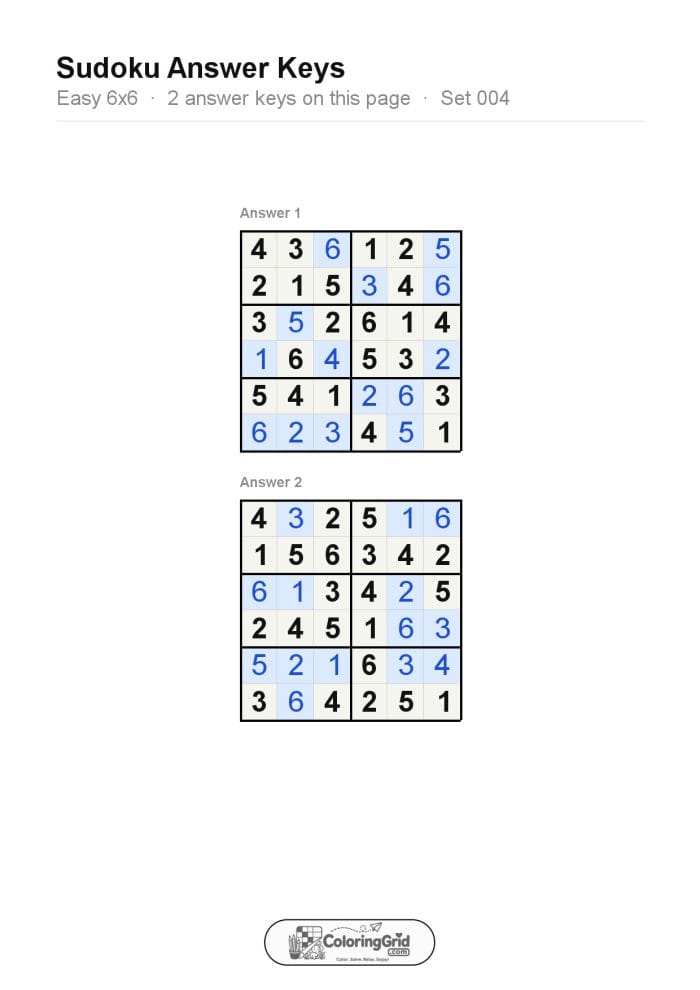
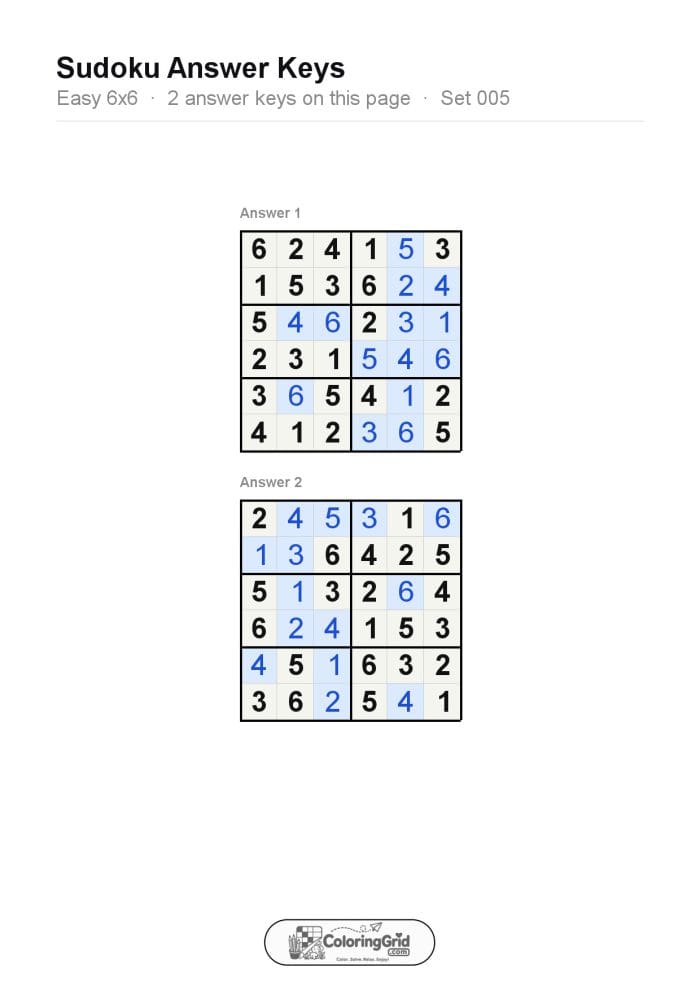
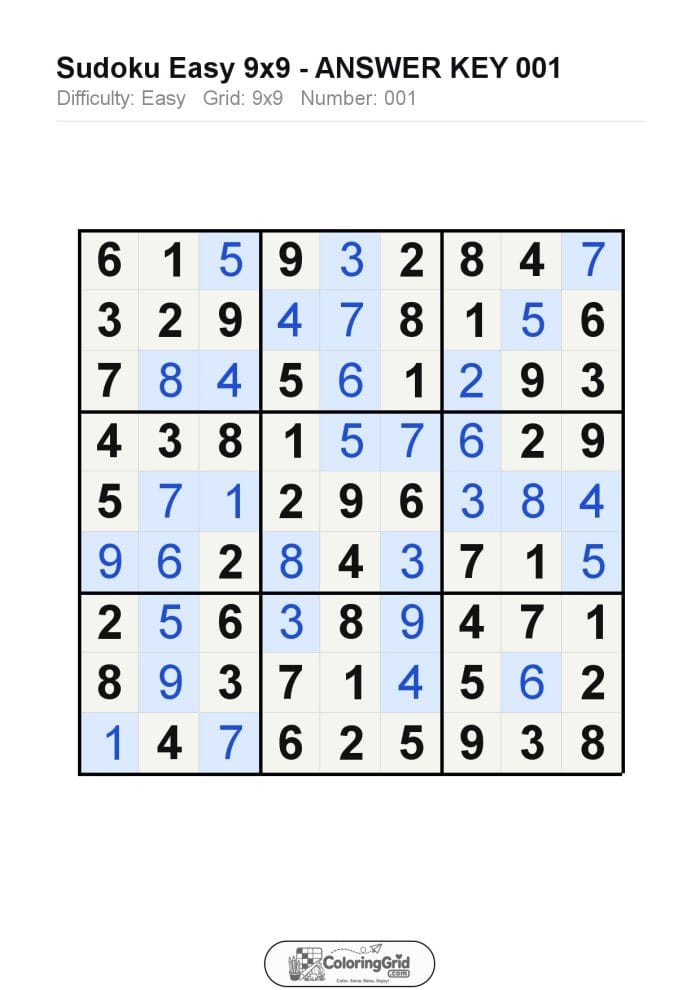
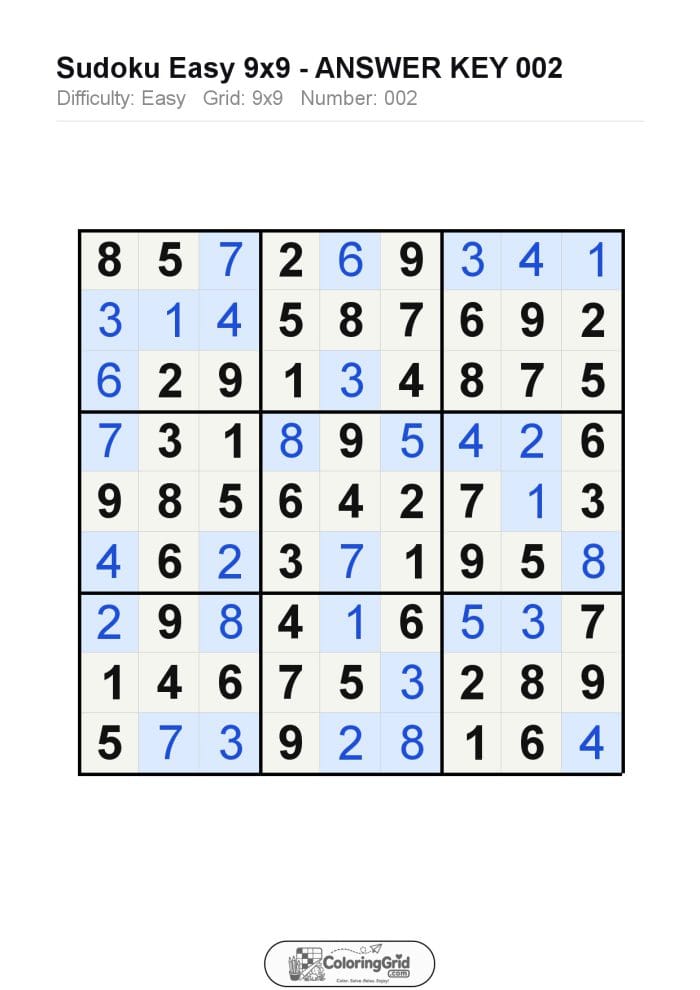
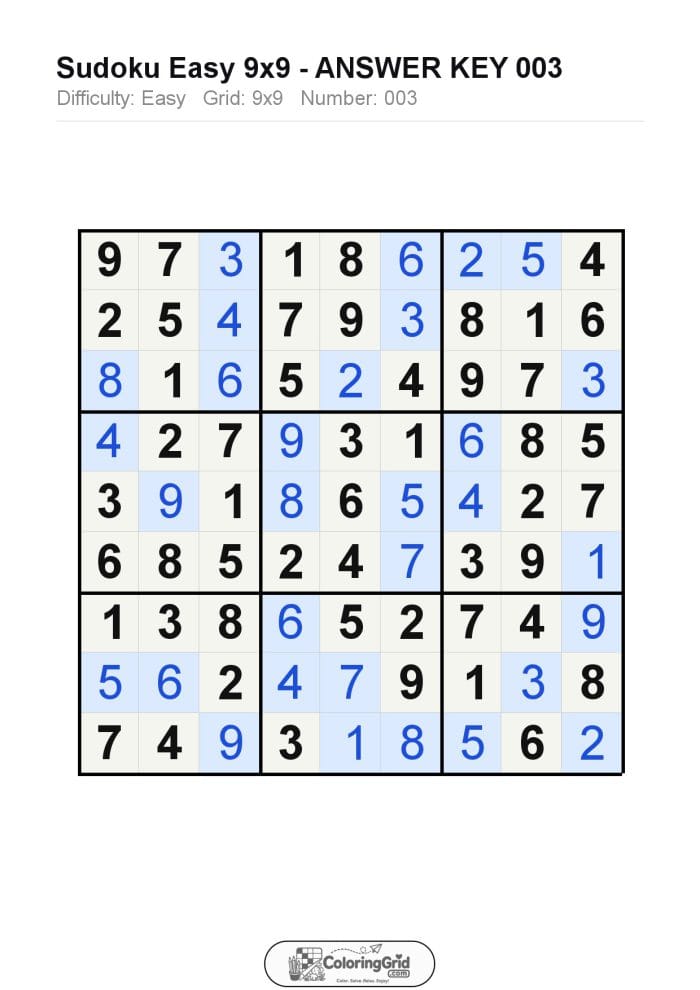
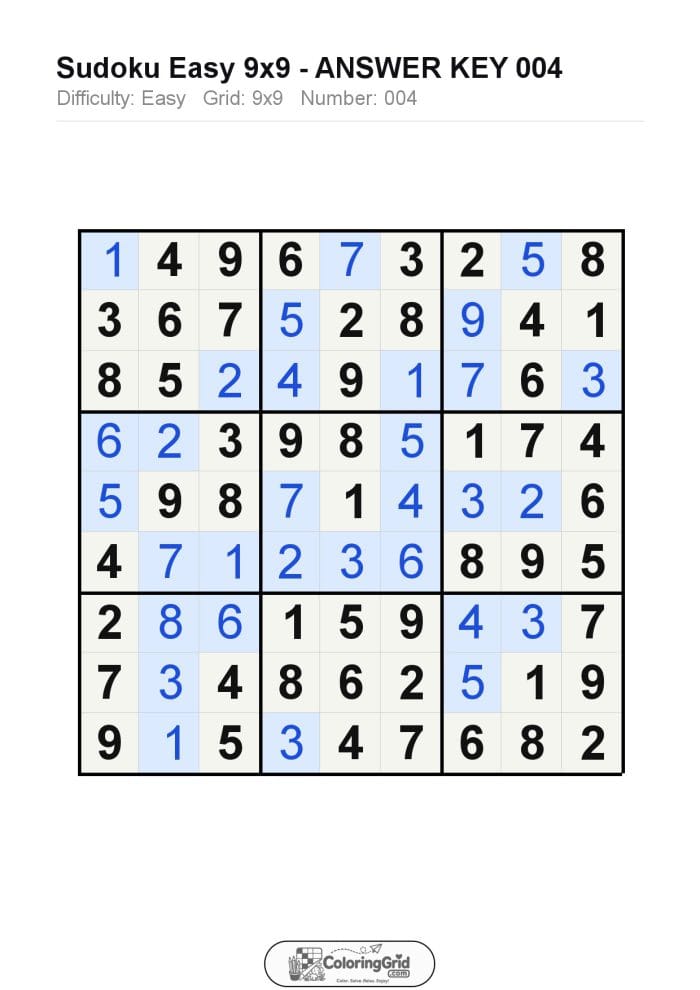
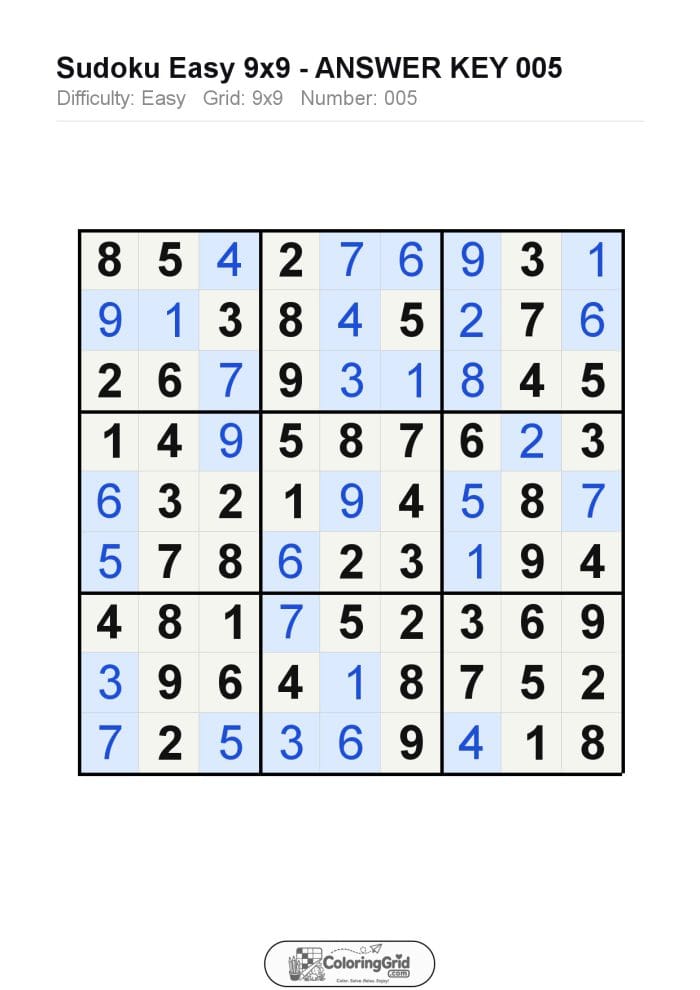
The 15 answer sheets match the puzzle sheets in the same sequence: 4×4 answers first, then 6×6, then 9×9. Use the number in each image title to pair a puzzle with its solution. For example, Easy 6×6 Puzzle 003 matches Easy 6×6 Puzzle 003 – Answer. Keep the answer page separate while solving, then use it to check the finished grid or reveal one square as a hint.
While you're here, explore these fun related sudoku puzzles too!
Which Grid Should a Beginner Choose?
A smaller grid teaches the Sudoku rule without asking a new solver to track nine numbers at once. A 4×4 puzzle uses only 1–4 and four-square boxes, so it is the clearest first step. A 6×6 grid adds more choices while remaining shorter than standard Sudoku. The 9×9 set uses the familiar 1–9 format and is best after the solver can check rows, columns and boxes without guessing.
Difficulty depends on more than grid size, so choose by experience rather than a fixed age. If a solver cannot place a number after checking several rows, switch to a smaller grid or use one answer-square as a hint.
How to Solve Sudoku for Beginners
The easiest way to teach a Beginner Sudoku Printable is to keep the steps small. One rule at a time. No racing.
1. Start with the rows
Look across one row and see which numbers are already there. If only one or two numbers are missing, that row is a great starting point. Ask, “What number is not here yet?”
2. Check the columns
Before writing an answer, look straight up and down the column. If the same number already appears there, it cannot go in that square. This small habit saves a lot of erasing.
3. Look inside the boxes
Sudoku boxes matter just as much as rows and columns. A Beginner Sudoku Printable should make those box lines easy to see, because new solvers need a clear place to check.
A Quick Example
Suppose a 4×4 row already contains 1, 2 and 4. The missing number is 3. Before writing 3, check its column and 2×2 box. If neither already contains a 3, the placement is valid. This three-part check—row, column, box—is the habit every puzzle in this set practices.
4. Use a pencil, not a pen
A pencil is the right tool here. Kids will change answers, test ideas, and fix mistakes. That is part of learning Sudoku, not a problem.
5. Avoid guessing too soon
Guessing can turn an easy puzzle into a messy one. A better habit is to ask, “Can I prove this number belongs here?” If the answer is yes, write it in.
How to Print the Sudoku PDFs
No special setup needed. A Beginner Sudoku Printable should be quick to print and easy to use right away.
- Print at full size: Large squares are easier for young writers and new puzzle solvers.
- Use regular printer paper: Standard paper works well for everyday sudoku practice and classroom use.
- Choose PDF for clean grids: An easy Sudoku free PDF is usually best when you want neat lines and steady spacing.
- Save JPG files for quick previewing: JPG downloads are useful when you want to see the puzzle before printing.
- Print answers separately: Keep the solution pages in a parent binder, teacher folder, or answer-key tray.
For classroom use, print several Beginner Sudoku Printable pages at once and sort them by difficulty. One small folder can cover early finishers for the whole week. No laminator needed. No cutting. Just print.
Age and Difficulty Guide
Different solvers need different amounts of help. That is normal. A Beginner Sudoku Printable can work for children and adults, but the support changes by age.
| Age or Stage | Best Puzzle Type | How to Use It |
|---|---|---|
| Ages 6–7 | Very easy beginner sudoku | Solve together and focus on one row or box at a time. |
| Ages 8–10 | Beginner Sudoku Printable pages with clear clues | Let kids try independently, then check a few answers together. |
| Ages 11–12 | Easy sudoku free PDF sets | Use as a quiet challenge, math warm-up, or homework folder extra. |
| Teens | Easy to medium beginner puzzles | Start with beginner grids before moving into harder sudoku patterns. |
| Adults new to sudoku | Sudoku for beginners | Work slowly, use pencil marks, and check the answer key after finishing. |
Ways to Use Beginner Sudoku at Home or School
A Beginner Sudoku Printable is one of those activities that fits into awkward little gaps. Five minutes before lunch. A quiet Saturday morning. The last part of a homeschool math block.
- Morning work: Place one puzzle on each desk to start the day with quiet logic practice.
- Early finisher activity: Keep a folder of Beginner Sudoku Printable pages for students who complete assignments quickly.
- Travel puzzle pack: Print a few easy grids for car rides, waiting rooms, or restaurant downtime.
- Homeschool warm-up: Use Sudoku for beginners before math to help children switch into careful thinking.
- Family puzzle time: Print one easy puzzle for each person and compare strategies after everyone finishes.
The nice thing is that Sudoku feels grown-up to kids. It has numbers. It has rules. It looks like a real puzzle, because it is one. That little bit of seriousness can help children take their time.
FAQ About Beginner Sudoku Printable Pages
What is the best Beginner Sudoku Printable for kids?
The best Beginner Sudoku Printable for kids has clear grid lines, plenty of starting numbers, and enough white space for neat writing. Very easy puzzles are best for a first try.
Is Sudoku good for beginners?
Yes. Sudoku for beginners helps new solvers practice logic, attention to detail, and careful checking. It does not require advanced math facts, which makes it more approachable than many number activities.
Can I print an easy Sudoku free PDF for classroom use?
Yes, these pages are made for personal and classroom activities. Teachers can print an easy Sudoku free PDF for early finishers, math centers, substitute folders, or quiet independent work.
Should beginners use answer keys?
Answer keys are helpful after the puzzle is finished. For children, a grown-up can also use the solution page to give a small hint without giving away the whole puzzle.
Do beginners need to use pencil marks?
Pencil marks can help, but they are not required for every Beginner Sudoku Printable. For very easy grids, many solvers can work directly in the squares. Harder beginner puzzles may need small notes.
Conclusion
Start with one 4×4 sheet, keep its matching answer page nearby, and move up only when the current grid feels comfortable. The complete set provides 35 puzzles across three grid sizes, so a beginner can learn the rule and progress without leaving the page.